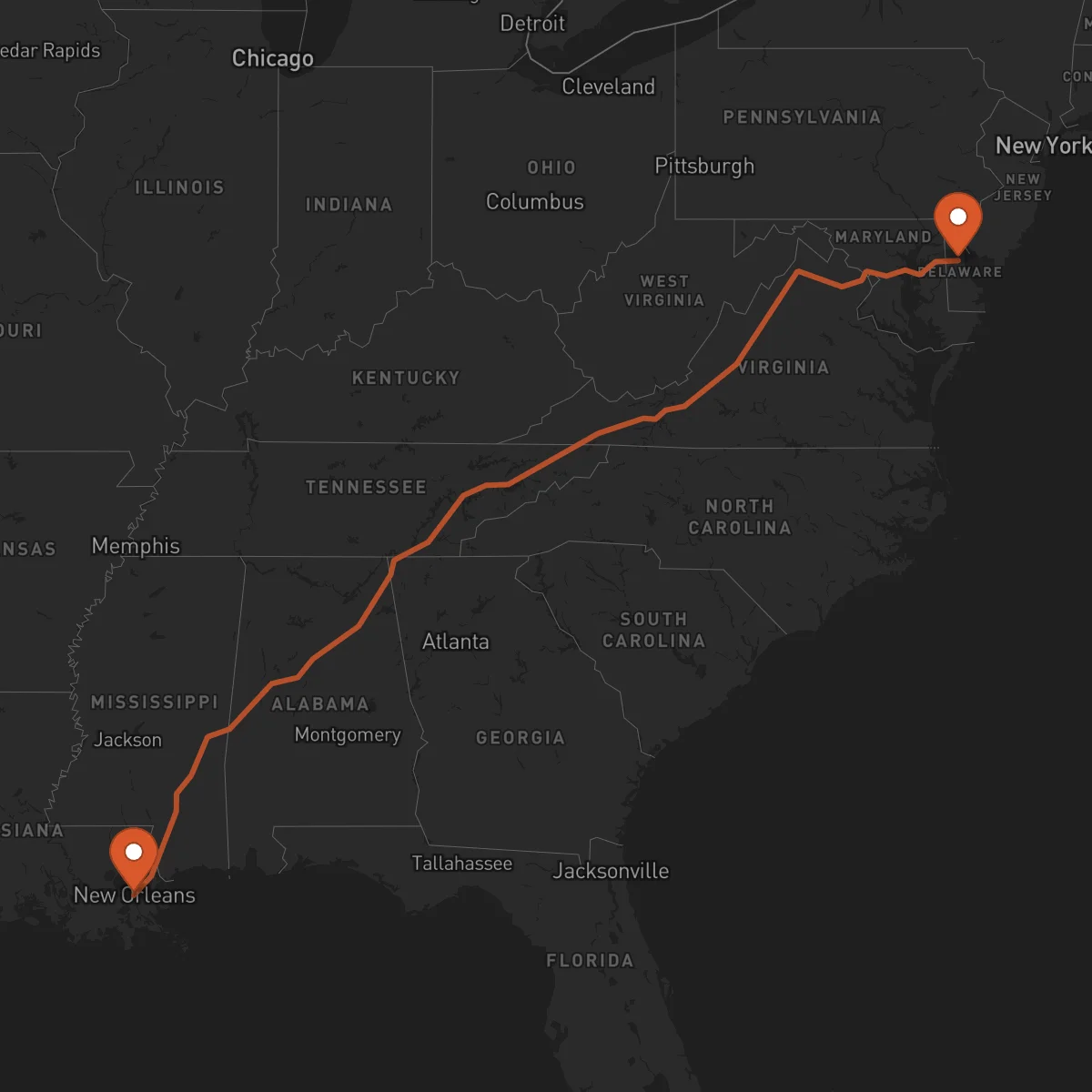
New Orleans to Dover
Dover → New OrleansFTL freight transportation service between New Orleans and Dover. Reliable logistics solutions for your business.
Route Description
Everything you need to know about the corridor New Orleans - Dover
The New Orleans to Dover corridor represents a vital domestic freight transportation route connecting the Gulf Coast to the Mid-Atlantic region of the United States. This approximately 1,042-mile journey traverses diverse terrain and crosses multiple state lines, making it a strategic pathway for businesses moving goods between major economic centers. The corridor links Louisiana's largest port city with Delaware's capital, facilitating the movement of goods from the Mississippi River Basin to the Atlantic Seaboard.
The economic significance of this corridor is substantial, connecting two regions with distinct industrial profiles. New Orleans serves as a critical gateway for imports and exports, while Dover anchors a network of manufacturing, aerospace, and government-related industries in the Northeast. This route enables the efficient flow of agricultural products, manufactured goods, and raw materials between these economic hubs, supporting supply chains that span the southeastern and northeastern United States.
Control Terrestre provides specialized FTL transportation services along this corridor, leveraging our network of certified carriers to ensure reliable, timely delivery. Our expertise in managing long-haul domestic routes means we understand the unique challenges of this journey, from weather considerations to varying state regulations. We offer dedicated truckload services with real-time tracking capabilities, ensuring your freight moves seamlessly from origin to destination with the professionalism and attention to detail that defines our operations.
Services for this Route
Available services for the corridor New Orleans - Dover
 Origin
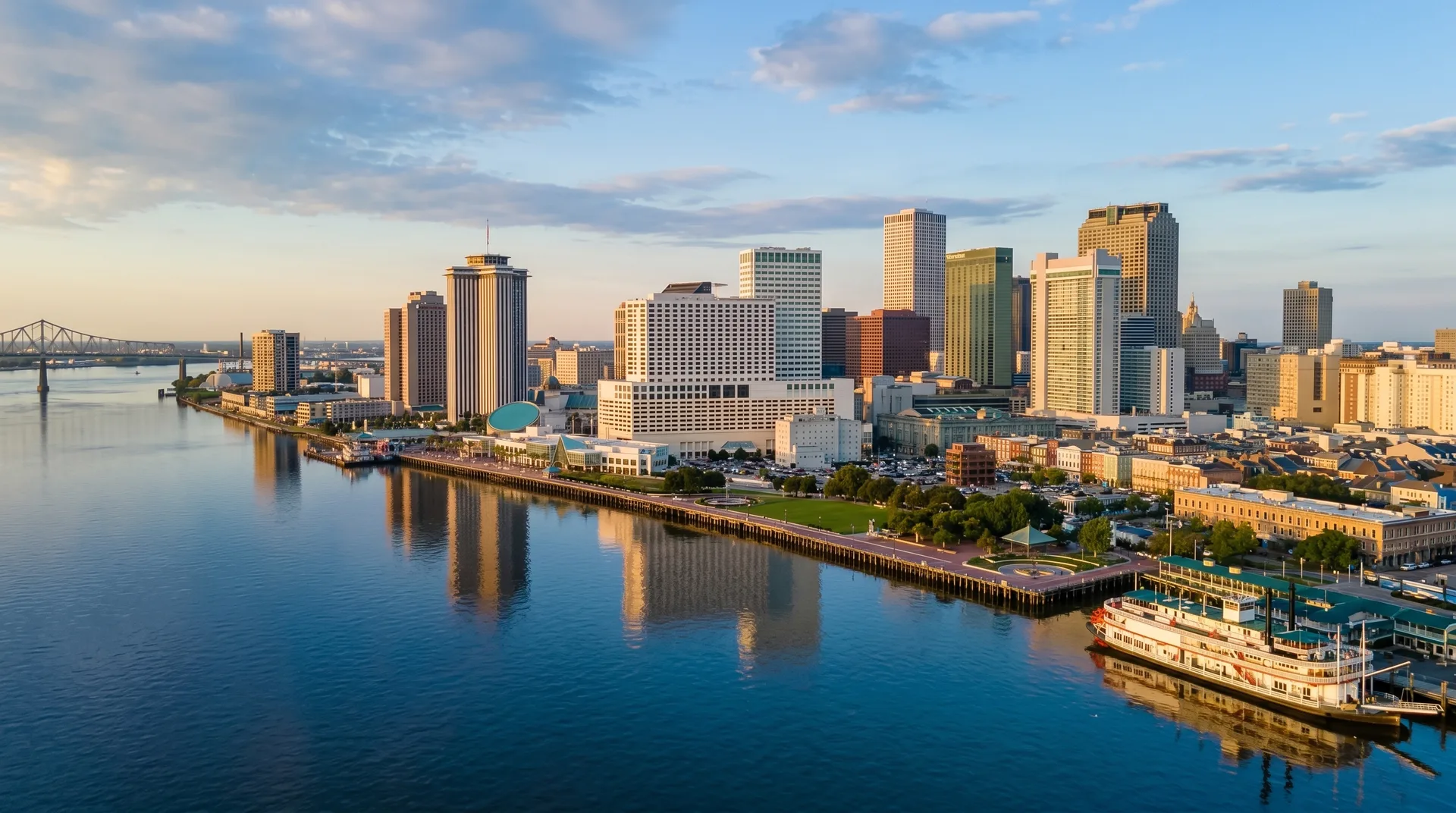
New Orleans
New Orleans stands as a strategic logistics powerhouse in the southern United States, positioned at the mouth of the Mississippi River where it meets the Gulf of Mexico. This unique location makes it a critical hub for both domestic and international freight movement, with extensive port facilities, rail connections, and highway networks converging in the metropolitan area. The city's proximity to major petrochemical facilities, agricultural production areas, and manufacturing centers creates a constant flow of freight requiring efficient transportation solutions.
The region's economy is anchored by the energy sector, with numerous refineries and chemical plants requiring regular material shipments. Additionally, New Orleans serves as a gateway for agricultural exports from the Midwest, with grain elevators and cold storage facilities supporting the movement of food products. The city's transportation infrastructure includes major highways such as I-10, I-55, and I-59, providing multiple routing options for freight moving in all directions, including the critical northeast corridor toward Dover.
 Destination
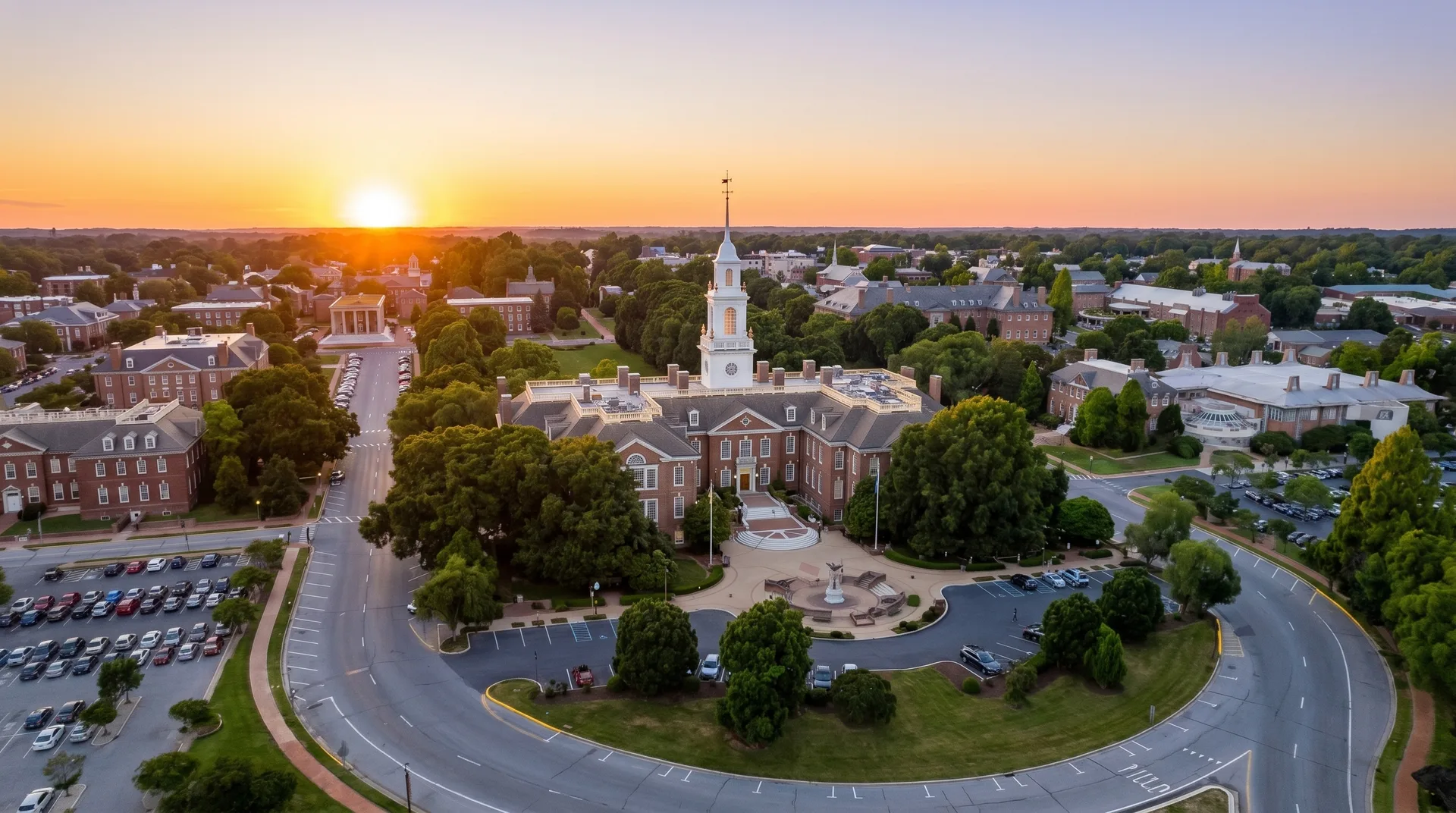
Dover
Dover, Delaware, serves as a strategic logistics center in the Mid-Atlantic region, offering excellent connectivity to major metropolitan areas including Philadelphia, Baltimore, and Washington D.C. The city's location provides efficient access to the Northeast Corridor's dense population centers and industrial zones, making it an ideal destination for freight distribution. Dover's proximity to major ports in Delaware and New Jersey, combined with its central position within the I-95 corridor, creates optimal conditions for regional distribution and last-mile delivery operations.
The Dover area hosts a diverse industrial base including aerospace manufacturing, military installations, and government operations. The First State's business-friendly environment has attracted numerous corporations to establish distribution centers in the region. Transportation infrastructure includes direct access to I-95, U.S. Route 13, and U.S. Route 113, providing multiple routing options for freight arriving from southern and western origins. The region's well-developed road network ensures efficient movement of goods to final destinations throughout the Northeast.










