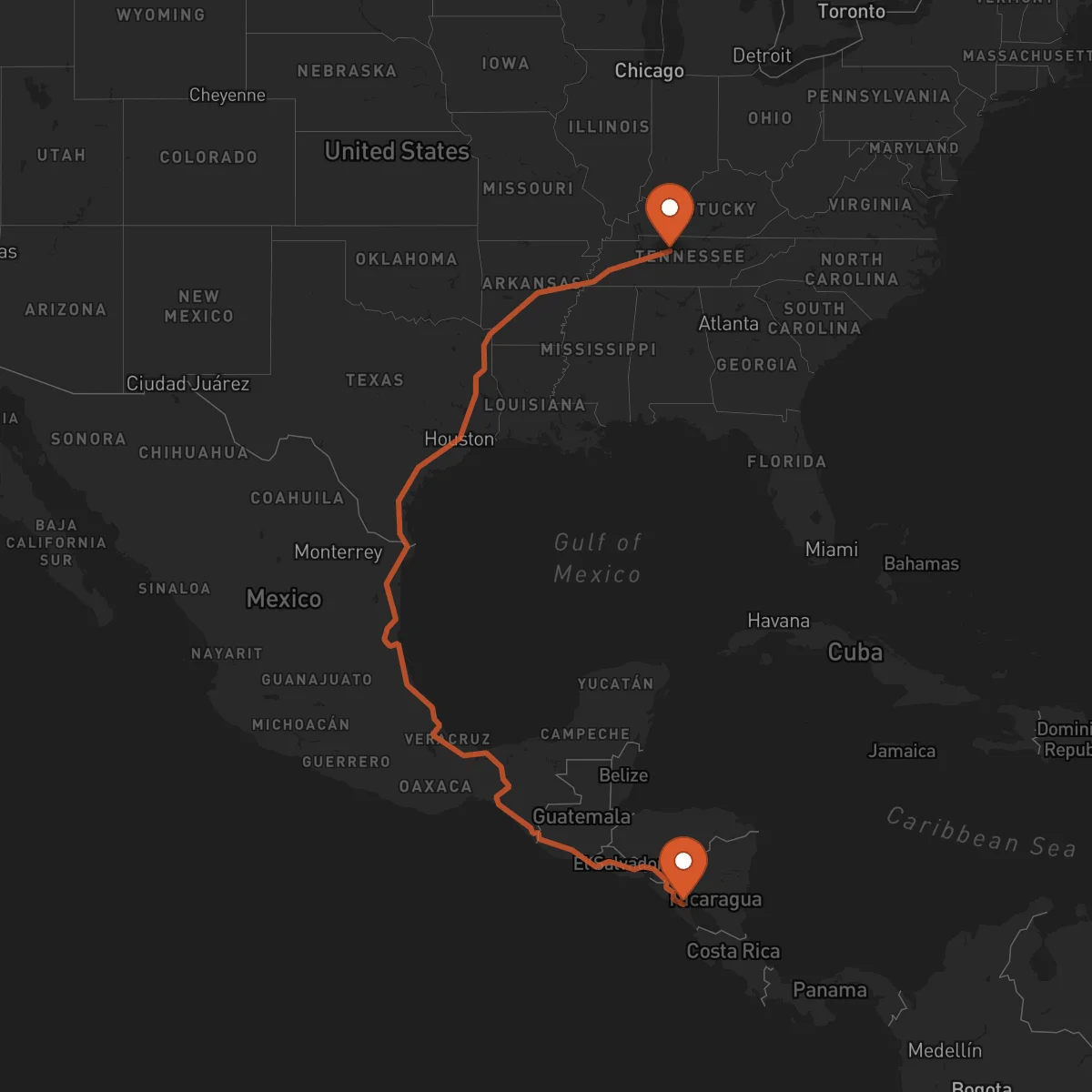
Nashville to Managua
Managua → NashvilleFTL freight transportation service between Nashville and Managua. Reliable logistics solutions for your business.
Route Description
Everything you need to know about the corridor Nashville - Managua
The logistics corridor connecting Nashville, Tennessee, with Managua, Nicaragua, represents a vital trade route spanning approximately 2,675 kilometers. This cross-border corridor facilitates the movement of goods between the central United States and Central America, serving as a crucial link in the supply chain for companies operating in both regions. The route traverses diverse terrain and crosses multiple international borders, requiring expert coordination and specialized knowledge to ensure efficient and compliant freight transportation.
The corridor's strategic importance stems from the strong economic ties between Tennessee's manufacturing sector and Nicaragua's growing industrial base. Nashville serves as a major logistics hub with excellent connectivity to national rail networks and interstate highways, while Managua functions as Nicaragua's primary commercial center and gateway to Central American markets. This route supports industries including automotive parts, electronics, agricultural products, and consumer goods, with many companies leveraging it for both import and export operations.
Key transportation infrastructure along this corridor includes major U.S. interstate highways such as I-24, I-65, and I-10, connecting to Mexican Federal Highways and Central American road networks. The route typically involves border crossings at Laredo/Nuevo Laredo or El Paso/Ciudad Juárez, followed by passage through Mexico and into Central America. Control Terrestre's expertise in cross-border operations ensures seamless coordination across all jurisdictions, with our certified carriers providing reliable door-to-door service throughout the entire journey.
Services for this Route
Available services for the corridor Nashville - Managua
 Origin
Nashville
Nashville, Tennessee serves as a strategic logistics hub in the southeastern United States, offering exceptional connectivity through its central location and robust transportation infrastructure. The city benefits from proximity to major interstate highways including I-40, I-24, and I-65, creating a triangular network that facilitates efficient distribution throughout the region. Nashville's international airport provides air cargo services, while nearby intermodal facilities support seamless transitions between truck, rail, and air transportation modes.
The region's economy is diverse, with strong presence in automotive manufacturing, healthcare, music and entertainment, and food processing industries. Major corporations have established distribution centers in the Nashville area, taking advantage of its business-friendly environment and skilled workforce. The city's logistics ecosystem includes numerous third-party logistics providers, warehousing facilities, and specialized transportation services that support both domestic and international freight movements.
 Destination
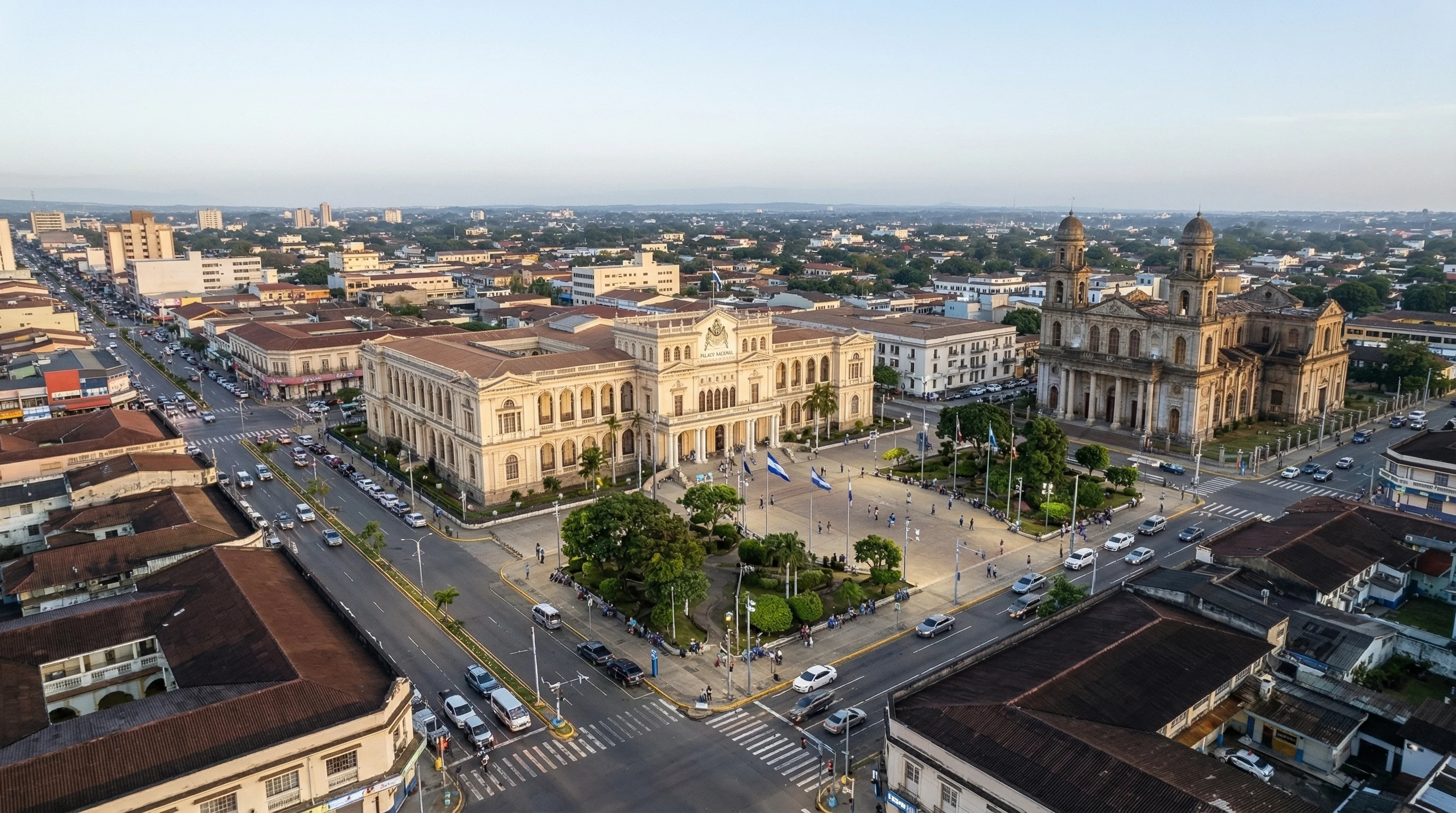
Managua, the capital and largest city of Nicaragua, serves as the country's primary commercial and logistics center, strategically positioned to connect with both North and South American markets. The city's location in the Pacific lowlands provides relatively flat terrain that facilitates transportation and distribution operations. Augusto C. Sandino International Airport offers air cargo services, while the Port of Corinto on the Pacific coast, approximately 130 kilometers away, provides maritime connectivity for international trade.
The Nicaraguan economy features growing sectors in agriculture, textiles, light manufacturing, and services. Managua's industrial parks host companies involved in food processing, apparel manufacturing, and electronics assembly. The city's central location within Nicaragua makes it an ideal distribution point for reaching other Central American destinations. While infrastructure continues to develop, Managua's logistics sector is expanding to meet increasing demand for efficient freight transportation and warehousing services.










