Nacaome to Louisville
Louisville → NacaomeFTL freight transportation service between Nacaome and Louisville. Reliable logistics solutions for your business.
Route Description
Everything you need to know about the corridor Nacaome - Louisville
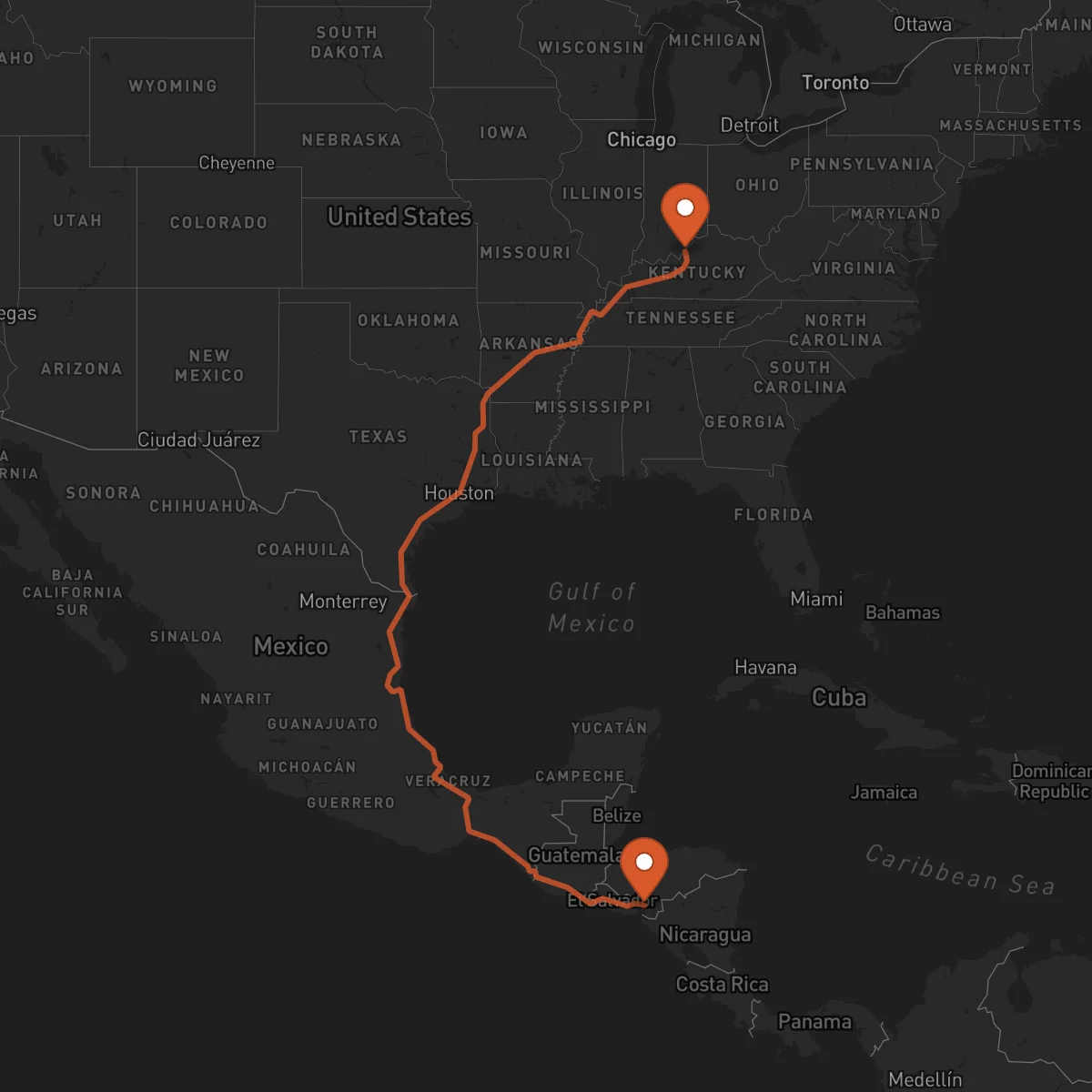
The Nacaome-Louisville corridor represents a vital logistics connection between Honduras and the United States, spanning approximately 2753 km through Central America and the southeastern United States. This cross-border route facilitates the movement of goods from Central America's industrial centers to one of Kentucky's most important logistics hubs. The corridor traverses multiple countries and regions, requiring expert coordination of cross-border procedures and compliance with international trade regulations.
The economic significance of this corridor lies in its ability to connect Honduran manufacturing and agricultural sectors with American distribution networks. Major industries utilizing this route include automotive components, electronics, textiles, and agricultural products. The journey involves navigating through key border crossings, including the Mexico-US border, where specialized knowledge of customs procedures and documentation is essential for efficient transit.
Control Terrestre facilitates seamless operations on this corridor through our network of certified transportation providers and expertise in cross-border logistics. Our services ensure that cargo moves efficiently from Nacaome's industrial parks through Central American highways, across international borders, and into Louisville's extensive distribution network. We handle all aspects of the journey, from customs clearance to final delivery, providing our clients with reliable full truckload (FTL) transportation solutions that optimize their supply chain between these strategic locations.
Services for this Route
Available services for the corridor Nacaome - Louisville
 Origin
Nacaome, located in the Valle department of Honduras, serves as a strategic logistics point in Central America due to its proximity to major industrial centers and transportation infrastructure. The city benefits from its location near the Pan-American Highway and its access to the Gulf of Fonseca, facilitating both land and maritime transportation options. Nacaome's economy is driven by manufacturing, particularly in textiles and automotive components, as well as agricultural exports including coffee, bananas, and other tropical products.
The region has developed significant industrial capacity with several maquiladora operations and manufacturing plants that require efficient transportation to North American markets. Local transportation infrastructure includes well-maintained highways connecting to San Pedro Sula and other major Honduran cities, as well as access to the Puerto Cortés maritime terminal for international shipping. The combination of industrial activity and transportation connectivity makes Nacaome an important origin point for cross-border freight movements to the United States.
 Destination
Louisville
Louisville, Kentucky stands as one of the most strategically positioned logistics hubs in the United States, located at the crossroads of major interstate highways including I-64, I-65, and I-71. The city's central location provides optimal distribution access to over two-thirds of the U.S. population within a day's drive, making it an ideal destination for cross-border freight from Central America. Louisville's economy is heavily influenced by logistics, with major operations from companies like UPS Worldport, Ford Motor Company, and GE Appliances creating substantial freight movement.
The city boasts exceptional transportation infrastructure, including the Louisville International Airport with its UPS hub, the Port of Louisville on the Ohio River, and extensive rail connections through CSX and Norfolk Southern. The presence of numerous warehousing and distribution centers, combined with the city's designation as a Foreign Trade Zone, creates a robust environment for international freight handling. Louisville's logistics ecosystem supports diverse industries including automotive, healthcare, e-commerce, and manufacturing, all of which benefit from efficient connections to Central American supply chains.










