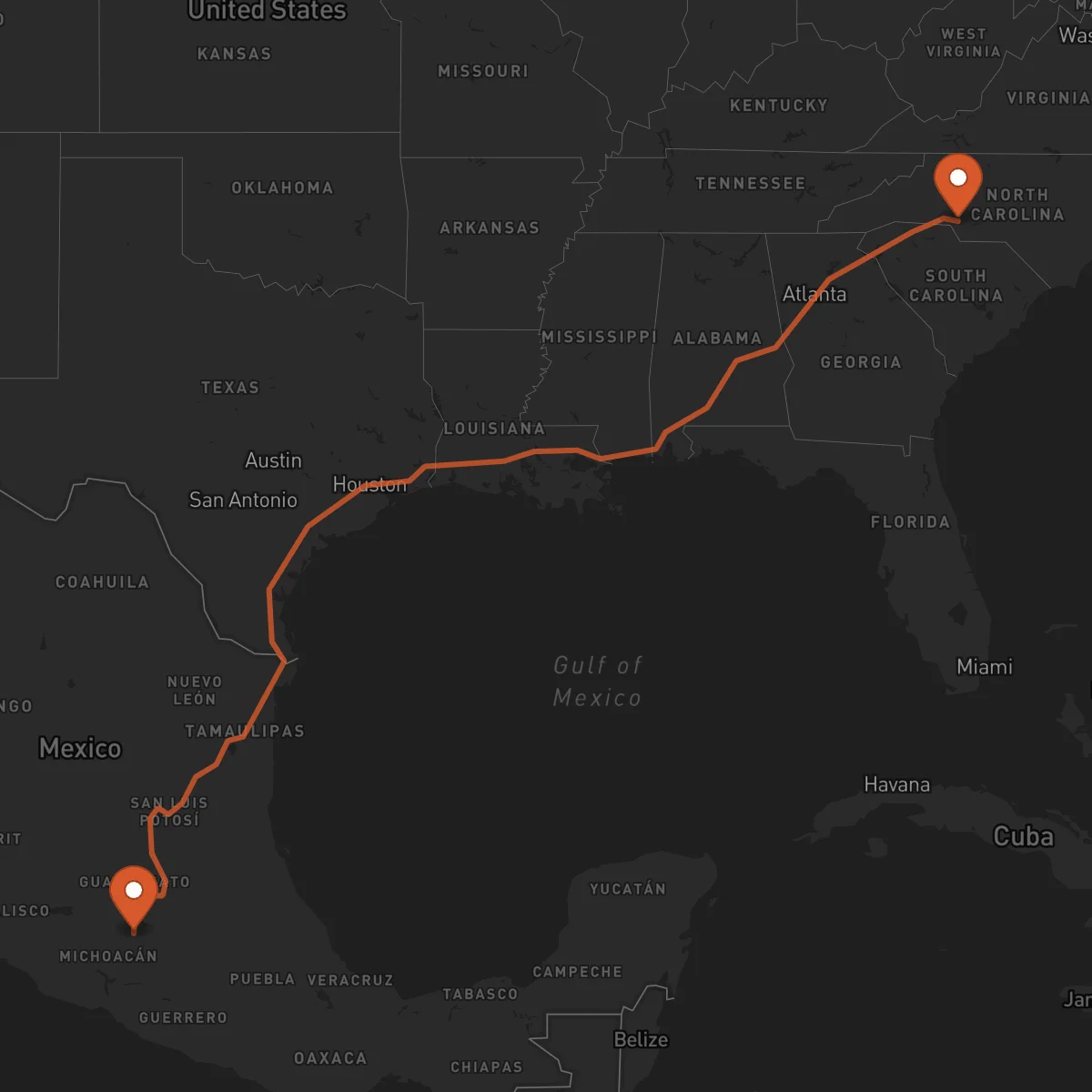
Morelia to Charlotte
Charlotte → MoreliaFTL freight transportation service between Morelia and Charlotte. Reliable logistics solutions for your business.
Route Description
Everything you need to know about the corridor Morelia - Charlotte
The logistics corridor between Morelia, Michoacán and Charlotte, North Carolina represents a vital trade route connecting Mexico's industrial heartland with one of the United States' most dynamic logistics hubs. This cross-border corridor spans approximately 2,638 kilometers and facilitates the movement of diverse cargo between two major economic regions. The route traverses Mexico's central highlands before crossing at key border points and continuing through the southeastern United States to reach Charlotte's strategic location in the Piedmont region.
The corridor serves critical industries including automotive manufacturing, aerospace components, electronics, and agricultural products. Morelia's industrial parks and Charlotte's concentration of logistics companies create a symbiotic relationship that drives bilateral trade. The route primarily utilizes Mexico's Federal Highway 15 and Federal Highway 40, connecting to U.S. Interstate systems including I-85 and I-40, which provide efficient access to Charlotte's extensive transportation network.
Control Terrestre specializes in managing cross-border operations along this corridor, offering comprehensive FTL services that ensure cargo moves seamlessly between both countries. Our experienced team handles all customs documentation, regulatory compliance, and border crossing procedures, minimizing delays and optimizing transit times. With our network of certified carriers and strategic partnerships, we provide reliable door-to-door service that connects Morelia's manufacturing centers directly to Charlotte's distribution networks, supporting just-in-time inventory systems and supply chain efficiency.
Services for this Route
Available services for the corridor Morelia - Charlotte
 Origin
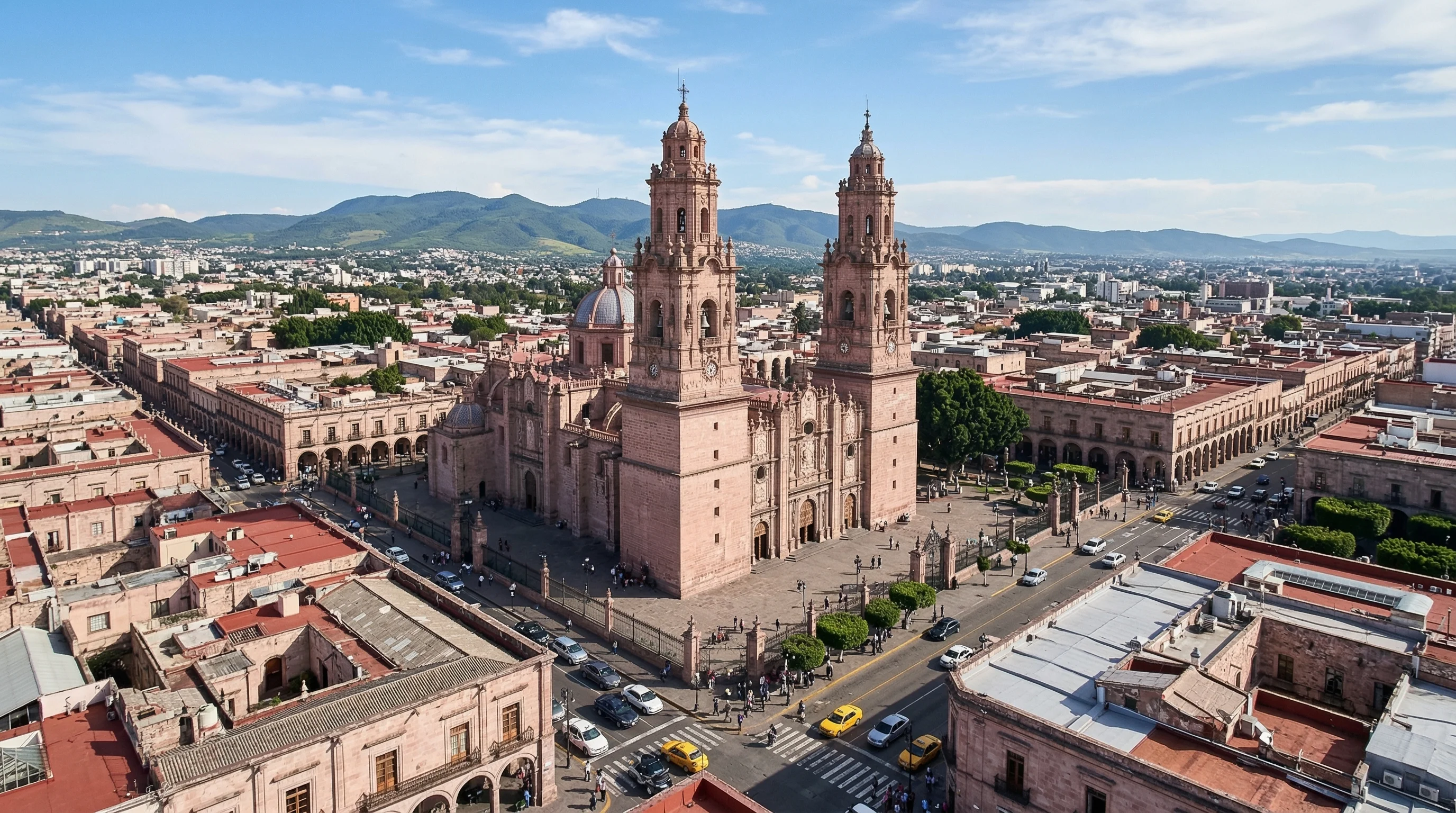
Morelia, the capital of Michoacán, stands as a strategic logistics hub in Mexico's central region, offering excellent connectivity to major industrial centers. The city's location provides access to Mexico's central highlands and proximity to key automotive manufacturing clusters in Guanajuato and Estado de México. Morelia's economy is anchored by diverse sectors including automotive parts production, food processing, metalworking, and technology manufacturing. The city benefits from its elevation and climate, making it ideal for certain types of manufacturing and storage operations.
The transportation infrastructure around Morelia includes multiple access points to major highways, with Federal Highway 15 providing direct north-south connectivity. The city is served by General Francisco Mujica International Airport and has rail connections through Ferromex, offering multimodal transportation options. Morelia's industrial parks and manufacturing zones are well-equipped with modern facilities, and the city's proximity to Mexico City (approximately 300 km) provides additional distribution capabilities for companies operating in the region.
 Destination
Charlotte
Charlotte, North Carolina serves as a premier logistics and distribution center in the southeastern United States, strategically positioned to serve both regional and national markets. The city's location at the intersection of major transportation corridors makes it an ideal gateway for international trade, particularly with its proximity to the Port of Charleston and Port of Wilmington. Charlotte's economy is characterized by strong financial services, advanced manufacturing, energy, and technology sectors, with significant automotive and aerospace presence including facilities from major manufacturers.
The transportation infrastructure in Charlotte is exceptional, featuring extensive highway networks including I-85 and I-77 that provide direct connections to major U.S. markets. The city is served by Charlotte Douglas International Airport, one of the busiest airports in the world for aircraft movements, offering robust air cargo capabilities. Charlotte's intermodal facilities and proximity to major rail terminals support efficient freight movement, while the city's concentration of third-party logistics providers and warehousing facilities creates a comprehensive ecosystem for supply chain operations.










