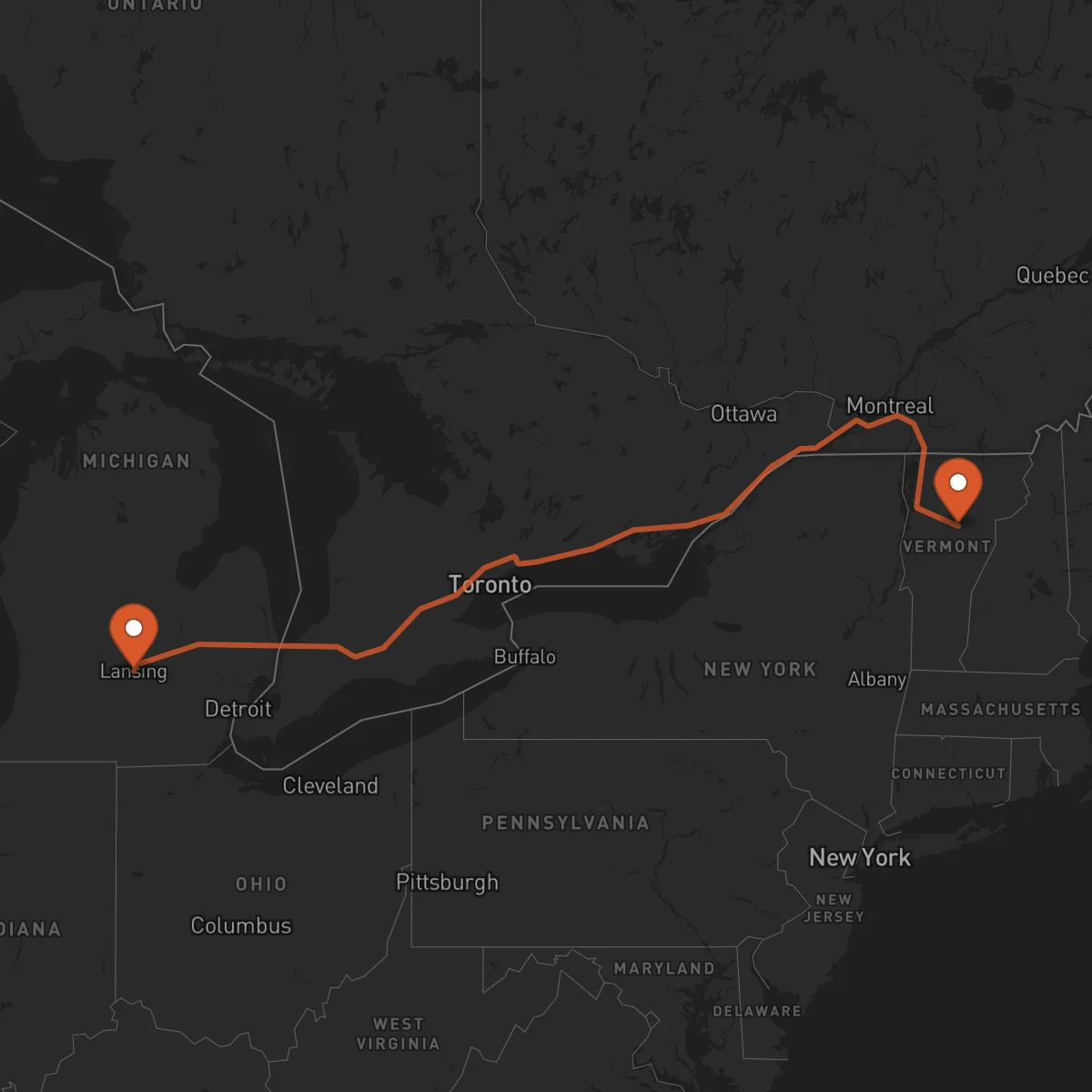
Montpelier to Lansing
Lansing → MontpelierFTL freight transportation service between Montpelier and Lansing. Reliable logistics solutions for your business.
Route Description
Everything you need to know about the corridor Montpelier - Lansing
The logistics corridor connecting Montpelier, Vermont to Lansing, Michigan represents a vital transportation link spanning approximately 980 kilometers across the northeastern and midwestern United States. This route traverses diverse terrain and connects two distinct economic regions, facilitating the movement of goods between New England and the Great Lakes industrial heartland. The corridor serves as a critical artery for businesses operating across multiple states, enabling efficient distribution of products and materials throughout the region.
This transportation route passes through several key states including Vermont, New York, Pennsylvania, Ohio, and Michigan, intersecting with major economic centers and industrial zones. The corridor benefits from access to Interstate 89, I-90, and I-94, providing reliable and efficient freight movement capabilities. The route's strategic importance has grown alongside the increasing integration of supply chains between the northeastern and midwestern United States, supporting just-in-time delivery models and regional distribution networks.
Control Terrestre specializes in full truckload (FTL) transportation services along this corridor, offering dedicated equipment and experienced drivers familiar with the route's specific requirements. Our comprehensive coverage ensures seamless door-to-door delivery from origin to destination, with real-time tracking and dedicated customer support throughout the journey. We understand the unique challenges of this cross-state route and provide tailored solutions to meet the diverse needs of shippers moving goods between these regions.
Services for this Route
Available services for the corridor Montpelier - Lansing
 Origin
Montpelier
Montpelier, Vermont serves as a strategic origin point for logistics operations, situated in the heart of New England. The city benefits from its proximity to major transportation routes including Interstate 89, which provides direct access to both northern and southern destinations. Vermont's capital is surrounded by a network of state highways that connect to regional distribution centers and manufacturing facilities throughout the state. The area's logistics infrastructure includes several freight terminals and cross-docking facilities that support efficient cargo handling and distribution operations.
The local economy features a diverse mix of industries including manufacturing, healthcare, education, and technology sectors. Vermont's commitment to sustainable practices has fostered a growing market for eco-friendly products and specialized cargo requiring careful handling. The region's agricultural heritage continues to support food processing and distribution operations, while the presence of several higher education institutions drives demand for technology and research-related shipments. Montpelier's strategic location makes it an ideal starting point for shipments destined for the Midwest and beyond.
 Destination
Lansing
Lansing, Michigan represents a crucial logistics hub in the Great Lakes region, strategically positioned to serve both Michigan's state capital and the broader Midwest market. The city's location provides excellent access to major transportation networks including Interstate 96, which connects directly to Detroit and Chicago, two of the region's most important economic centers. Lansing benefits from its proximity to several Class I railroads and the Port of Detroit, offering multimodal transportation options for shippers. The area features modern warehousing facilities and distribution centers equipped to handle various cargo types and specialized freight requirements.
The Lansing metropolitan area hosts a diverse industrial base including automotive manufacturing, healthcare, education, and government services. Michigan's strong manufacturing heritage, particularly in the automotive sector, creates consistent demand for reliable freight transportation services. The presence of Michigan State University contributes to a vibrant research and technology ecosystem, driving specialized logistics needs. Lansing's central location within Michigan makes it an ideal distribution point for goods destined throughout the state and the surrounding Midwest region, supporting both inbound raw materials and outbound finished products.










