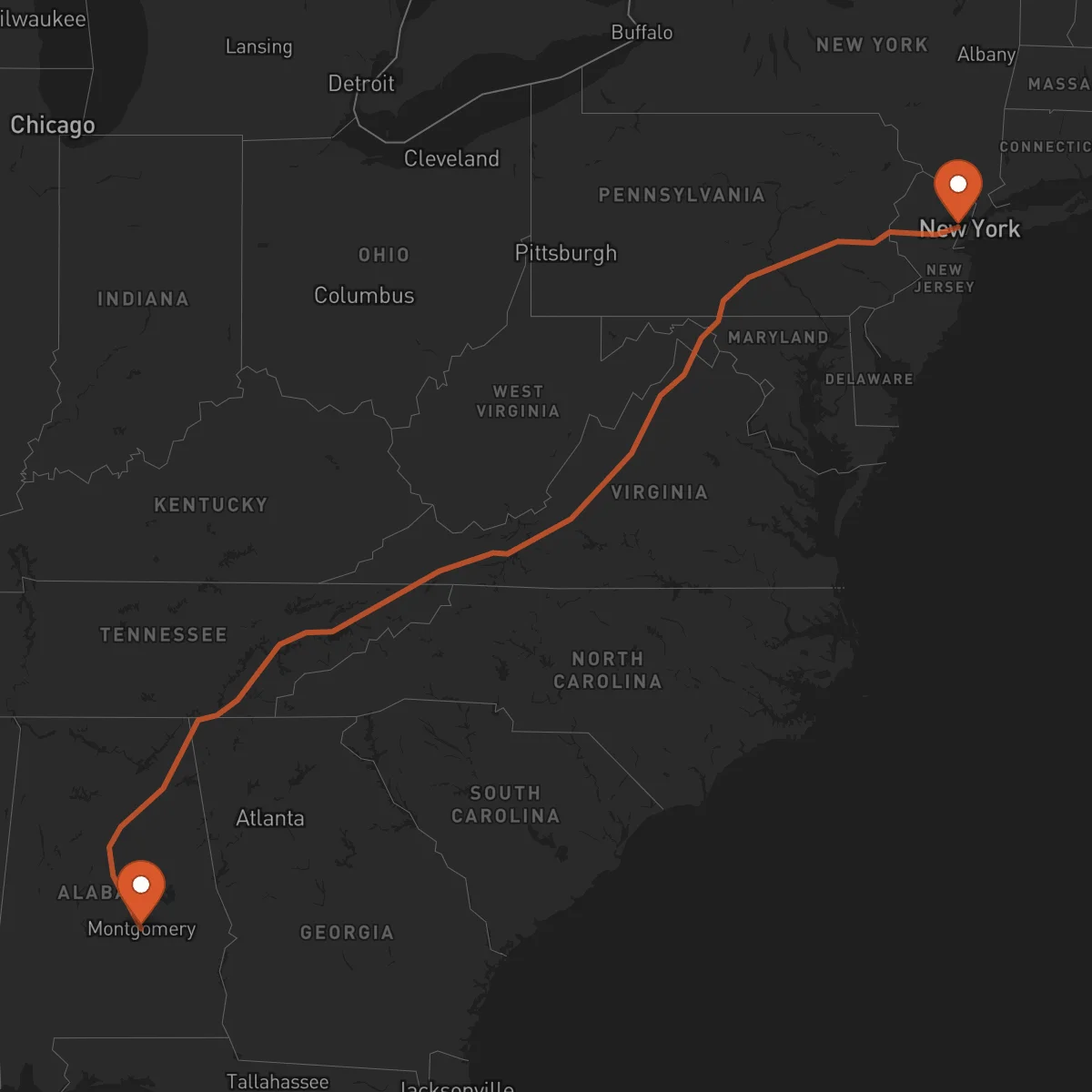
Montgomery to Newark
Newark → MontgomeryFTL freight transportation service between Montgomery and Newark. Reliable logistics solutions for your business.
Route Description
Everything you need to know about the corridor Montgomery - Newark
The Montgomery, Alabama to Newark, New Jersey corridor represents a vital freight transportation link connecting the southeastern United States to the northeastern industrial corridor. This 1,425-kilometer route traverses diverse economic regions, linking Montgomery's growing logistics hub with Newark's position as a major gateway to the New York metropolitan area. The corridor primarily follows Interstate 85 north through Atlanta, then transitions to I-95 for the northeastern leg, providing efficient access to one of America's most economically active regions.
The strategic importance of this corridor stems from its connection between Alabama's manufacturing and agricultural sectors with the dense consumer markets and industrial centers of the Northeast. Montgomery serves as a key distribution point for automotive parts, agricultural products, and manufactured goods, while Newark provides access to the Port of New York and New Jersey, the largest port on the East Coast. This route facilitates the movement of goods between the Southeast's growing production centers and the Northeast's consumption and distribution networks.
Major industries utilizing this corridor include automotive manufacturing and parts distribution, food and beverage products, industrial equipment, and consumer goods. The route supports just-in-time manufacturing supply chains, retail distribution networks, and e-commerce fulfillment operations. Control Terrestre's full truckload (FTL) services on this corridor ensure dedicated capacity for time-sensitive shipments, with our experienced carriers navigating this critical north-south/east-west connection efficiently and reliably.
Services for this Route
Available services for the corridor Montgomery - Newark
 Origin
Montgomery
Montgomery, Alabama serves as a strategic logistics hub in the southeastern United States, offering excellent connectivity for freight transportation. Located along Interstate 65, the city provides direct access to major markets throughout the South and Midwest. Montgomery's transportation infrastructure includes the Montgomery Regional Airport, multiple rail connections through Norfolk Southern and CSX, and the Port of Montgomery on the Alabama River, creating multimodal shipping options. The city's central location in Alabama makes it an ideal origin point for distributing goods throughout the southeastern region and beyond.
The local economy is anchored by automotive manufacturing, with Hyundai's manufacturing plant nearby, along with growing sectors in aerospace, healthcare, and government services. Montgomery's industrial base produces a diverse range of goods including automotive components, food products, and manufactured materials. The city's pro-business environment and strategic location have attracted numerous distribution centers and logistics operations, making it a key origin point for freight moving north along the I-85/I-95 corridor toward major northeastern markets.
 Destination
Newark
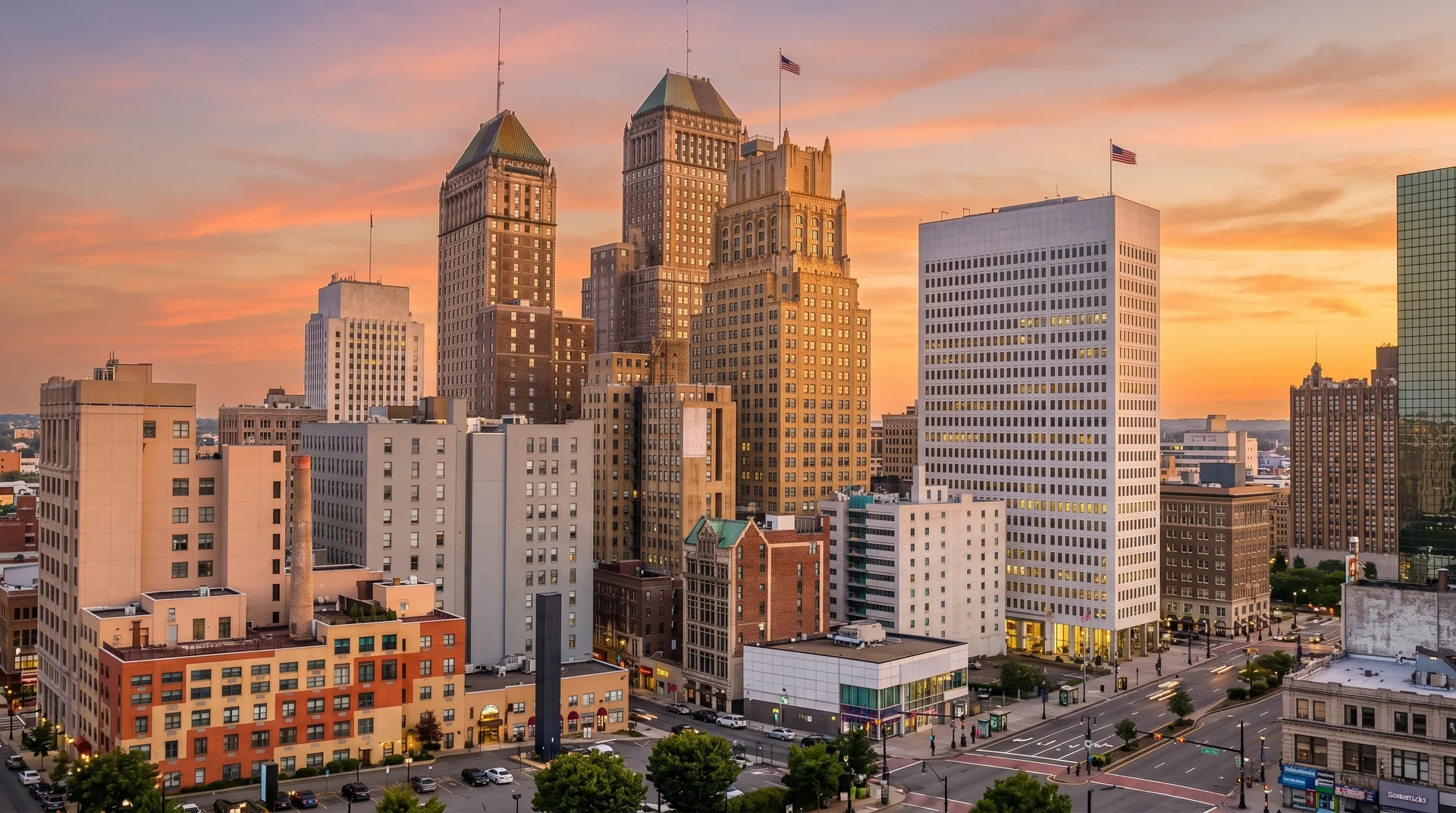
Newark, New Jersey stands as a critical logistics gateway to the New York metropolitan area and the entire northeastern United States. The city's strategic location provides immediate access to Interstate 95, the New Jersey Turnpike, and proximity to major bridges and tunnels connecting to New York City. Newark Liberty International Airport serves as a major cargo hub, while the Port Newark-Elizabeth Marine Terminal represents the largest container port on the East Coast. This multimodal infrastructure creates exceptional connectivity for freight distribution throughout the region.
The Newark area is home to diverse industries including finance, healthcare, telecommunications, and manufacturing. The region's dense population and concentration of businesses create substantial demand for freight transportation services. Newark's position as a distribution center for the greater New York area makes it a crucial destination for goods moving from manufacturing centers in the South and Midwest. The city's extensive warehousing and distribution facilities, combined with its superior transportation infrastructure, enable efficient last-mile delivery to one of the nation's largest consumer markets.










