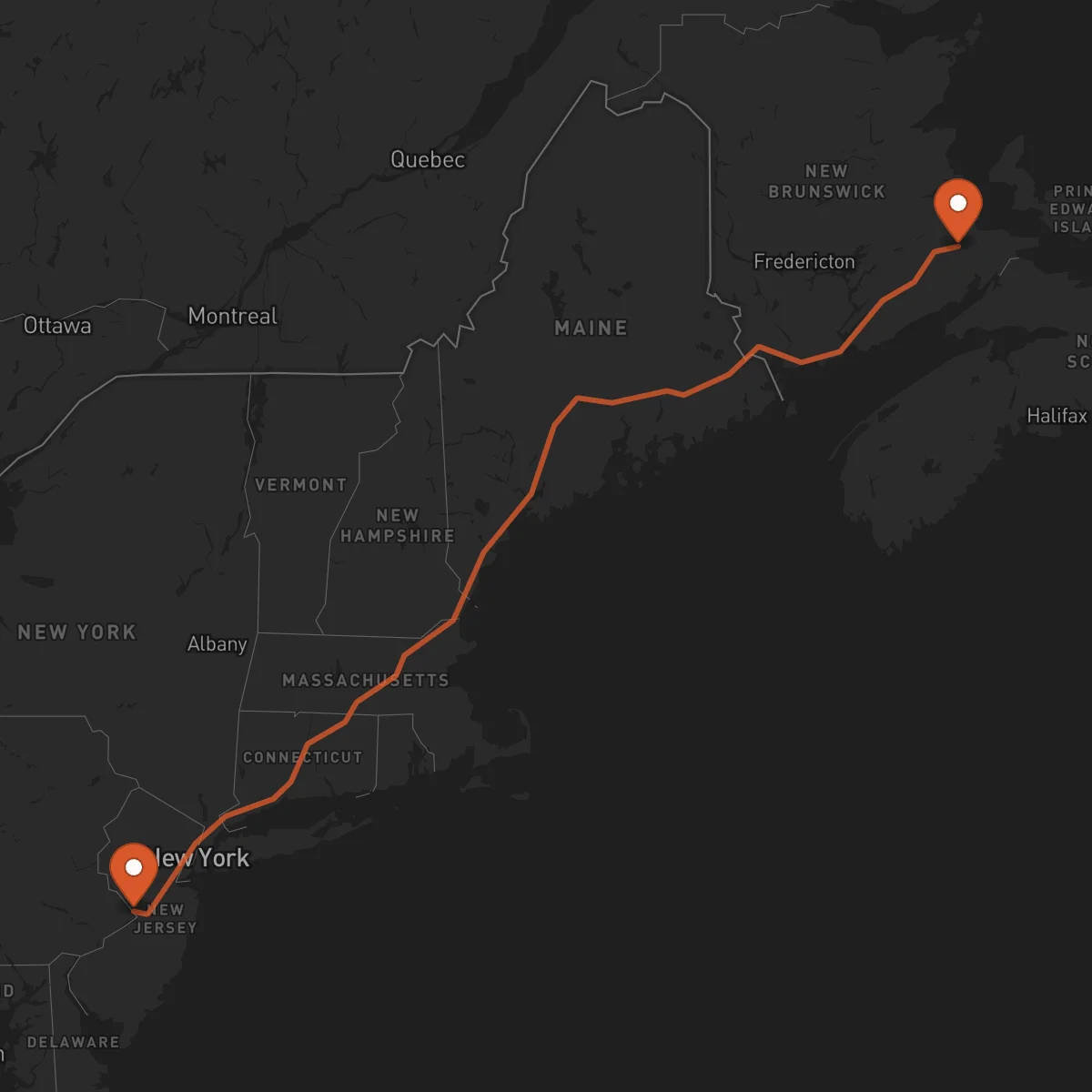
Moncton to Trenton
Trenton → MonctonFTL freight transportation service between Moncton and Trenton. Reliable logistics solutions for your business.
Route Description
Everything you need to know about the corridor Moncton - Trenton
The Moncton to Trenton corridor represents a vital logistics link connecting Atlantic Canada with the Northeastern United States. This 1,039 km cross-border route serves as a critical artery for freight movement between Canada's maritime provinces and one of America's most industrialized regions. The corridor facilitates the seamless flow of goods from New Brunswick's port facilities and manufacturing centers to New Jersey's distribution hubs and consumer markets. Control Terrestre specializes in optimizing this international freight movement, ensuring efficient cross-border operations through our network of certified carriers and expertise in customs compliance.
Services for this Route
Available services for the corridor Moncton - Trenton
 Origin
Moncton
Moncton serves as a strategic logistics hub for Atlantic Canada, positioned at the geographic center of the Maritimes. The city boasts excellent transportation infrastructure including the Greater Moncton Roméo LeBlanc International Airport and comprehensive rail connections through CN Rail. Moncton's economy is driven by transportation, distribution, and manufacturing sectors, with significant activity in food processing, technology, and call center operations. The city's location provides access to major ports like the Port of Halifax and Port of Saint John, making it an ideal origin point for freight destined for US markets.
 Destination
Trenton
Trenton, New Jersey represents a key logistics center in the Northeastern United States, strategically located near Philadelphia and within the New York metropolitan area. The region features extensive transportation infrastructure including major highways, rail connections, and proximity to ports like the Port of New York and New Jersey. Trenton's economy encompasses manufacturing, healthcare, and government services, with strong demand for industrial and consumer goods. The area's dense population and industrial base create consistent freight needs, supported by numerous warehousing and distribution facilities throughout the region.










