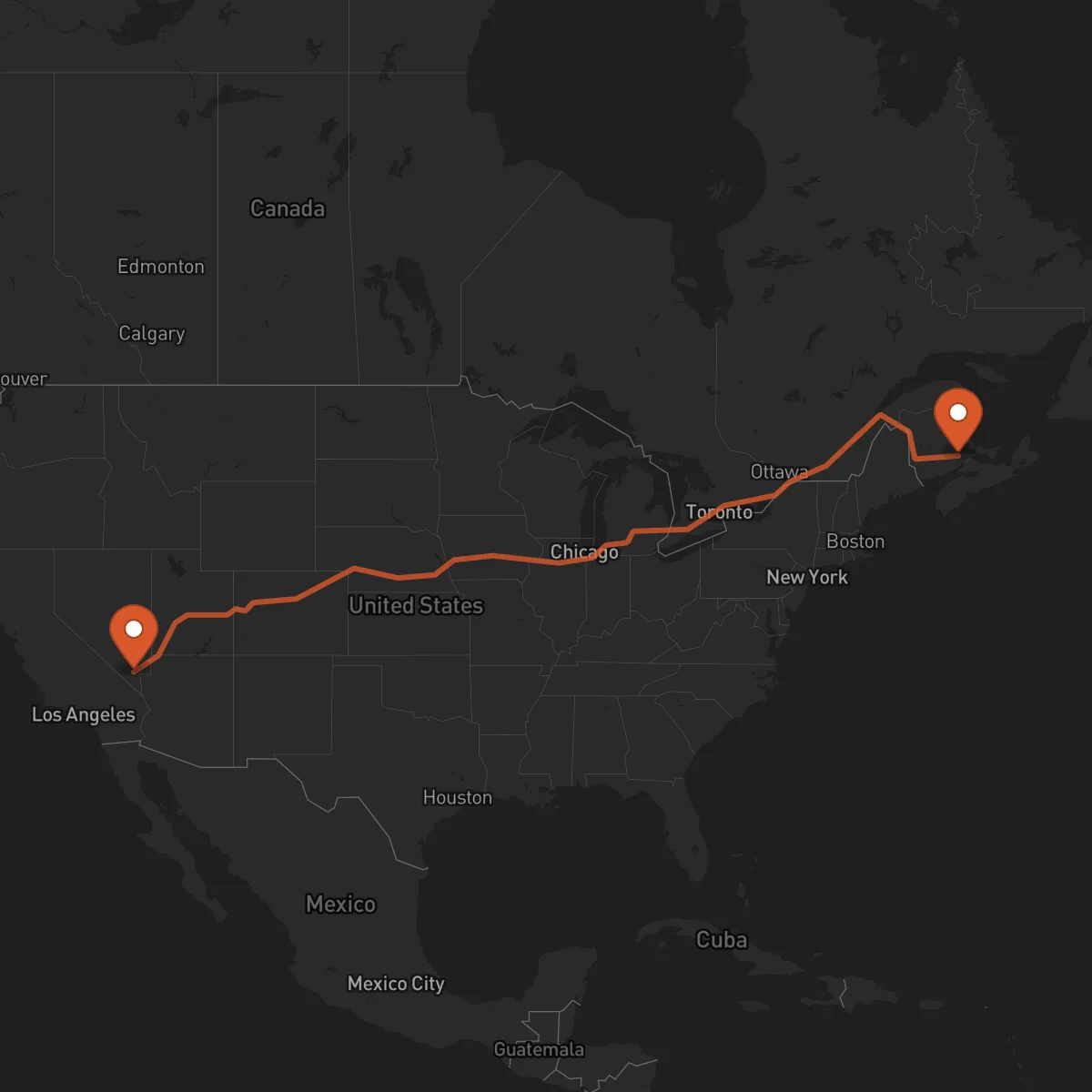
Moncton to Las Vegas
Las Vegas → MonctonFTL freight transportation service between Moncton and Las Vegas. Reliable logistics solutions for your business.
Route Description
Everything you need to know about the corridor Moncton - Las Vegas
The Moncton to Las Vegas corridor represents a vital cross-border freight transportation route connecting the Atlantic provinces of Canada with the southwestern United States. This extensive 4,284 km journey traverses diverse geographic regions, connecting major economic centers and facilitating the movement of goods between two significant markets. The corridor serves as a critical link for businesses operating across North America, enabling efficient supply chain operations between Canada's eastern maritime region and Nevada's entertainment and technology hub.
The economic significance of this corridor is substantial, supporting trade between Canada's manufacturing and agricultural sectors with Nevada's retail, hospitality, and technology industries. Moncton serves as a logistics gateway for Atlantic Canada, while Las Vegas functions as a major distribution center for the southwestern United States. This route facilitates the movement of consumer goods, industrial equipment, electronics, and specialized cargo between these regions, supporting the economic activities of both nations.
Key industries utilizing this corridor include manufacturing, retail distribution, automotive parts, agricultural products, and technology equipment. The route primarily follows major highways including I-15 through the United States and connects with Canadian highways leading to Moncton. The corridor crosses the Canada-US border at various points, with customs clearance procedures varying by location. Control Terrestre facilitates seamless operations on this corridor through our network of certified transportation providers, offering dedicated FTL services that ensure cargo moves efficiently and securely from origin to destination.
Services for this Route
Available services for the corridor Moncton - Las Vegas
 Origin
Moncton
Moncton, located in New Brunswick, Canada, serves as a strategic logistics hub for the Atlantic provinces. Positioned at the geographic center of the Maritimes, Moncton offers excellent connectivity to major Atlantic ports and serves as a distribution nexus for eastern Canada. The city's transportation infrastructure includes the Greater Moncton Roméo LeBlanc International Airport, extensive highway networks (Trans-Canada Highway), and rail connections through CN Rail, making it an ideal origin point for cross-border freight operations.
The region's economy is diverse, with strong sectors in manufacturing, information technology, transportation, and distribution. Moncton is particularly known for its call center industry and serves as a regional service center for Atlantic Canada. The area also has significant agricultural production and food processing industries, along with growing aerospace and defense sectors. These economic activities generate substantial freight volume requiring reliable transportation solutions to US markets.
 Destination
Las Vegas
Las Vegas, Nevada, stands as a major logistics and distribution center in the southwestern United States, strategically positioned to serve the western US market. The city's location provides excellent access to major transportation routes including Interstate 15, which connects to California, Arizona, and beyond. McCarran International Airport offers robust air cargo capabilities, while the region's highway infrastructure supports efficient ground transportation operations throughout the area.
The Las Vegas economy is dominated by tourism, hospitality, and entertainment industries, but also includes significant retail distribution, technology, and manufacturing sectors. The city serves as a major warehousing and distribution hub for companies serving the southwestern US, with numerous fulfillment centers and logistics facilities located in the surrounding area. Las Vegas's proximity to major ports in California and its position as a gateway to the western United States makes it a crucial destination for cross-border freight traffic, particularly for consumer goods, electronics, and specialized cargo requiring efficient distribution networks.










