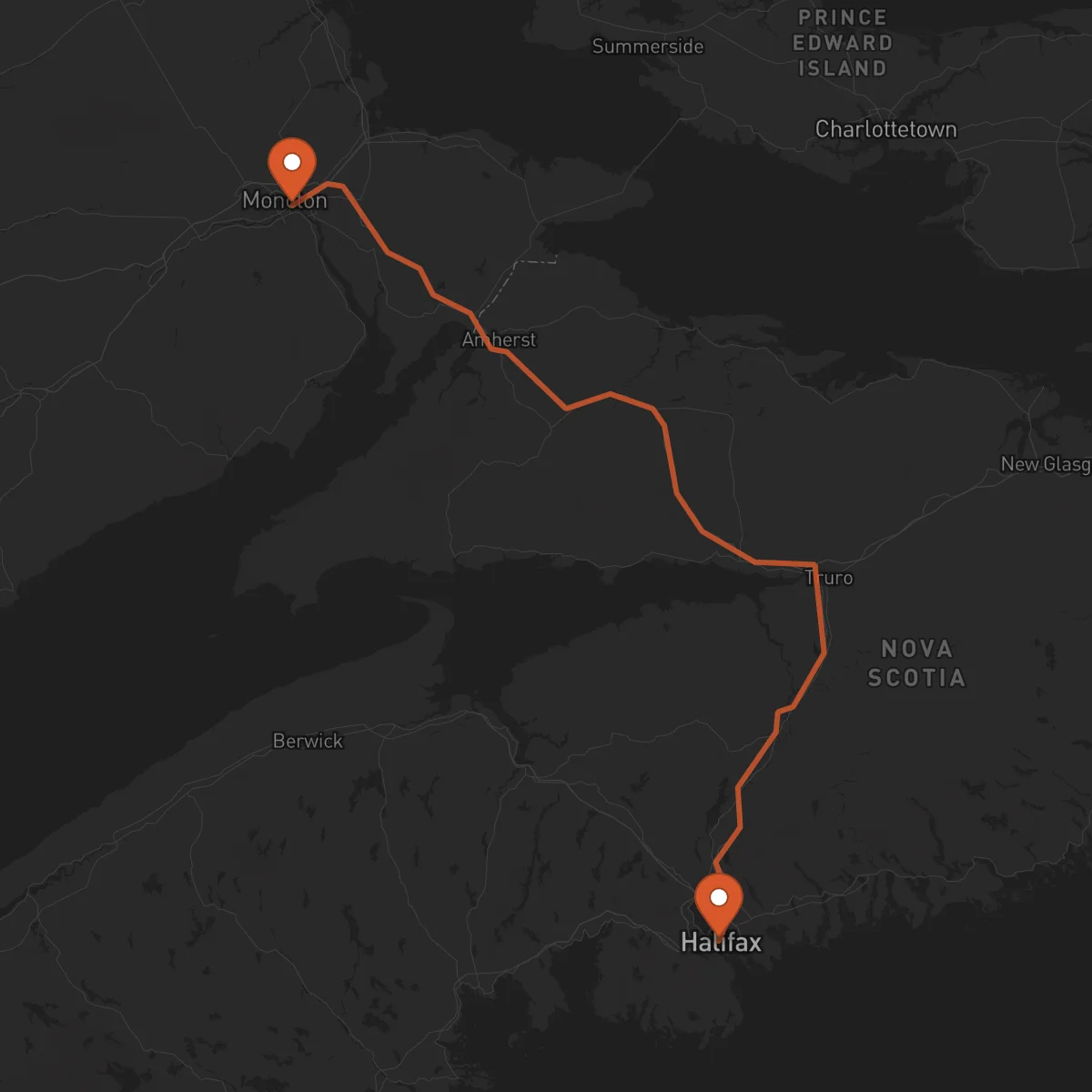
Moncton to Halifax
Halifax → MonctonFTL freight transportation service between Moncton and Halifax. Reliable logistics solutions for your business.
Route Description
Everything you need to know about the corridor Moncton - Halifax
The Moncton-Halifax corridor represents a vital logistics link in Atlantic Canada, connecting two of the region's most important economic centers. This 185-kilometer route serves as a critical artery for freight transportation between New Brunswick and Nova Scotia, facilitating the movement of goods across the Maritimes. The corridor's strategic importance lies in its ability to connect major ports, manufacturing centers, and distribution hubs, making it essential for regional commerce and supply chain operations.
The economic landscape along this corridor is diverse and robust, with key industries including manufacturing, seafood processing, forestry products, and technology services. Moncton serves as a major logistics and distribution center for Atlantic Canada, while Halifax functions as a primary gateway for international trade through its deep-water port. This complementary relationship between the two cities creates substantial freight volume, particularly for time-sensitive and specialized cargo that requires dedicated transportation solutions.
Control Terrestre leverages this corridor to provide efficient full truckload (FTL) transportation services, offering dedicated capacity and reliable transit times for businesses operating between these two cities. Our strategic partnerships with local carriers ensure we can meet the specific needs of industries along this route, whether it's refrigerated goods from the seafood sector or specialized equipment for the manufacturing industry. The primary transportation infrastructure includes the Trans-Canada Highway (Highway 104 and Highway 102), which provides direct, high-capacity connections between Moncton and Halifax, supporting our commitment to timely and secure freight delivery.
Services for this Route
Available services for the corridor Moncton - Halifax
 Origin
Moncton
Moncton stands as a strategic logistics hub in Atlantic Canada, positioned at the geographic center of the Maritimes. The city's location provides exceptional access to major transportation networks, including the CN rail line and the Trans-Canada Highway, making it an ideal origin point for freight distribution throughout the region. Moncton's designation as a bilingual city and its diverse workforce contribute to its economic vitality, while its growing technology sector and strong service industry create additional freight transportation opportunities.
The city hosts several major distribution centers and warehouses, serving as a consolidation point for goods destined throughout Atlantic Canada. Moncton's infrastructure includes the Greater Moncton Roméo LeBlanc International Airport, which supports air freight operations, and its proximity to the Port of Saint John provides additional multimodal transportation options. The local economy benefits from strong sectors in information technology, insurance, and call centers, alongside traditional industries such as manufacturing and agriculture, all of which generate consistent freight movement requiring reliable transportation solutions.
 Destination
Halifax
Halifax serves as Atlantic Canada's primary economic engine and a major international trade gateway, making it a crucial destination for freight transportation. The city's strategic location on the Atlantic coast, combined with one of North America's deepest and most protected harbors, establishes Halifax as a critical entry and exit point for international commerce. The Port of Halifax handles over 1,500 vessels annually and processes millions of metric tons of cargo, creating substantial domestic freight movement to and from the interior provinces.
The Halifax Regional Municipality benefits from a diversified economy anchored by the defense sector, ocean technology, aerospace, and financial services. The city's infrastructure includes the Halifax Stanfield International Airport, extensive highway networks, and the Halifax Port Authority's modern container terminals. These facilities support the movement of diverse cargo types, from seafood and agricultural products to manufactured goods and specialized equipment. Halifax's role as a regional capital and its concentration of government services, educational institutions, and healthcare facilities generate consistent freight demand, particularly for time-sensitive deliveries between the city and other major centers like Moncton.










