Minneapolis to Vancouver
Vancouver → MinneapolisFTL freight transportation service between Minneapolis and Vancouver. Reliable logistics solutions for your business.
Route Description
Everything you need to know about the corridor Minneapolis - Vancouver
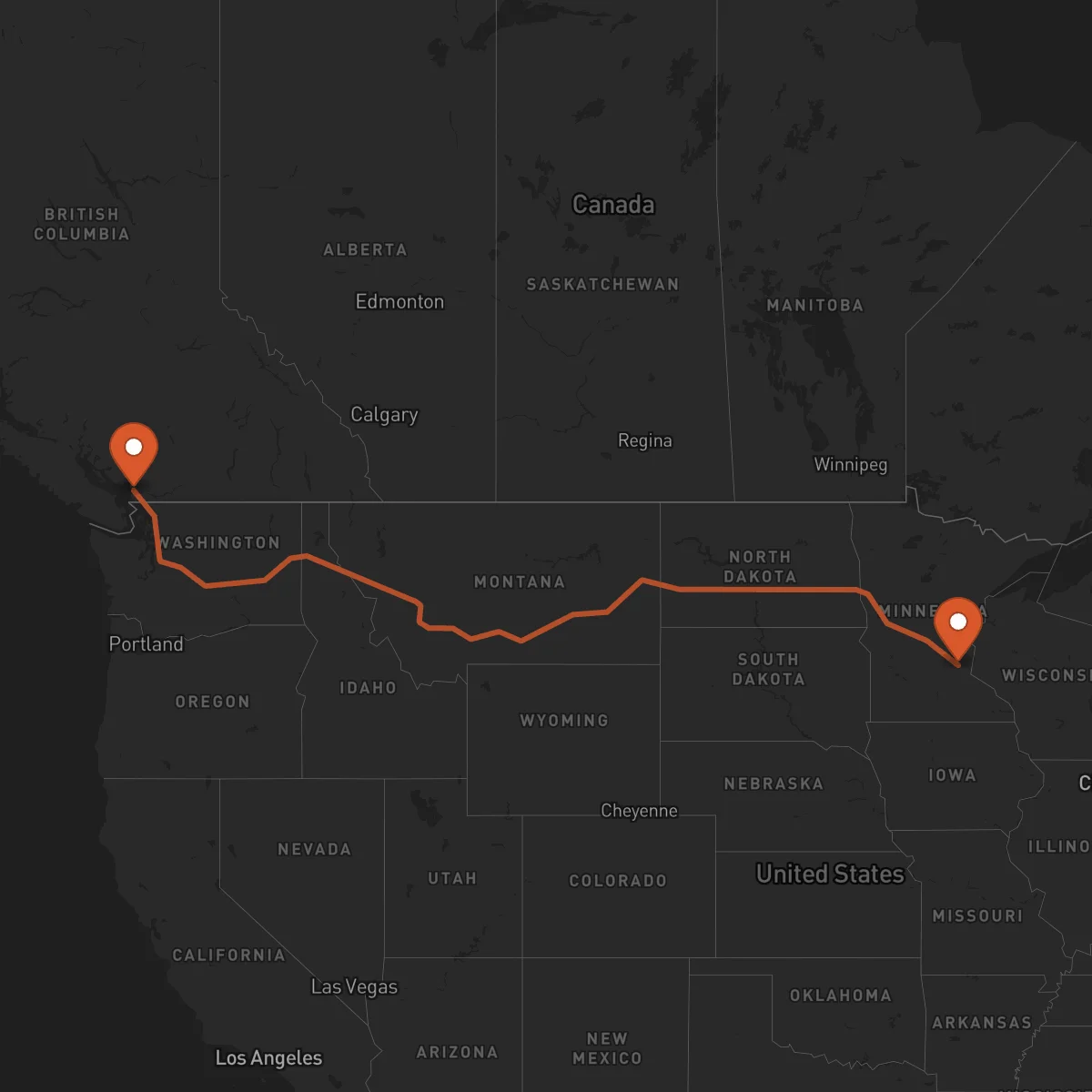
The Minneapolis to Vancouver corridor represents a vital cross-border freight transportation route connecting the heart of the American Midwest with Canada's Pacific gateway. This 2,293-kilometer journey traverses diverse terrain and crosses international borders, making it a strategic link for businesses operating between the United States and Canada. The corridor serves as a critical supply chain artery for industries requiring reliable transportation between Minnesota's industrial centers and British Columbia's bustling port facilities.
The economic significance of this route extends beyond its geographical span. Minneapolis, as a major distribution hub in the Midwest, generates substantial freight volumes destined for Western Canada's markets. Vancouver, positioned as Canada's largest port on the Pacific coast, serves as a gateway for international trade, particularly with Asia. This creates a bidirectional flow of goods that keeps the corridor active year-round, with manufacturers, retailers, and logistics providers relying on consistent, cross-border transportation solutions.
Transportation infrastructure along this corridor includes major highways such as I-94 West connecting Minneapolis to the Canadian border, where it transitions to Trans-Canada Highway 1. The route continues through the Canadian Rockies to reach Vancouver. Key border crossings include the Pembina-Emerson crossing in North Dakota, which handles significant commercial traffic. Control Terrestre's expertise in cross-border operations ensures seamless customs clearance and compliance with both US and Canadian regulations, facilitating smooth freight movement across this international boundary.
Services for this Route
Available services for the corridor Minneapolis - Vancouver
 Origin
Minneapolis
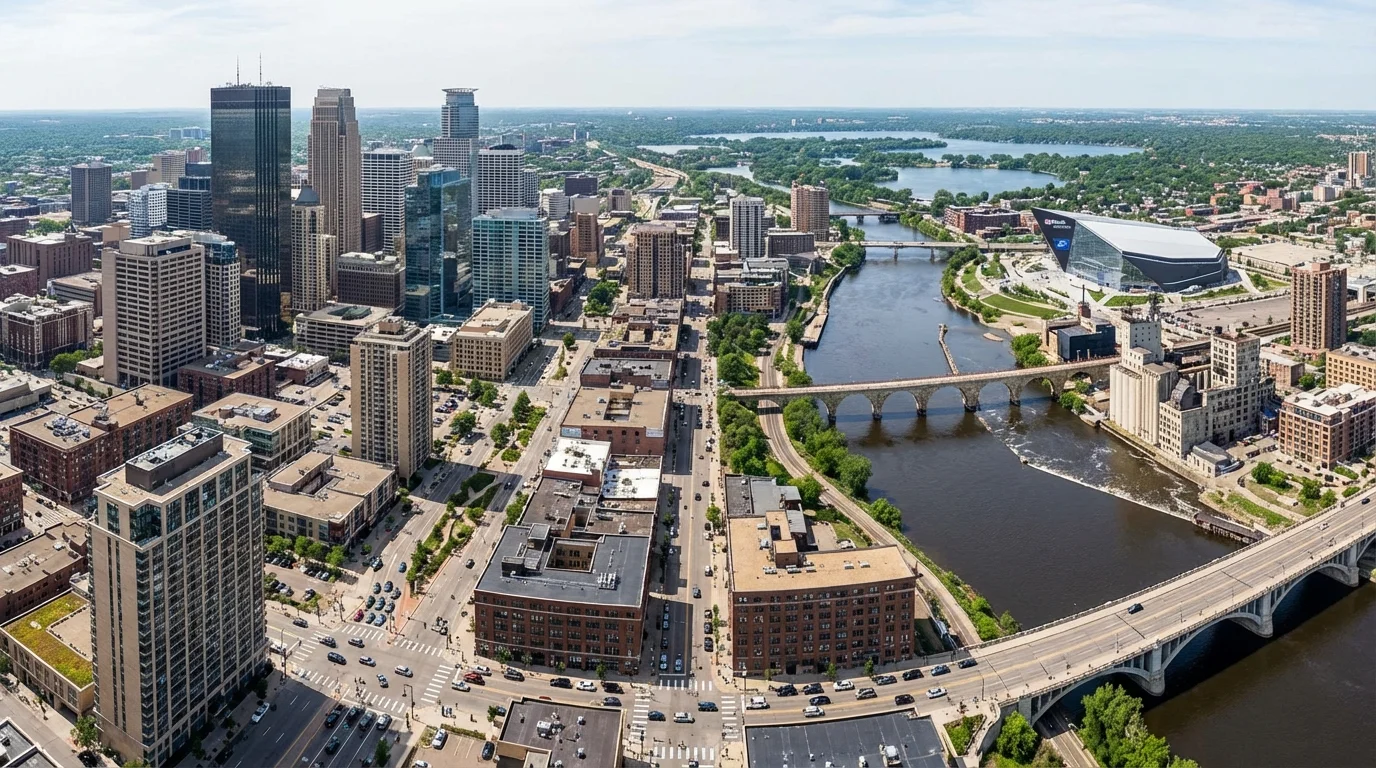
Minneapolis serves as a strategic logistics hub in the American Midwest, offering exceptional connectivity and infrastructure for freight transportation. The city's location provides access to major interstate highways, including I-94, I-35, and I-90, creating an extensive network for domestic distribution. Minneapolis benefits from its proximity to the Twin Cities metropolitan area, which hosts numerous warehousing facilities, distribution centers, and manufacturing plants. The region's robust transportation infrastructure includes the Minneapolis-Saint Paul International Airport and the Port of Minneapolis on the Mississippi River, complementing its strong ground transportation capabilities.
The Minneapolis area is home to diverse industries that generate substantial freight volumes, including medical technology, food processing, retail distribution, and advanced manufacturing. The region's cold climate also creates demand for specialized refrigerated transportation services. With its central location in North America and comprehensive logistics infrastructure, Minneapolis functions as an ideal origin point for cross-border shipments to Canada and other destinations, making it a key node in Control Terrestre's national network.
 Destination
Vancouver
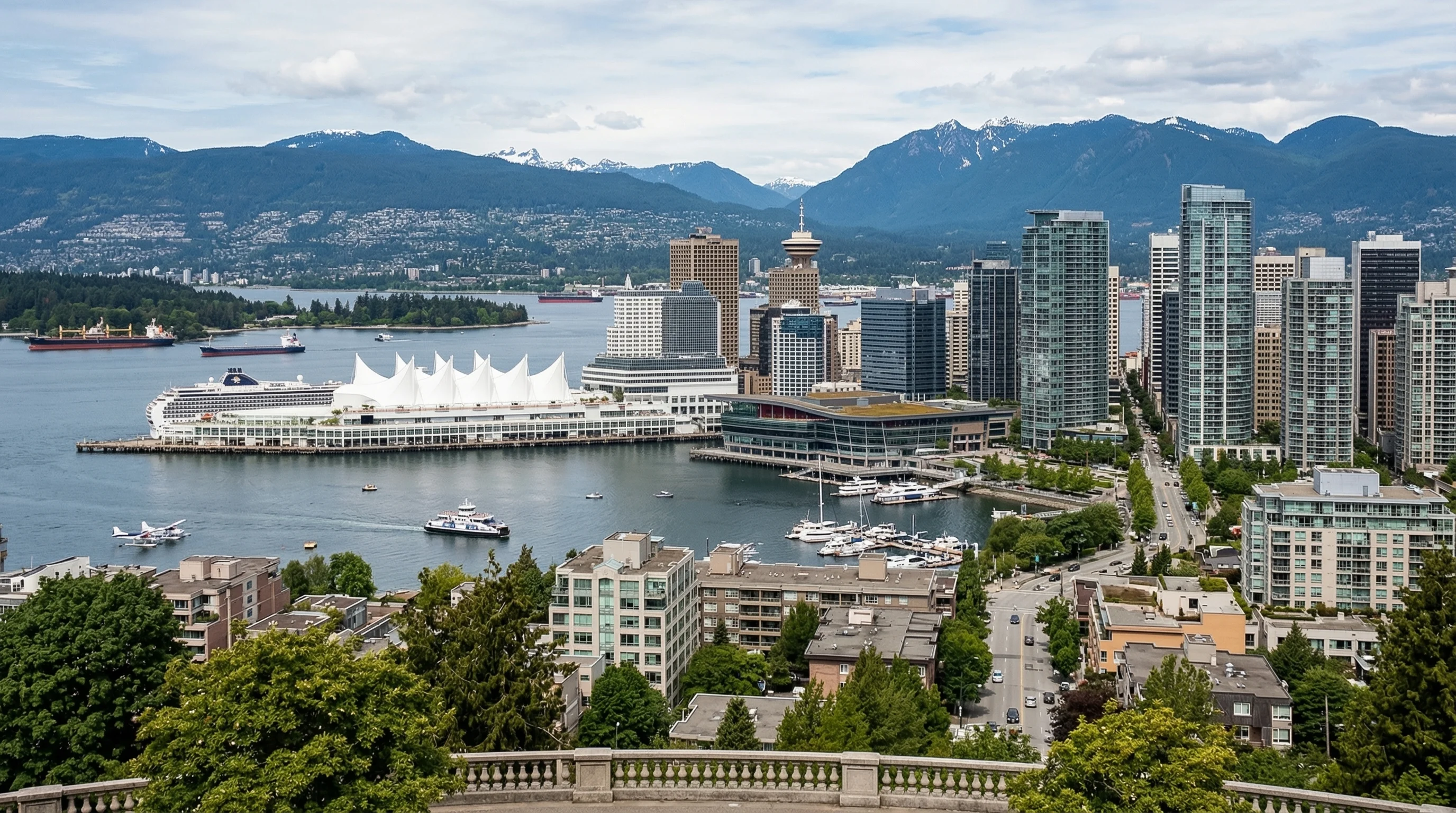
Vancouver stands as Canada's primary gateway to the Pacific, offering unparalleled strategic advantages for international logistics operations. Located on the country's west coast, Vancouver provides direct access to major Asian markets and serves as the terminus for numerous trans-Pacific shipping routes. The Port of Vancouver, Canada's largest port by tonnage, handles millions of containers annually and connects seamlessly with rail and trucking networks for inland distribution. The city's comprehensive transportation infrastructure includes the Vancouver International Airport, extensive highway systems, and connections to the Canadian National and Canadian Pacific rail networks.
The Vancouver metropolitan area hosts a diverse economic base that drives freight demand, including international trade, technology, film and television production, tourism, and natural resource industries. The region's port facilities and proximity to Asian markets make it a critical node for import-export operations. Vancouver's role as British Columbia's economic center also generates substantial domestic freight movements, with manufacturing, retail, and construction sectors requiring reliable transportation services. The city's strategic position makes it an essential destination for cross-border freight from the United States, particularly for time-sensitive and high-value shipments requiring efficient customs clearance and distribution.


Ready to ship your cargo?
Get a personalized quote for your freight.
Quote Now Minneapolis - Vancouver








