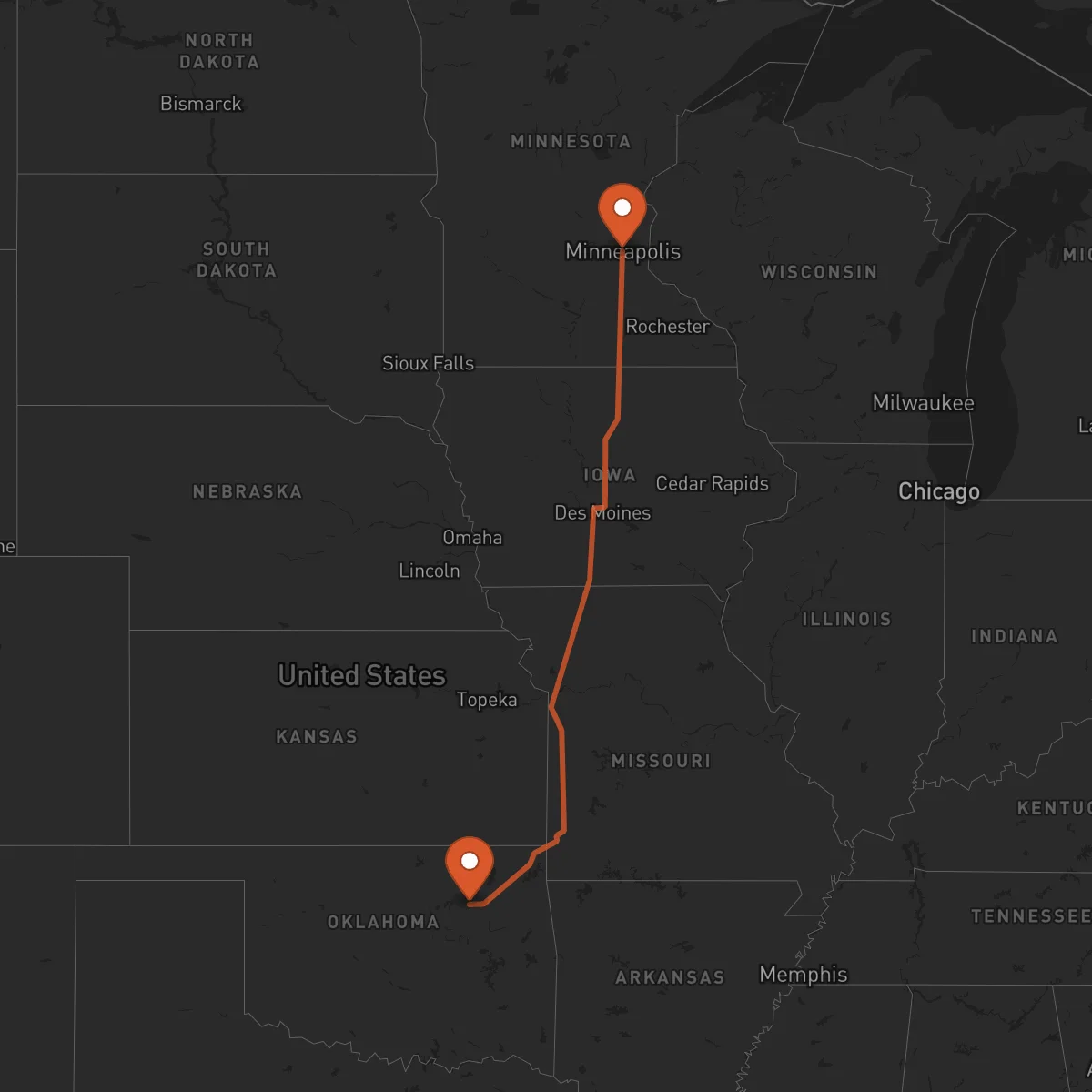
Minneapolis to Tulsa
Tulsa → MinneapolisFTL freight transportation service between Minneapolis and Tulsa. Reliable logistics solutions for your business.
Route Description
Everything you need to know about the corridor Minneapolis - Tulsa
The Minneapolis to Tulsa corridor represents a vital logistics connection between the Upper Midwest and the Southern Plains. This 1007 km route links Minnesota's economic powerhouse with Oklahoma's industrial center, facilitating the movement of goods between two dynamic regional economies. The corridor traverses multiple states, crossing diverse terrain and connecting major industrial hubs along the way.
The route primarily follows I-35, a major north-south interstate highway that serves as a critical freight artery. This corridor connects manufacturing centers, agricultural regions, and distribution hubs, making it essential for industries ranging from automotive to food processing. The strategic importance of this connection lies in its ability to bridge the manufacturing capabilities of the Upper Midwest with the energy and aerospace industries of Oklahoma.
Control Terrestre provides comprehensive FTL transportation services along this corridor, ensuring reliable and efficient freight movement. Our network of certified carriers and strategic partnerships enables us to offer dedicated transportation solutions that meet the specific needs of businesses operating between Minneapolis and Tulsa. We understand the unique requirements of this route and provide specialized equipment and services to handle various cargo types, from standard palletized goods to specialized freight.
Services for this Route
Available services for the corridor Minneapolis - Tulsa
 Origin
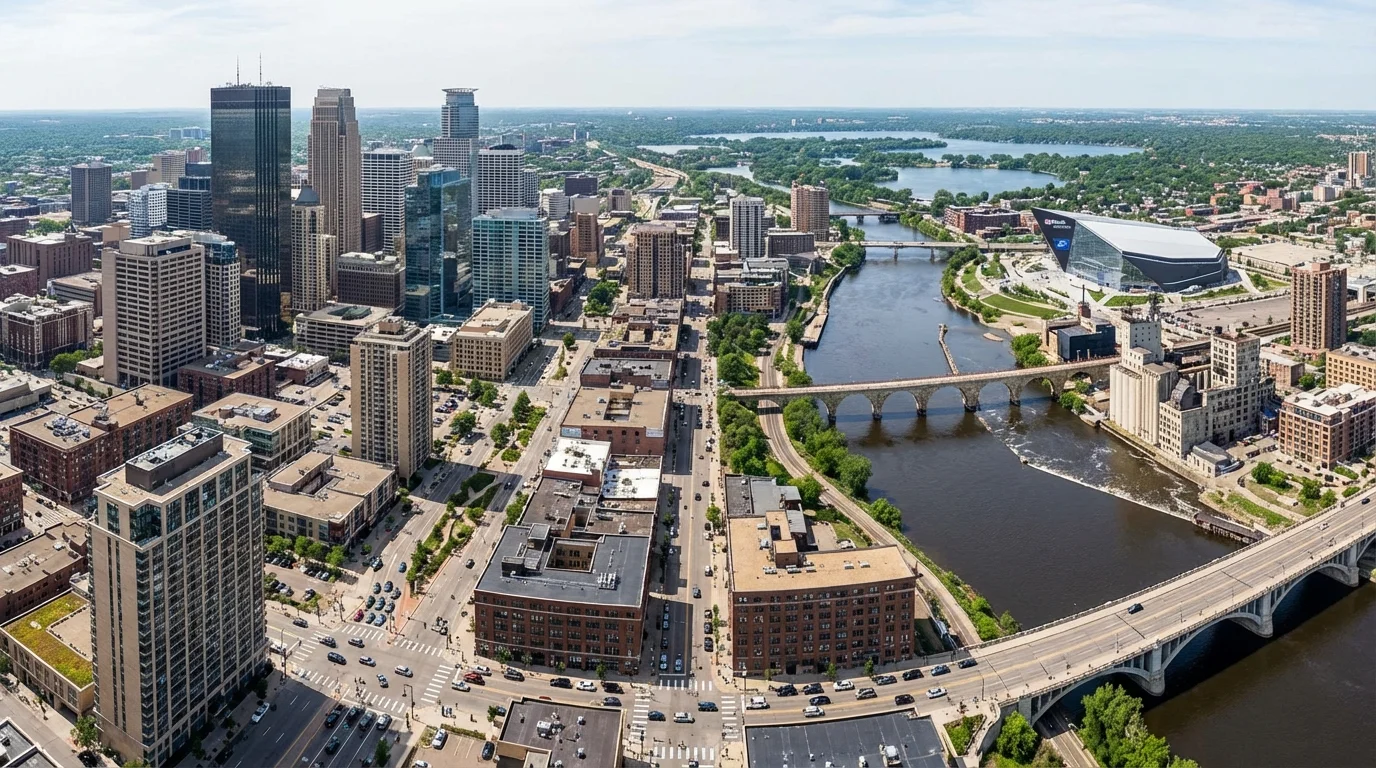
Minneapolis
Minneapolis serves as a major logistics hub in the Upper Midwest, strategically positioned at the crossroads of several major transportation networks. The city's location on the Mississippi River, combined with its extensive highway system including I-35, I-94, and I-90, makes it an ideal origin point for freight distribution. Minneapolis benefits from one of the most extensive inland port systems in the United States, with multiple intermodal facilities supporting both domestic and international trade.
The Minneapolis metropolitan area is home to a diverse industrial base, including food processing, medical technology, retail distribution, and advanced manufacturing. The region's strong agricultural heritage continues to influence its logistics sector, with significant grain and food product movements. The presence of major corporations and distribution centers in the area creates consistent freight demand, making it a strategic starting point for shipments heading south to Tulsa and beyond.
 Destination
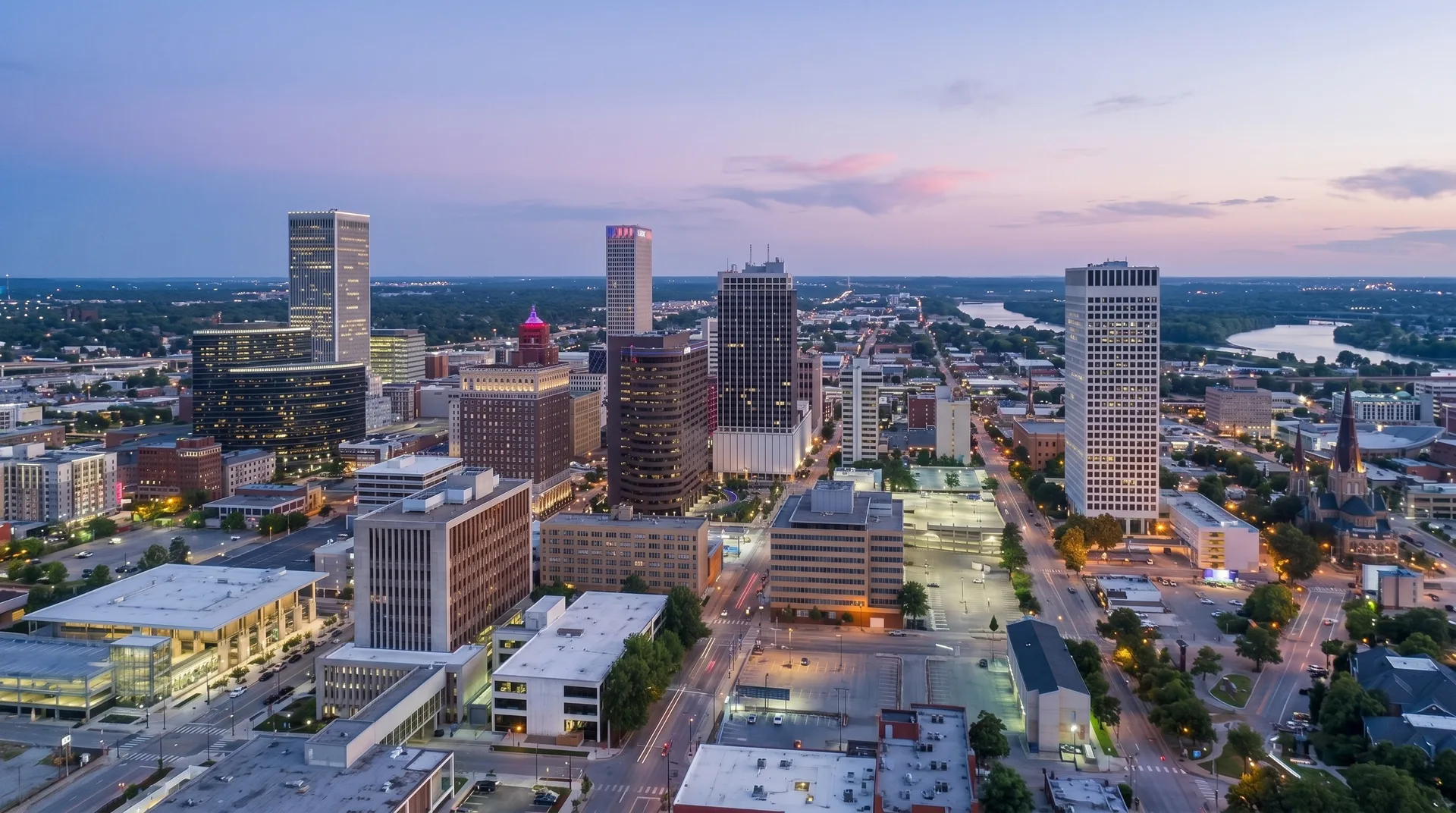
Tulsa
Tulsa stands as a key logistics and industrial center in Oklahoma, with a strategic location that provides access to multiple markets across the Southern United States. The city's transportation infrastructure includes major highways such as I-44 and I-35, as well as the Tulsa Port of Catoosa, providing multimodal shipping capabilities. Tulsa's geographic position makes it an ideal distribution point for goods destined for the central and southern regions of the country.
The Tulsa economy is characterized by strong energy, aerospace, and manufacturing sectors. The presence of major energy companies and their supply chains creates substantial freight movement in and out of the city. Additionally, Tulsa's growing logistics and distribution industry, supported by its central location and excellent transportation connections, makes it an attractive destination for businesses seeking efficient distribution solutions. The city's industrial parks and warehousing facilities are well-equipped to handle various types of freight, supporting the diverse needs of shippers using the Minneapolis-Tulsa corridor.










