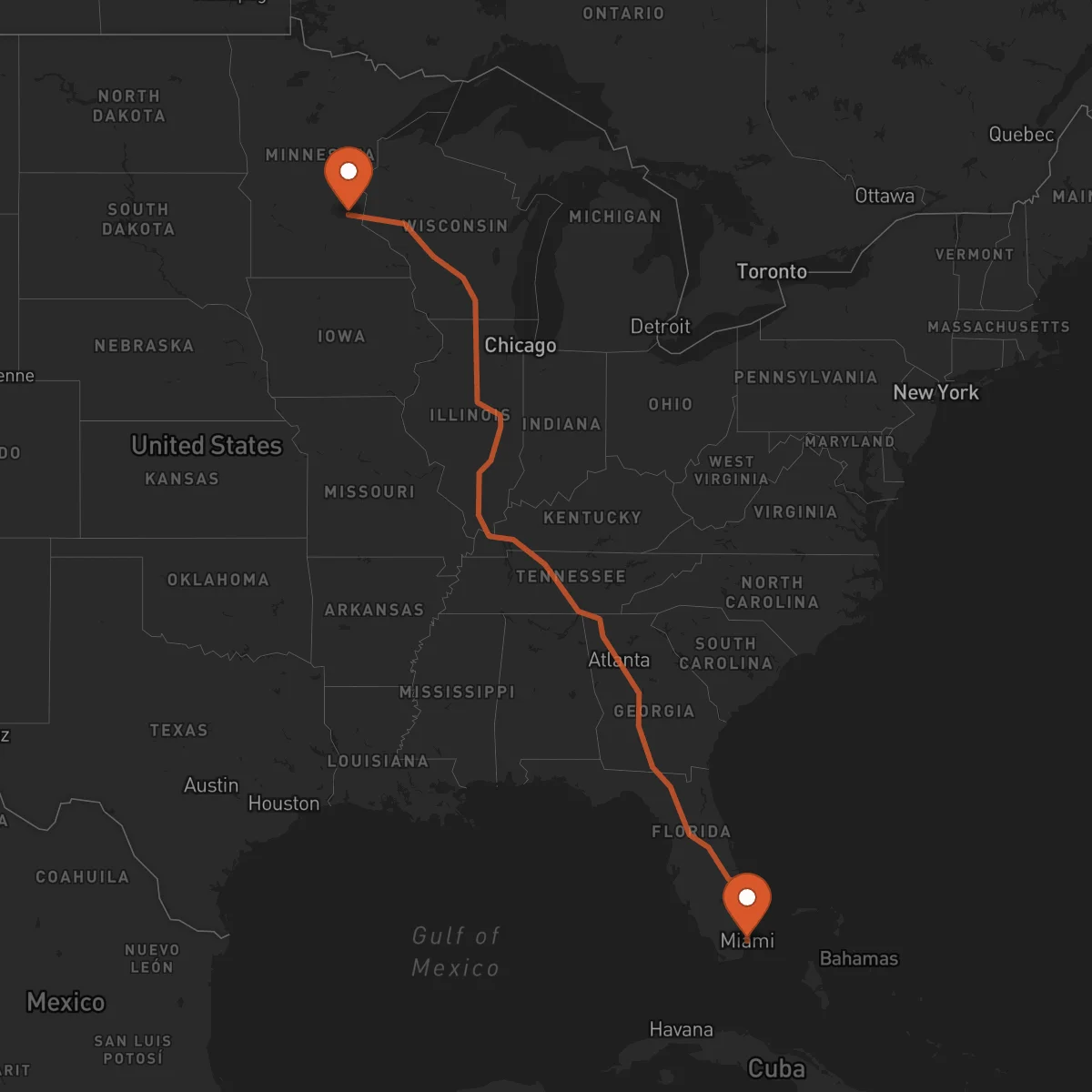
Minneapolis to Miami
Miami → MinneapolisFTL freight transportation service between Minneapolis and Miami. Reliable logistics solutions for your business.
Route Description
Everything you need to know about the corridor Minneapolis - Miami
The Minneapolis to Miami corridor represents a vital domestic freight route connecting the Upper Midwest to the Southeast United States. This 2,436 km journey traverses a diverse economic landscape, linking the industrial heartland with one of America's most important international trade gateways. The corridor facilitates the movement of goods between two distinct economic regions, serving as a crucial supply chain artery for businesses operating across multiple states.
The economic significance of this corridor is underscored by the complementary nature of its endpoints. Minneapolis serves as a major distribution hub for the northern United States, with strong manufacturing, agricultural, and retail sectors. Meanwhile, Miami functions as the primary gateway to Latin American and Caribbean markets, hosting one of the busiest container ports in the nation and serving as a critical logistics center for international trade. This creates a dynamic flow of goods moving in both directions.
Key industries utilizing this corridor include automotive parts, agricultural products, retail merchandise, electronics, and industrial equipment. The route also supports the movement of seasonal goods, with agricultural products from the Midwest heading south during harvest seasons, while consumer goods and imports from Latin America flow north through Miami's port facilities.
Control Terrestre optimizes freight operations along this corridor through our extensive network of certified carriers and strategic partnerships. Our dedicated FTL services ensure that shipments maintain their integrity throughout the journey, with direct delivery eliminating the handling risks associated with consolidated freight. We leverage our C-TPAT-certified partners to provide secure, efficient transportation that meets the demanding timelines of modern supply chains.
Services for this Route
Available services for the corridor Minneapolis - Miami
 Origin
Minneapolis
Minneapolis stands as a strategic logistics hub in the Upper Midwest, offering exceptional connectivity for freight transportation. The city's location at the crossroads of major interstate highways, including I-94 and I-35, provides direct access to both coasts and southern markets. Minneapolis benefits from a robust transportation infrastructure that includes the Minneapolis-Saint Paul International Airport and the Port of Minneapolis on the Mississippi River, creating multimodal shipping options for businesses.
The Minneapolis metropolitan area hosts a diverse economic base with strong representation in food processing, medical technology, retail (home to several Fortune 500 companies), and advanced manufacturing. The region's cold climate and agricultural surroundings make it a key center for food production and storage, while its educational institutions support a thriving technology and research sector. These industries generate consistent freight volume, particularly in specialized equipment, temperature-sensitive products, and high-value electronics that require dedicated transportation solutions.
 Destination
Miami
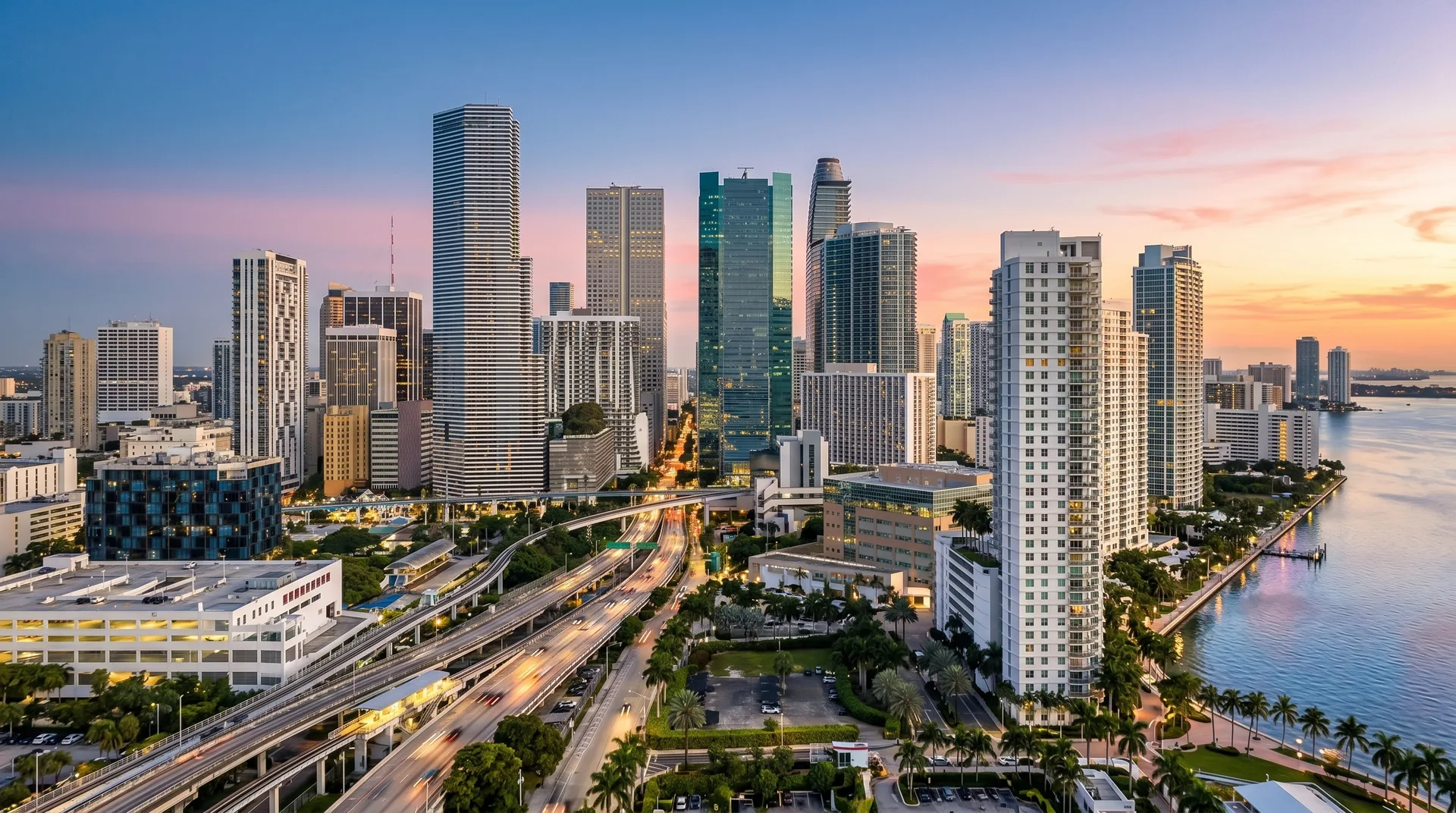
Miami serves as a critical logistics gateway for both domestic and international freight movement, strategically positioned at the southeastern tip of the United States. The city's proximity to Latin American and Caribbean markets, combined with its status as home to the largest containerized cargo port in the state, makes it an essential node in North American supply chains. Miami International Airport ranks among the top air cargo facilities in the nation, handling significant volumes of perishable goods, electronics, and pharmaceuticals.
The Miami metropolitan area's economy is heavily influenced by international trade, tourism, and financial services. The region is a major hub for import/export activities, particularly with Latin America, driving consistent demand for freight transportation services. Key industries include cruise line operations, agriculture (especially tropical fruits), medical devices, and consumer goods distribution. Miami's year-round warm climate and status as a tourist destination also create seasonal freight patterns, with increased volumes of retail merchandise and perishable goods flowing through the region's logistics infrastructure.










