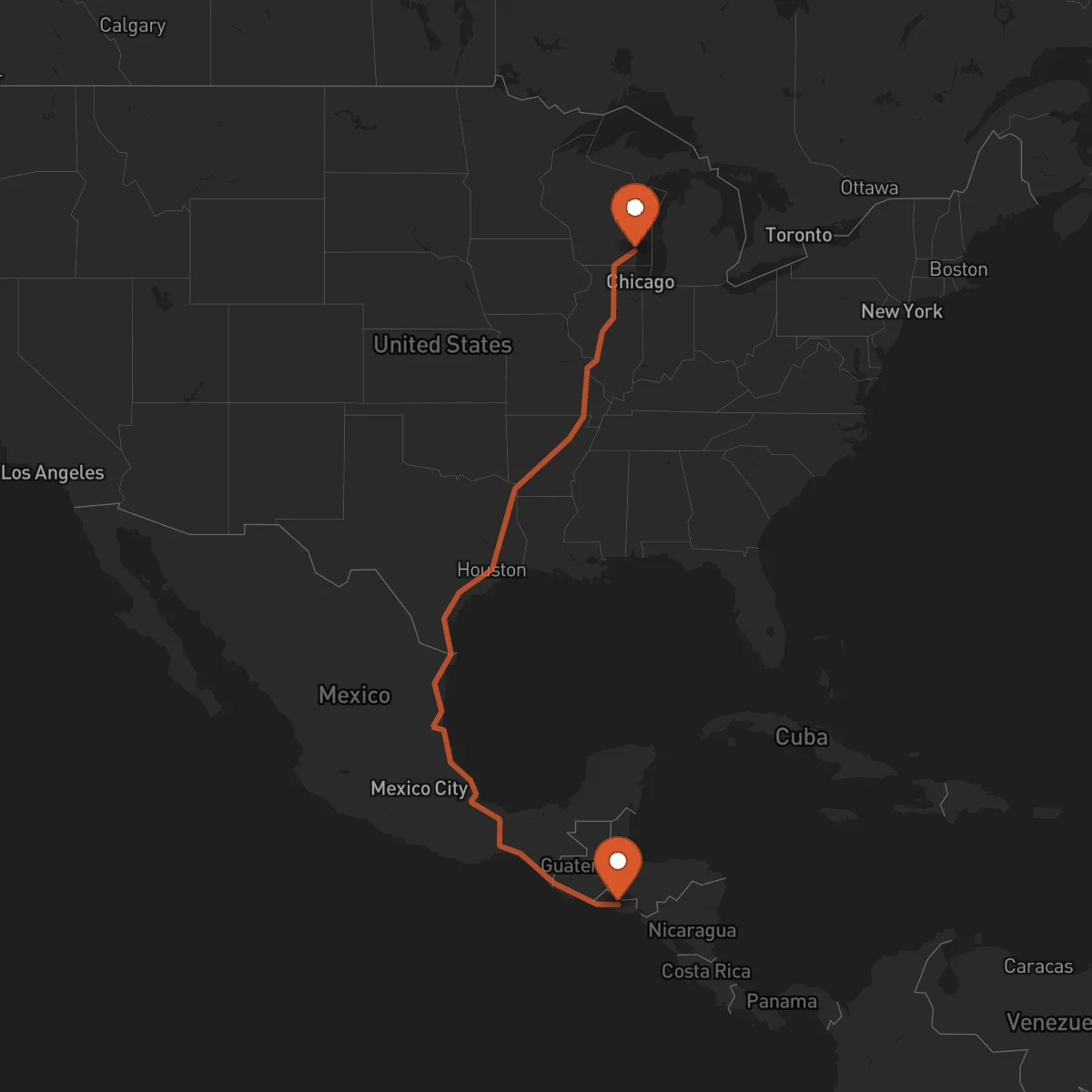
Milwaukee to San Vicente
San Vicente → MilwaukeeFTL freight transportation service between Milwaukee and San Vicente. Reliable logistics solutions for your business.
Route Description
Everything you need to know about the corridor Milwaukee - San Vicente
The Milwaukee to San Vicente corridor represents a critical North-South trade artery connecting the industrial heartland of the United States with the growing markets of Central America. This cross-border route, spanning approximately 3,270 km, facilitates the essential movement of goods between a major U.S. manufacturing hub and El Salvador's key economic region, navigating through Mexico and Guatemala. Strategically, it supports integrated supply chains, enabling U.S. manufacturers to access Central American assembly plants and export markets, while allowing Salvadoran producers to reach North American consumers with full truckload (FTL) efficiency. The corridor's importance is underscored by its role in regional trade agreements and the continuous flow of automotive parts, industrial machinery, consumer goods, and agricultural products.
Economically, the route links the robust industrial base of the Upper Midwest with El Salvador's dynamic export-oriented economy. Milwaukee's legacy in heavy manufacturing, brewing, and automotive components finds a counterpart in San Vicente's agricultural richness—particularly coffee, sugar, and grains—along with a significant textile and apparel assembly sector. This creates a balanced trade flow where finished goods and raw materials move bi-directionally. Companies leveraging this corridor typically include automotive suppliers, food and beverage manufacturers, industrial equipment distributors, and agricultural commodity exporters seeking reliable, direct land transportation without the complexity of consolidation.
Infrastructure on this corridor relies on a sequence of major highways. From Milwaukee, primary routes like I-94/I-41 south connect to the U.S.-Mexico border. After crossing into Mexico, the journey continues on Mexico's federal highway network, notably the toll roads (autopistas) of the central corridor, before entering Guatemala via the principal border crossings. The Pan-American Highway (CA-1) forms the backbone through Guatemala and into El Salvador, terminating near San Vicente. Key border crossings, such as those at Brownsville/Matamoros and Tecún Umán/El Carmen, are pivotal transfer points where customs procedures, documentation compliance (e.g., NAFTA/USMCA), and safety protocols are rigorously managed.
Control Terrestre facilitates seamless operations on this complex corridor through our strategic alliance of certified transportation providers. Our partners hold essential credentials like C-TPAT, FAST, and BASC, ensuring trusted and secure cross-border processes. We manage the entire door-to-door FTL journey, coordinating dedicated or expedited services as needed, and handling the intricacies of multiple customs jurisdictions. By offering specialized equipment—including dry vans, reefers for perishables, and flatbeds for industrial goods—and leveraging our network's expertise in Central American logistics, we provide our clients with a single, human point of contact to optimize their supply chain across this vital international route.
Services for this Route
Available services for the corridor Milwaukee - San Vicente
 Origin
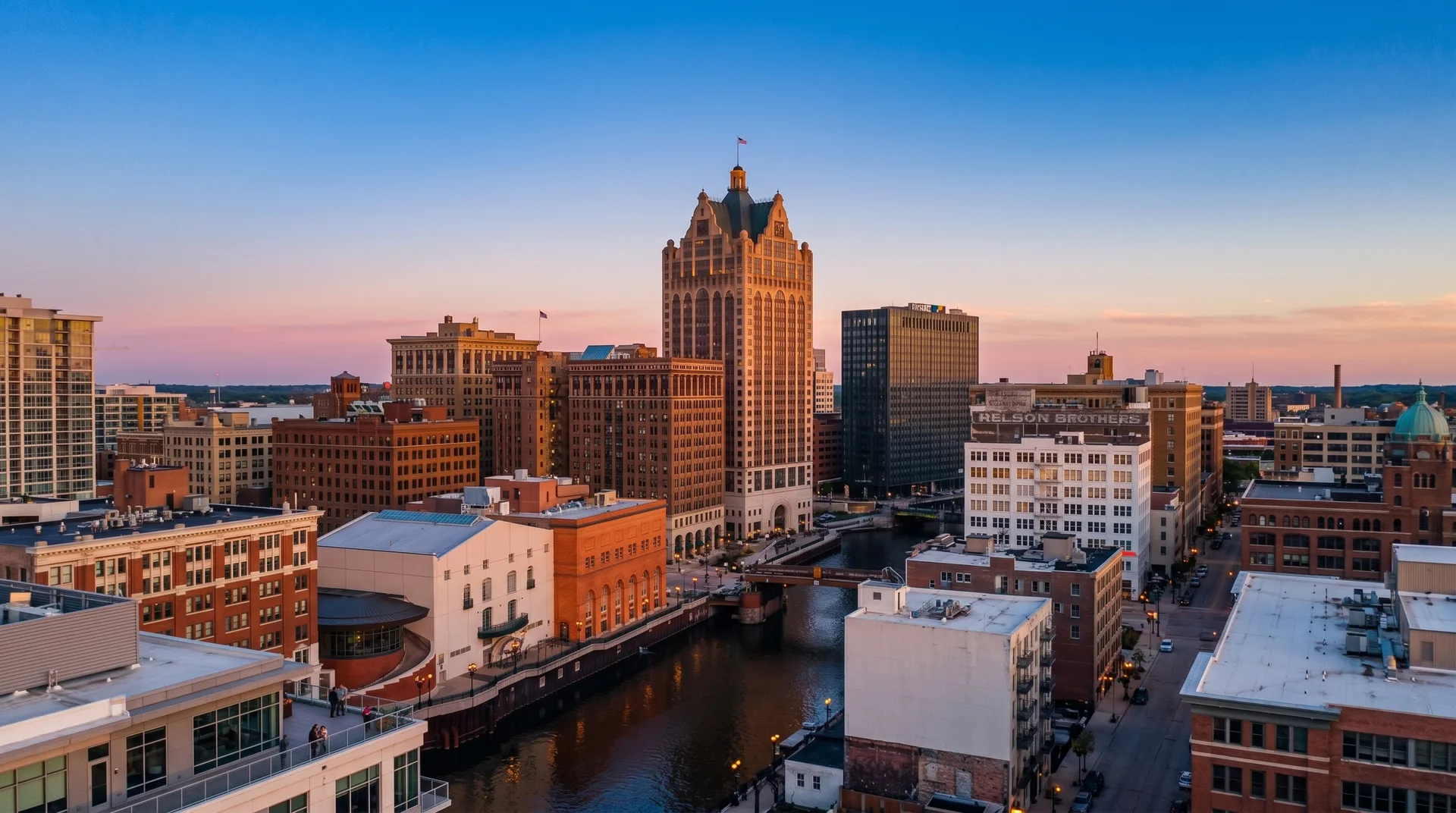
Milwaukee
Milwaukee, Wisconsin, serves as a strategic logistics origin due to its prime location on the western shore of Lake Michigan and its status as a core hub in the U.S. industrial corridor. The city is a nexus for multimodal transportation, featuring direct access to the Great Lakes/St. Lawrence Seaway via the Port of Milwaukee, extensive Class I railroad intermodal facilities (Union Pacific, Canadian Pacific), and a dense network of major highways including I-94, I-41, and I-894. This infrastructure provides efficient connections east to Chicago and west to Minneapolis, and south to the key Mexico-bound corridors.
The economic engine of Milwaukee is deeply rooted in advanced manufacturing. It is a global center for brewing (headquarters of major corporations), heavy machinery, automotive parts manufacturing (with a strong presence of Tier 1 and 2 suppliers), and metal fabrication. Additionally, the region has a strong presence in food processing, biomedical technology, and printing. These industries generate consistent, high-volume freight requiring reliable FTL transportation to national and international markets. The labor force is skilled in industrial trades, supporting the consistent output of goods destined for export.
For freight transportation, Milwaukee's infrastructure is designed for heavy industrial output. The city's numerous trucking terminals and logistics parks are equipped to handle 48' and 53' dry vans, reefers, and specialized equipment. Its highway grid allows for direct, uncongested routing to southern border crossings compared to more saturated coastal ports, making it an optimal launch point for cross-border trucking into Mexico and beyond. Control Terrestre leverages this origin's robust capabilities to initiate efficient, long-haul FTL shipments for our clients' manufactured goods.
 Destination
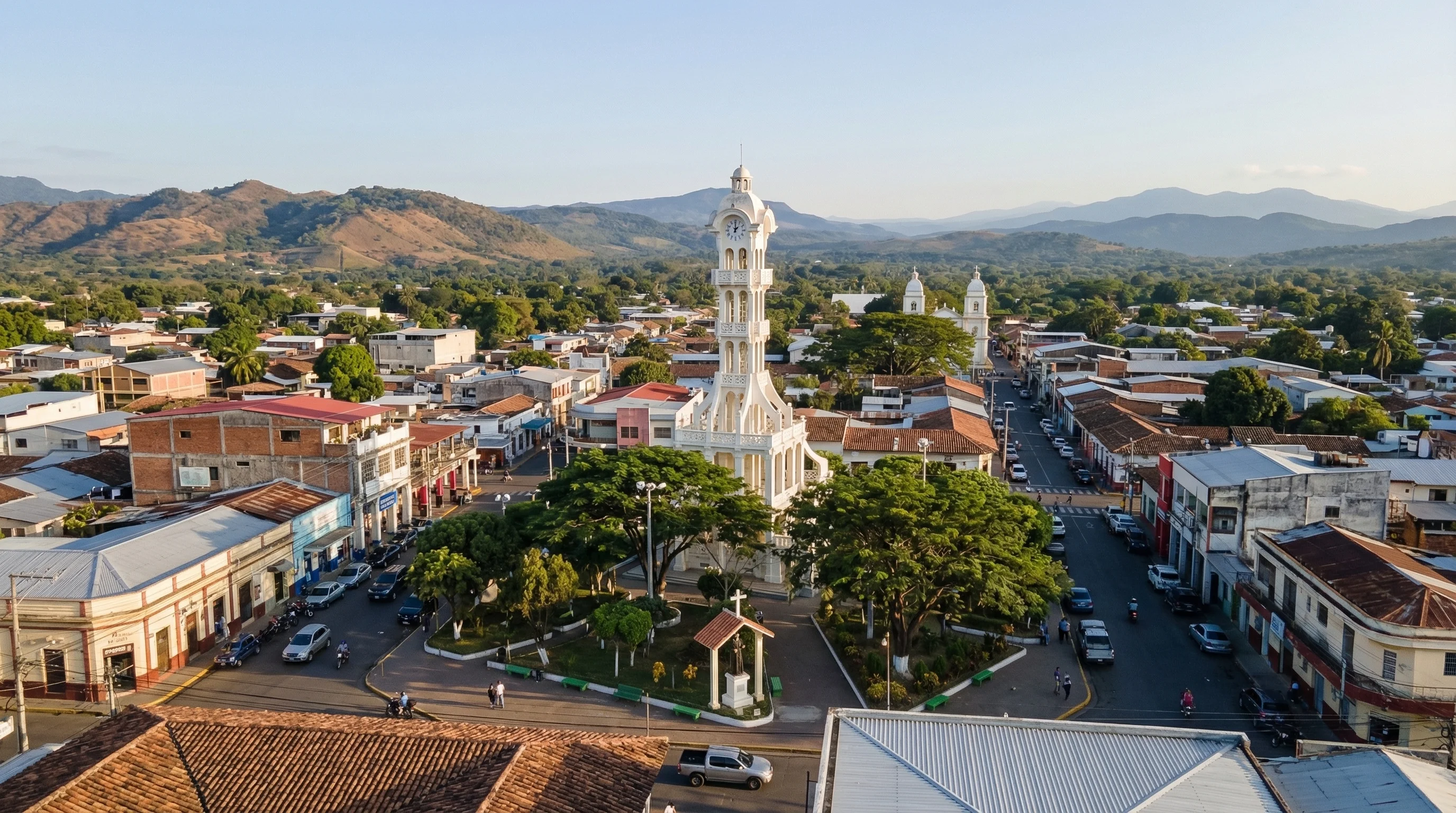
San Vicente
San Vicente, the capital of its namesake department in El Salvador, is a strategic agricultural and commercial logistics destination in the country's central region. Its location provides direct access to the Pan-American Highway (CA-1), the principal north-south artery running through El Salvador, connecting it seamlessly to the capital, San Salvador (approximately 50 km west), and the primary Pacific port of Acajutla. This highway connectivity is crucial for final-mile distribution and for linking to the broader Central American overland network. While not a port city itself, its position allows for efficient drayage to and from Acajutla for international ocean freight connections.
The economy of the San Vicente department is predominantly agricultural, forming the backbone of its export profile. Key sectors include coffee cultivation (a major high-value export), sugarcane processing, and the production of basic grains like maize and beans. Additionally, the region supports livestock and has a developing manufacturing sector, often linked to textile maquilas (assembly plants) located in nearby free zones. This creates demand for inbound transportation of raw materials, machinery, and consumer goods, as well as outbound movement of agricultural commodities and finished apparel.
Freight infrastructure in and around San Vicente is tailored to support its agricultural and light industrial output. The road network, centered on the CA-1, handles significant truck traffic carrying bulk agricultural products in tankers (for liquid inputs), hoppers (for grains), and flatbeds (for heavy equipment). Warehousing and distribution centers are typically clustered along the highway corridor. For Control Terrestre's clients, this means we can provide direct, door-to-door FTL service to farms, processing plants, and industrial parks in the region, utilizing our full range of equipment—from dry vans for packaged goods to tankers for liquids—ensuring cargo moves efficiently from the North American origin to its final destination in this productive Salvadoran heartland.


Ready to ship your cargo?
Get a personalized quote for your freight.
Quote Now Milwaukee - San Vicente








