Milwaukee to Colima
Colima → MilwaukeeFTL freight transportation service between Milwaukee and Colima. Reliable logistics solutions for your business.
Route Description
Everything you need to know about the corridor Milwaukee - Colima
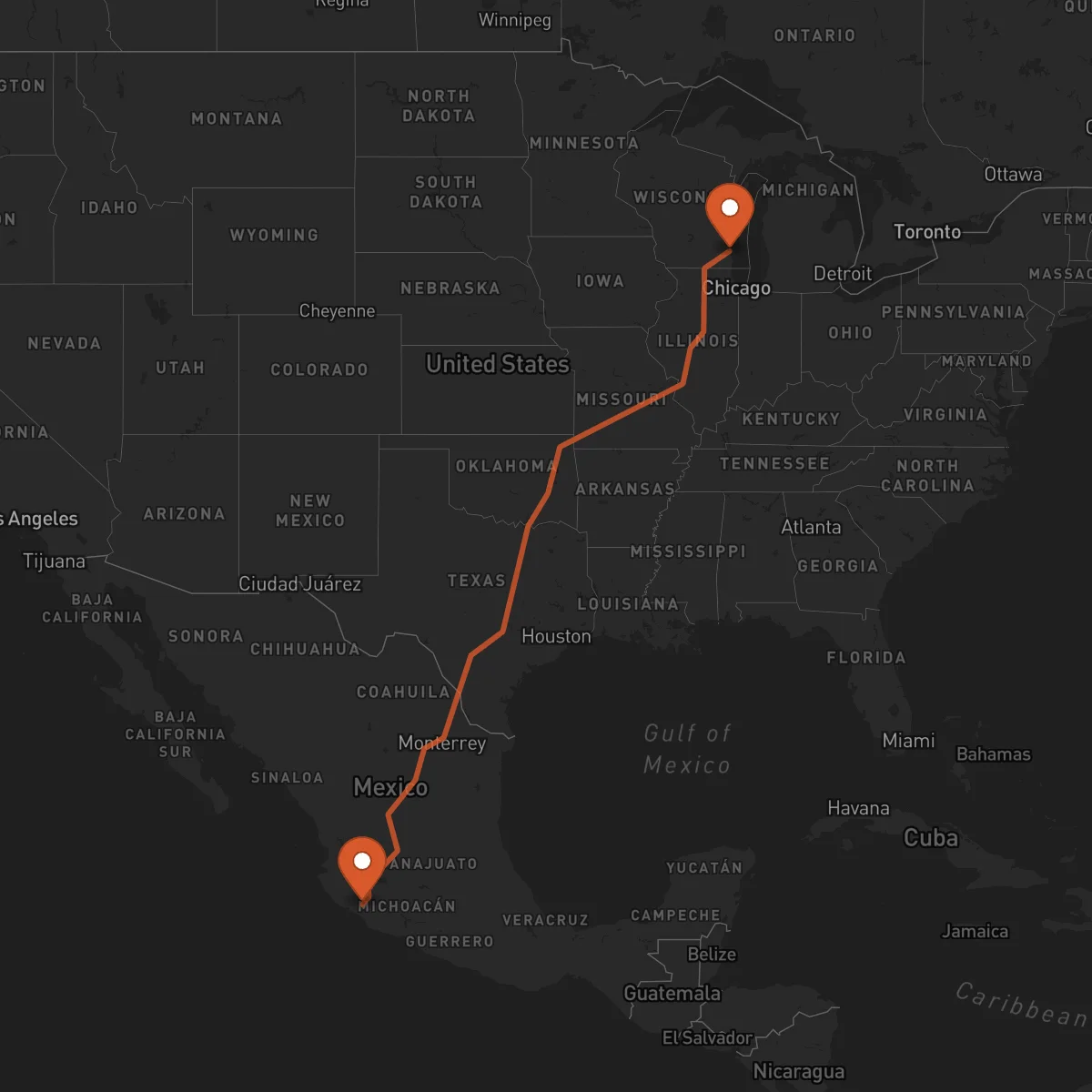
The logistics corridor connecting Milwaukee, Wisconsin to Colima, Colima represents a vital cross-border freight route spanning approximately 3,032 kilometers. This corridor links the industrial heartland of the American Midwest with Mexico's Pacific coast, facilitating the movement of goods between two dynamic economic regions. The route traverses key transportation hubs and industrial zones, creating a strategic supply chain connection that supports both manufacturing and distribution networks.
The economic significance of this corridor is underscored by the complementary industrial strengths of both regions. Milwaukee serves as a major manufacturing center with strong automotive, machinery, and food processing sectors, while Colima has developed as an important industrial and agricultural hub in western Mexico. This creates natural trade flows where components, raw materials, and finished goods move in both directions, supporting integrated North American production systems.
Key transportation infrastructure along this corridor includes major interstate highways such as I-94, I-35, and I-25, which connect to Mexican Federal Highway 15D. The primary border crossing at Laredo/Nuevo Laredo serves as the main gateway for cross-border freight movement, with alternative options including El Paso/Juarez for certain shipments. Control Terrestre facilitates seamless operations on this corridor through our C-TPAT certified carriers, providing full truckload (FTL) services with integrated customs clearance and door-to-door delivery solutions that ensure efficient cargo movement between Milwaukee and Colima.
Services for this Route
Available services for the corridor Milwaukee - Colima
 Origin
Milwaukee
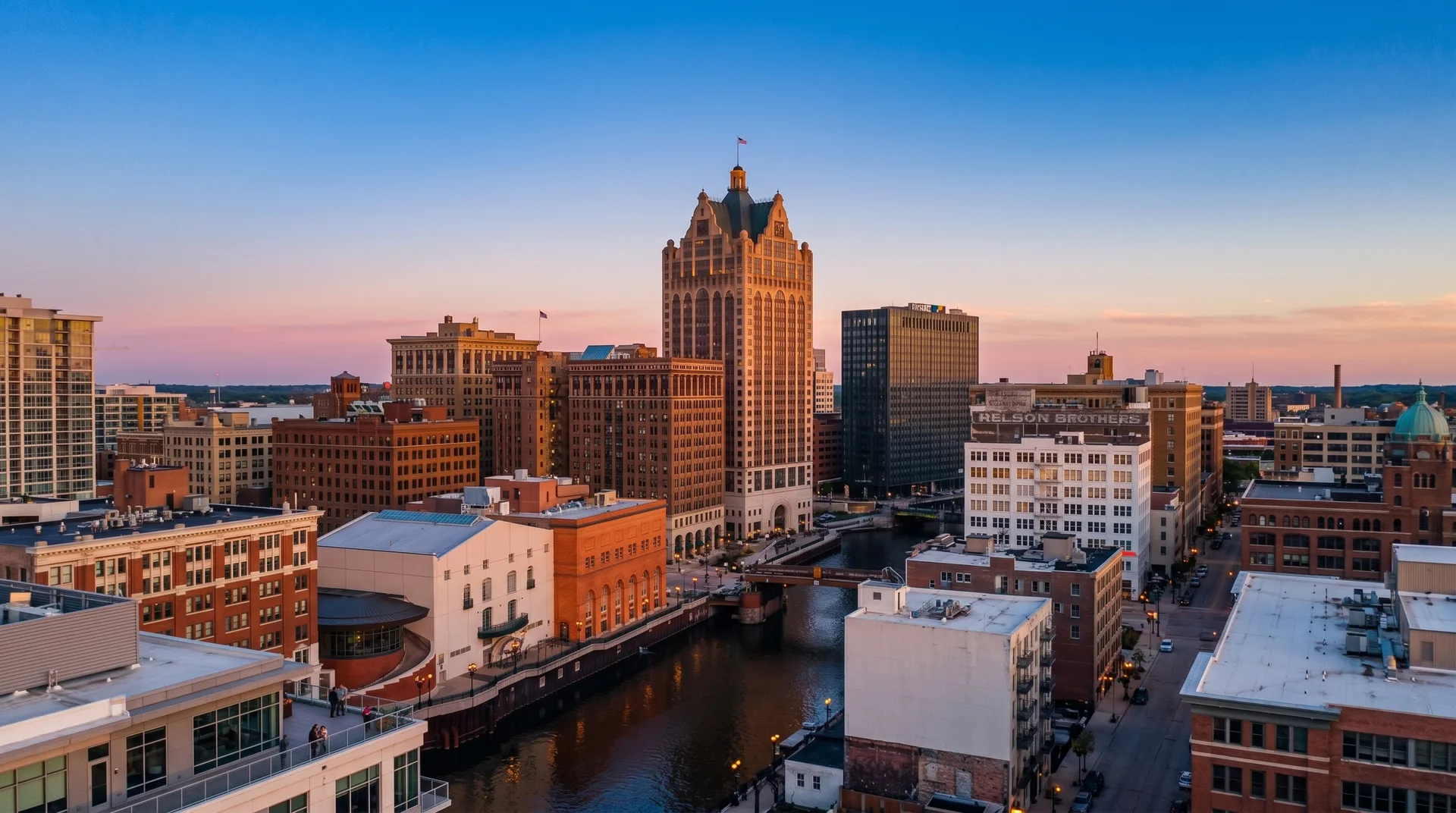
Milwaukee, Wisconsin serves as a strategic logistics hub in the American Midwest, positioned advantageously along the western shore of Lake Michigan. The city's location provides excellent connectivity through multiple transportation modes, including the Port of Milwaukee for maritime freight, General Mitchell International Airport for air cargo, and extensive rail networks operated by Class I railroads. The region's robust highway infrastructure, including I-94 and I-43, provides direct connections to major Midwestern markets and cross-border routes to Mexico.
The Milwaukee metropolitan area is characterized by diverse industrial strengths, particularly in advanced manufacturing, precision machinery, and food processing. The region hosts major operations in automotive components, medical devices, and brewing industries, creating consistent freight volumes for cross-border transportation. The presence of numerous industrial parks and distribution centers in the surrounding counties generates substantial demand for reliable freight services to Mexican manufacturing centers and agricultural regions.
 Destination
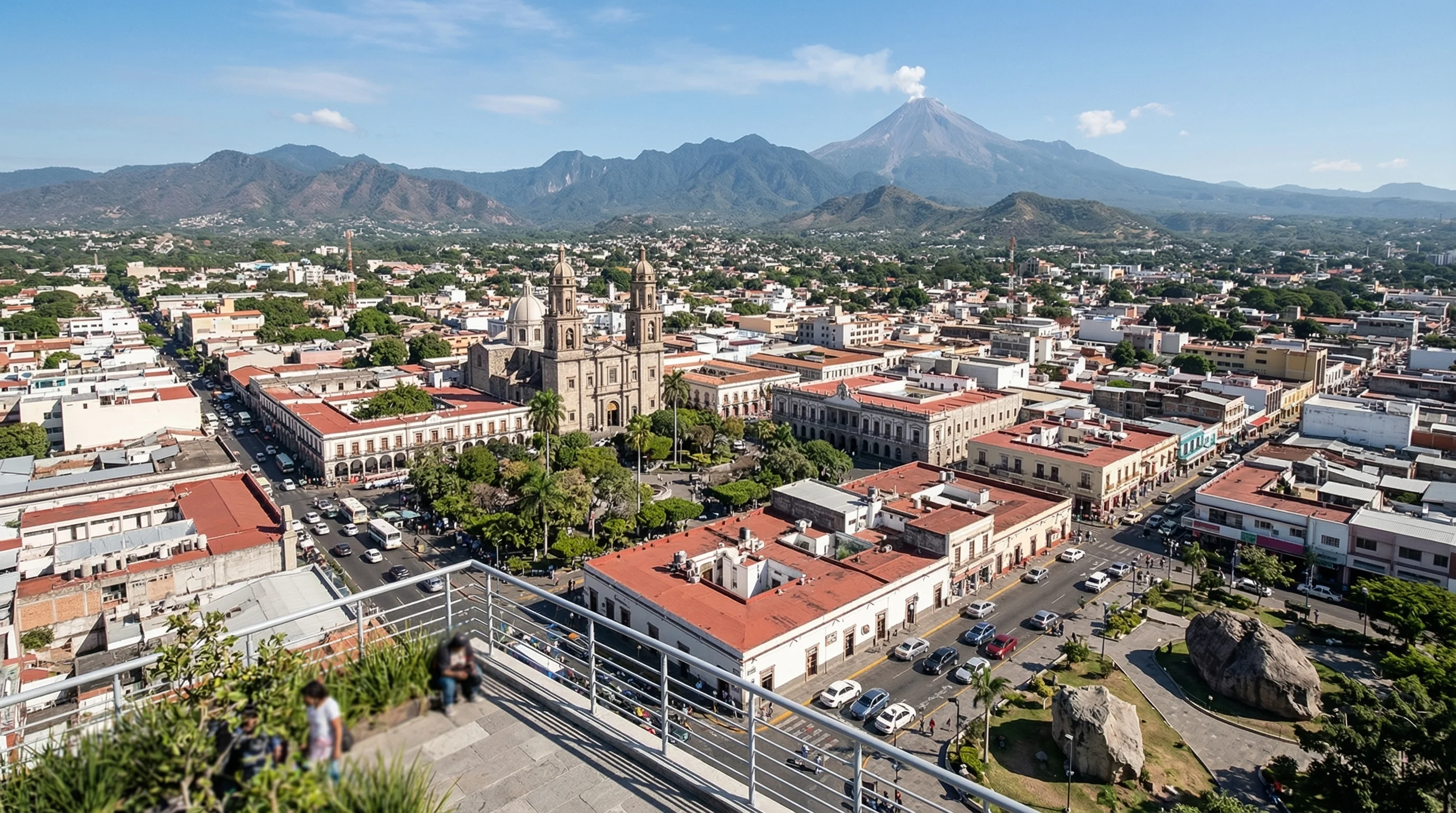
Colima, located on Mexico's Pacific coast, represents a strategic logistics point with unique geographical advantages. The state capital serves as the economic center of the region, positioned between major ports and industrial zones. Colima benefits from proximity to Manzanillo, Mexico's busiest cargo port, and maintains strong connections to Guadalajara, one of Mexico's largest industrial centers. The region's transportation infrastructure includes Federal Highway 110 and connections to the broader Mexican highway network, facilitating efficient cargo movement throughout western Mexico.
The Colima region has developed significant industrial capabilities, particularly in food processing, agriculture, and emerging manufacturing sectors. The state's economy is supported by strong agricultural production in fruits, vegetables, and coffee, complemented by growing food processing and packaging industries. Colima's strategic location makes it an important node for distribution to other Pacific coast destinations and provides access to Mexico's interior markets, creating consistent demand for cross-border freight services from U.S. suppliers and manufacturers.










