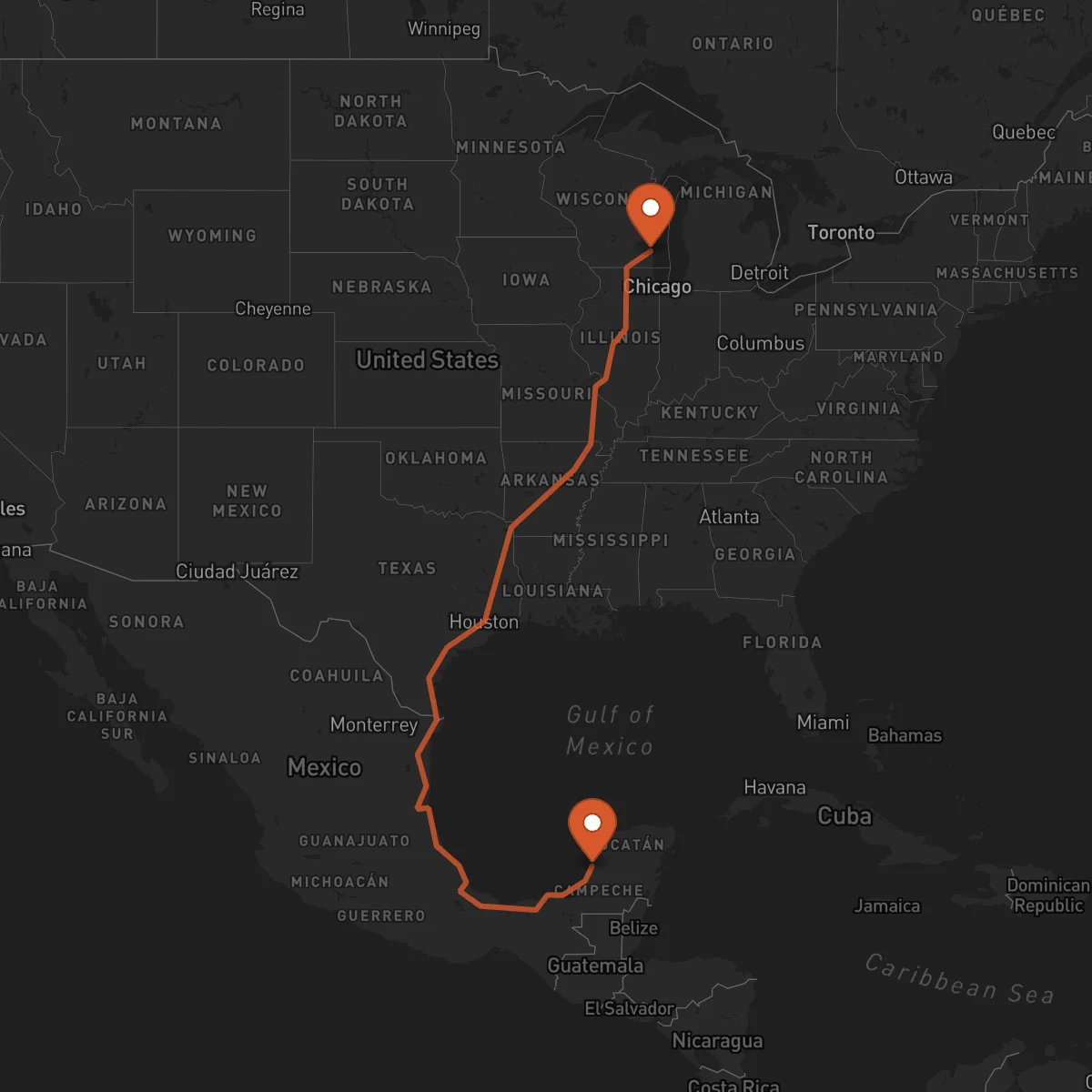
Milwaukee to Campeche
Campeche → MilwaukeeFTL freight transportation service between Milwaukee and Campeche. Reliable logistics solutions for your business.
Route Description
Everything you need to know about the corridor Milwaukee - Campeche
The logistics corridor between Milwaukee, Wisconsin and Campeche, Campeche represents a vital cross-border connection spanning approximately 2,593 kilometers. This route links the industrial heartland of the American Midwest with the strategic port city on Mexico's Gulf Coast, creating essential trade flows between two distinct economic regions. The corridor traverses diverse terrains and crosses multiple state and international boundaries, requiring expert coordination to ensure seamless freight movement.
The economic significance of this corridor is substantial, connecting Milwaukee's manufacturing and distribution sectors with Campeche's energy industry and growing industrial base. Milwaukee serves as a major logistics hub with access to the Great Lakes and extensive rail networks, while Campeche benefits from its position as a key port city and proximity to Mexico's oil and gas operations in the Gulf of Mexico. This creates a complementary trade relationship where industrial equipment, machinery, and manufactured goods flow south, while energy-related products and regional exports move north.
Transportation infrastructure along this corridor includes major interstate highways such as I-94, I-35, and I-35W connecting through key logistics hubs before transitioning to Mexico's Federal Highway 180. The primary border crossing at Laredo/Nuevo Laredo serves as the main gateway, with alternative options including Pharr/Reynosa for specialized freight. Control Terrestre's expertise in cross-border operations ensures efficient customs clearance, regulatory compliance, and optimized routing to minimize transit times while maintaining cargo security throughout the journey.
Services for this Route
Available services for the corridor Milwaukee - Campeche
 Origin
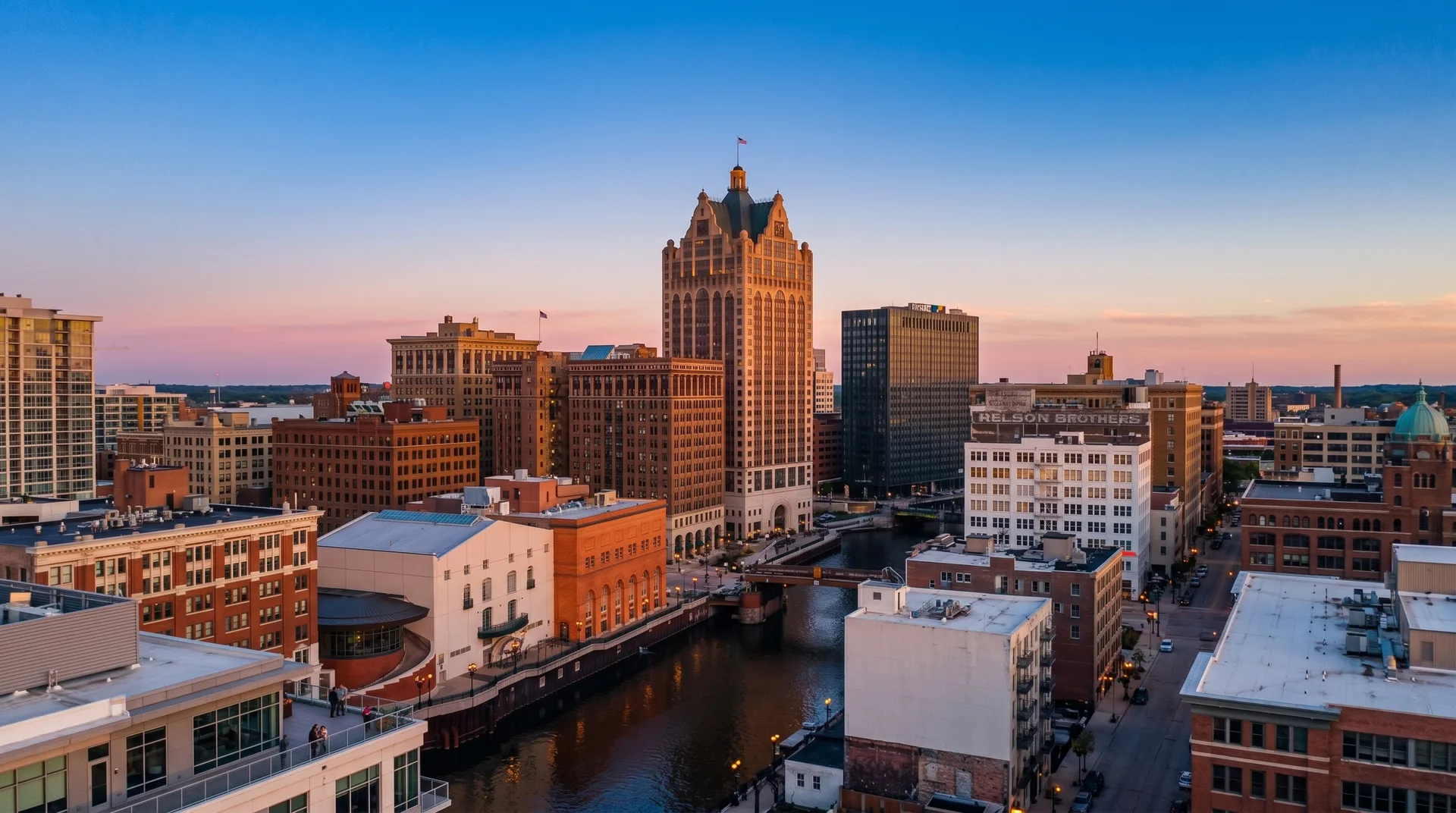
Milwaukee
Milwaukee, Wisconsin serves as a strategic logistics hub in the American Midwest, positioned on the western shore of Lake Michigan. The city's location provides multimodal transportation advantages, combining port access, extensive rail networks operated by major carriers, and connectivity to interstate highway systems. Milwaukee's infrastructure includes the Port of Milwaukee for Great Lakes shipping, direct rail connections to national networks, and proximity to Chicago's major logistics centers, creating a robust distribution ecosystem for manufacturers and distributors.
The economic base of Milwaukee centers on advanced manufacturing, machinery production, food processing, and medical equipment. Major employers include companies in the industrial, agricultural equipment, and precision manufacturing sectors, all requiring reliable freight transportation for both inbound raw materials and outbound finished products. The region's skilled workforce and established industrial base make it a consistent generator of full truckload freight moving to various destinations across North America.
 Destination
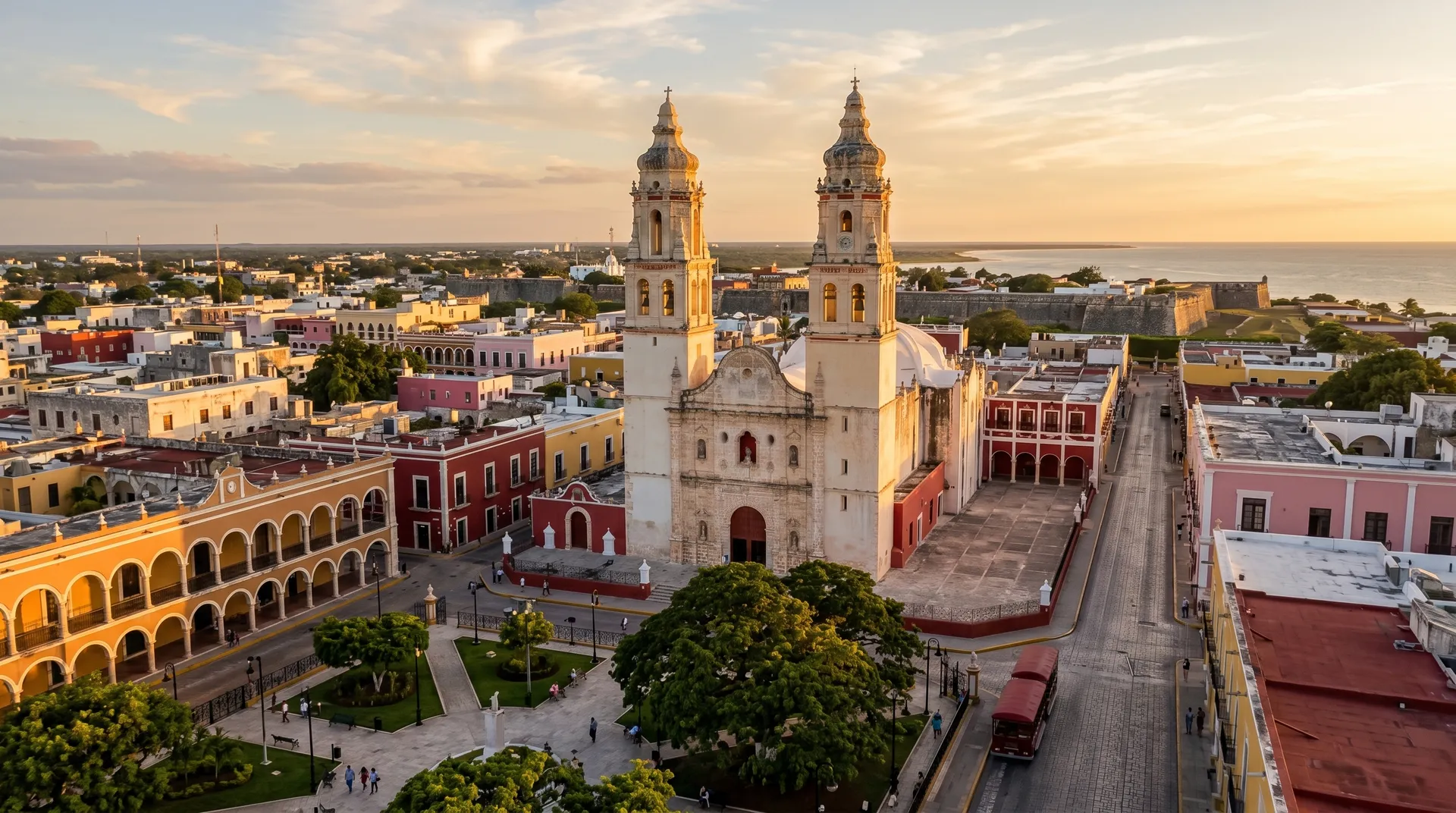
Campeche, located on Mexico's Gulf Coast, serves as a strategic logistics point for the Yucatán Peninsula and surrounding regions. The city's position provides access to maritime shipping routes through the Port of Campeche, which handles both commercial cargo and petroleum products. The region's transportation infrastructure includes Federal Highway 180 connecting to the broader Mexican highway network, as well as rail connections for bulk commodities and industrial materials. Campeche's airport also supports air freight operations for time-sensitive cargo.
The local economy is heavily influenced by the energy sector, with significant oil and gas operations in the surrounding waters and on-shore facilities. This creates substantial demand for specialized freight transportation, including heavy equipment, industrial machinery, and materials for energy infrastructure projects. Additionally, Campeche's growing industrial parks and manufacturing facilities contribute to freight flows, while the port facilitates export activities for regional products and imports of industrial supplies and consumer goods.










