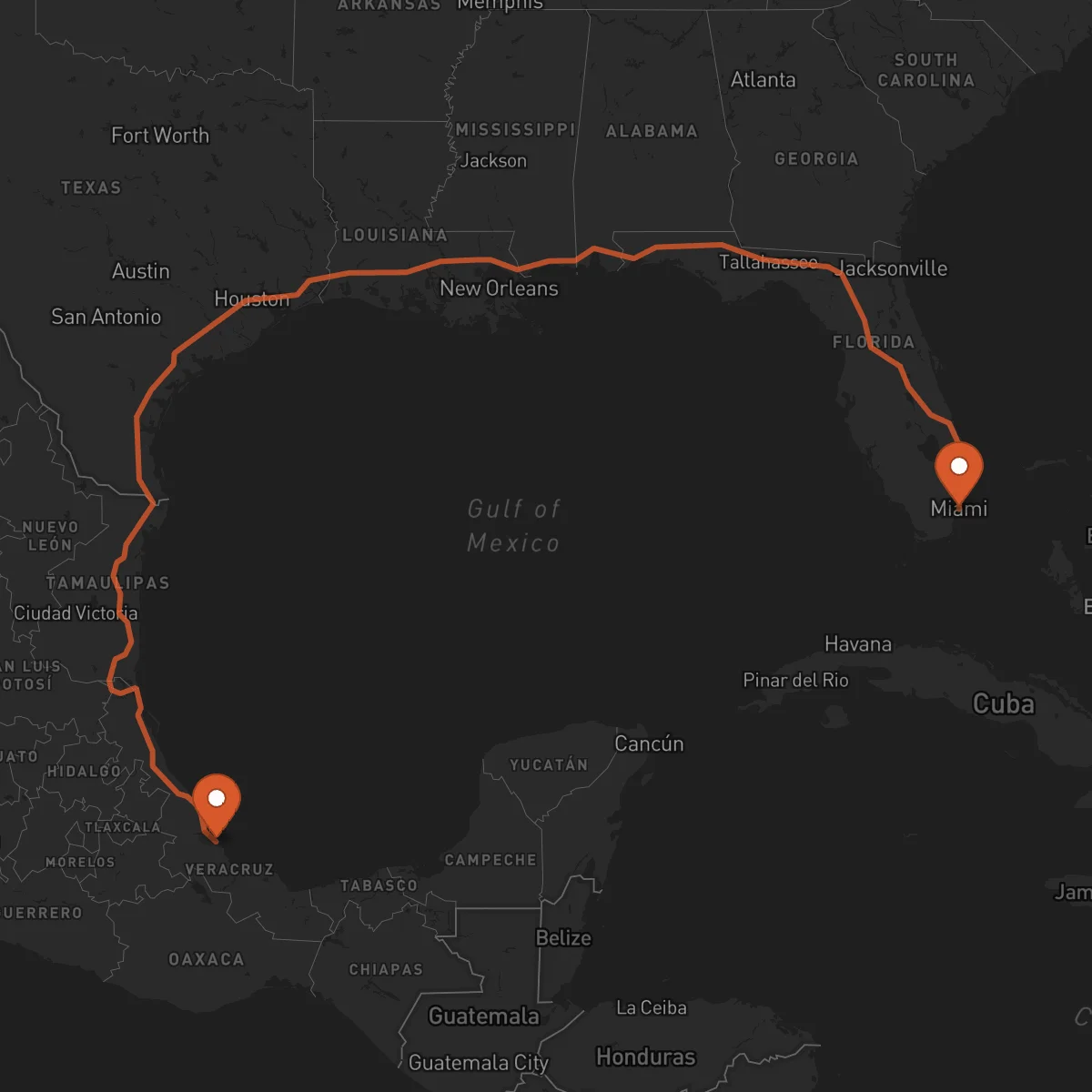
Miami to Veracruz
Veracruz → MiamiFTL freight transportation service between Miami and Veracruz. Reliable logistics solutions for your business.
Route Description
Everything you need to know about the corridor Miami - Veracruz
The Miami-Veracruz corridor represents a vital trade link connecting the southeastern United States with Mexico's Gulf coast. This 1,793 km route facilitates the movement of goods between two major economic hubs, supporting the growing trade relationship between the United States and Mexico. The corridor leverages Florida's strategic Atlantic port access and Veracruz's position as Mexico's primary Gulf port, creating a multimodal logistics solution for businesses operating across North America.
The economic significance of this corridor spans multiple industries. Miami serves as a gateway for international trade, particularly in electronics, pharmaceuticals, and perishable goods, while Veracruz anchors Mexico's industrial and agricultural exports. Key sectors utilizing this route include automotive components, consumer goods, agricultural products, and manufacturing materials. The corridor supports just-in-time manufacturing operations and helps companies maintain efficient supply chains across the US-Mexico border.
Transportation infrastructure along this route includes major highways such as I-95, I-10, and Mexican Federal Highways 180 and 140. The primary border crossing occurs at Laredo/Nuevo Laredo, one of North America's busiest commercial ports of entry. Control Terrestre's expertise in cross-border operations ensures seamless customs clearance and regulatory compliance, minimizing delays and optimizing transit times. Our team's familiarity with both US and Mexican customs procedures, combined with our certified carrier network, provides customers with reliable FTL transportation solutions tailored to this critical trade corridor.
Services for this Route
Available services for the corridor Miami - Veracruz
 Origin
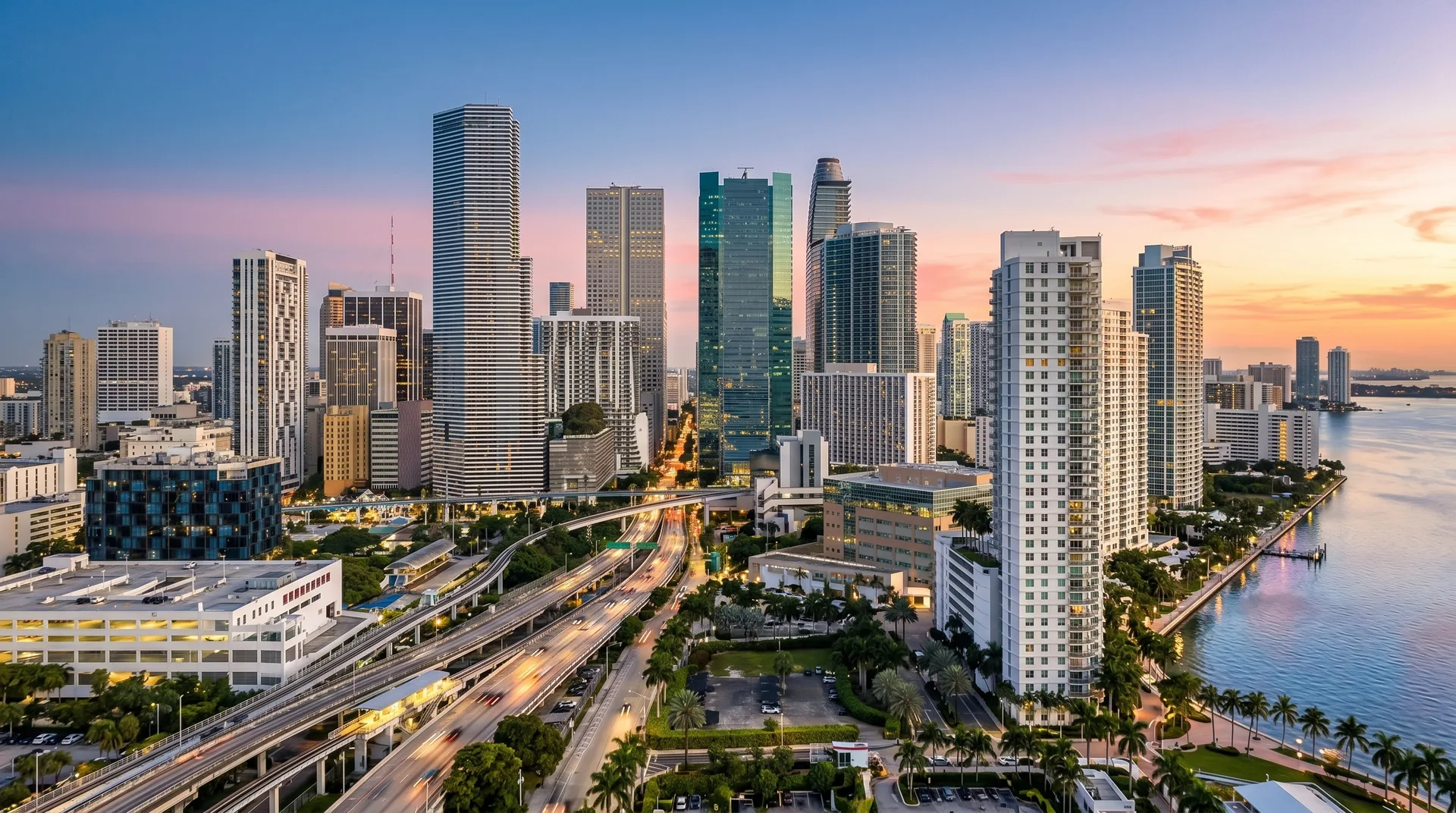
Miami
Miami stands as a strategic logistics hub in the southeastern United States, offering unparalleled access to international markets through its world-class port facilities and extensive air cargo infrastructure. The city's location provides direct access to Latin American and Caribbean markets, making it a crucial gateway for international trade. Miami International Airport ranks among the top air cargo facilities in the United States, while the Port of Miami handles significant container and breakbulk cargo volumes. The region's robust infrastructure includes major interstate highways, including I-95 and I-75, connecting to the broader US transportation network.
 Destination
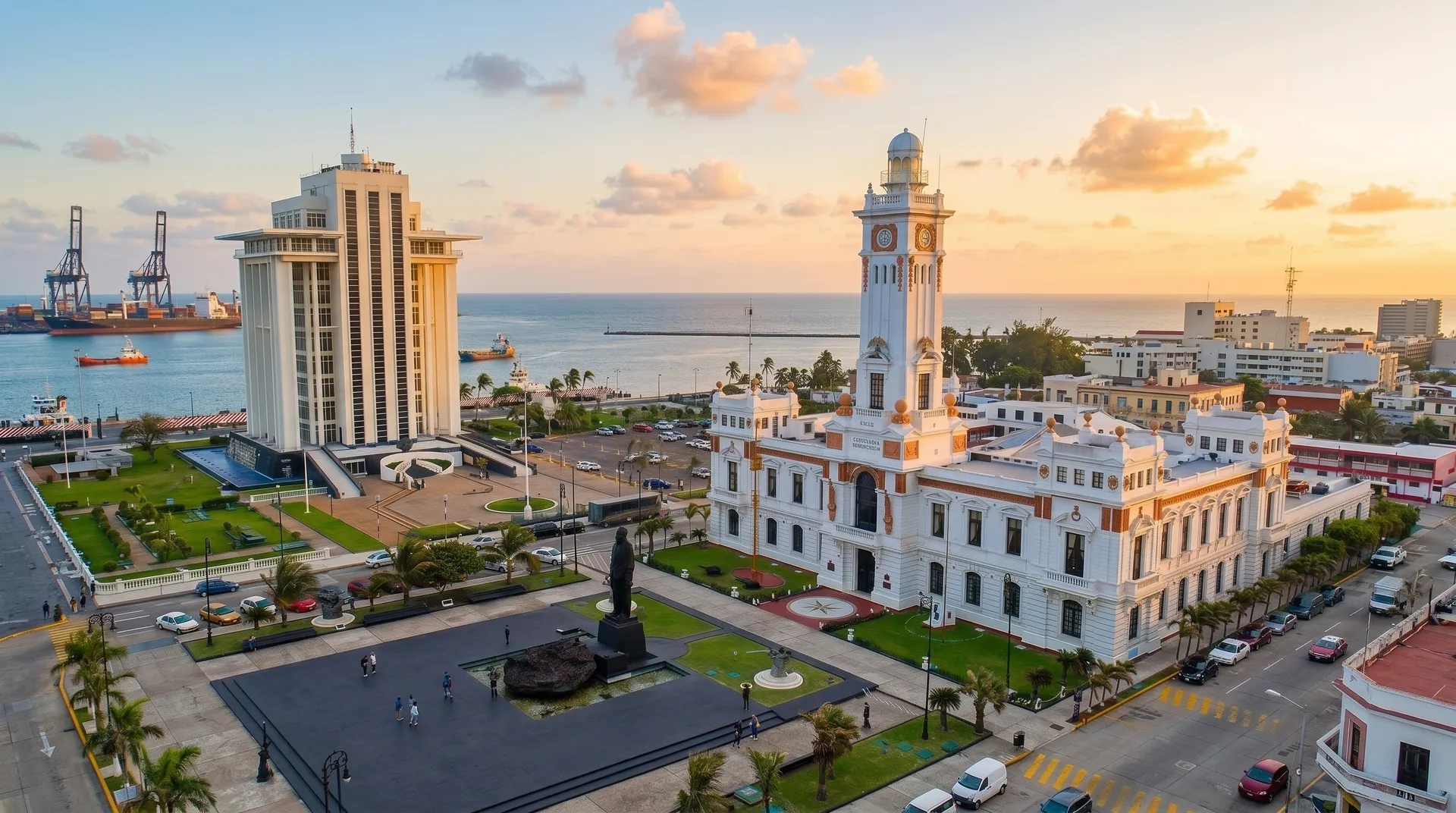
Veracruz serves as Mexico's primary Gulf coast port and a critical logistics hub for the country's import and export activities. The Port of Veracruz is one of Mexico's busiest maritime facilities, handling diverse cargo including agricultural products, manufactured goods, and industrial materials. The region's strategic location provides access to Mexico's central industrial corridor and connects to major manufacturing centers. Veracruz's transportation infrastructure includes modern highways, rail connections, and port facilities that support efficient cargo movement throughout Mexico and beyond.










