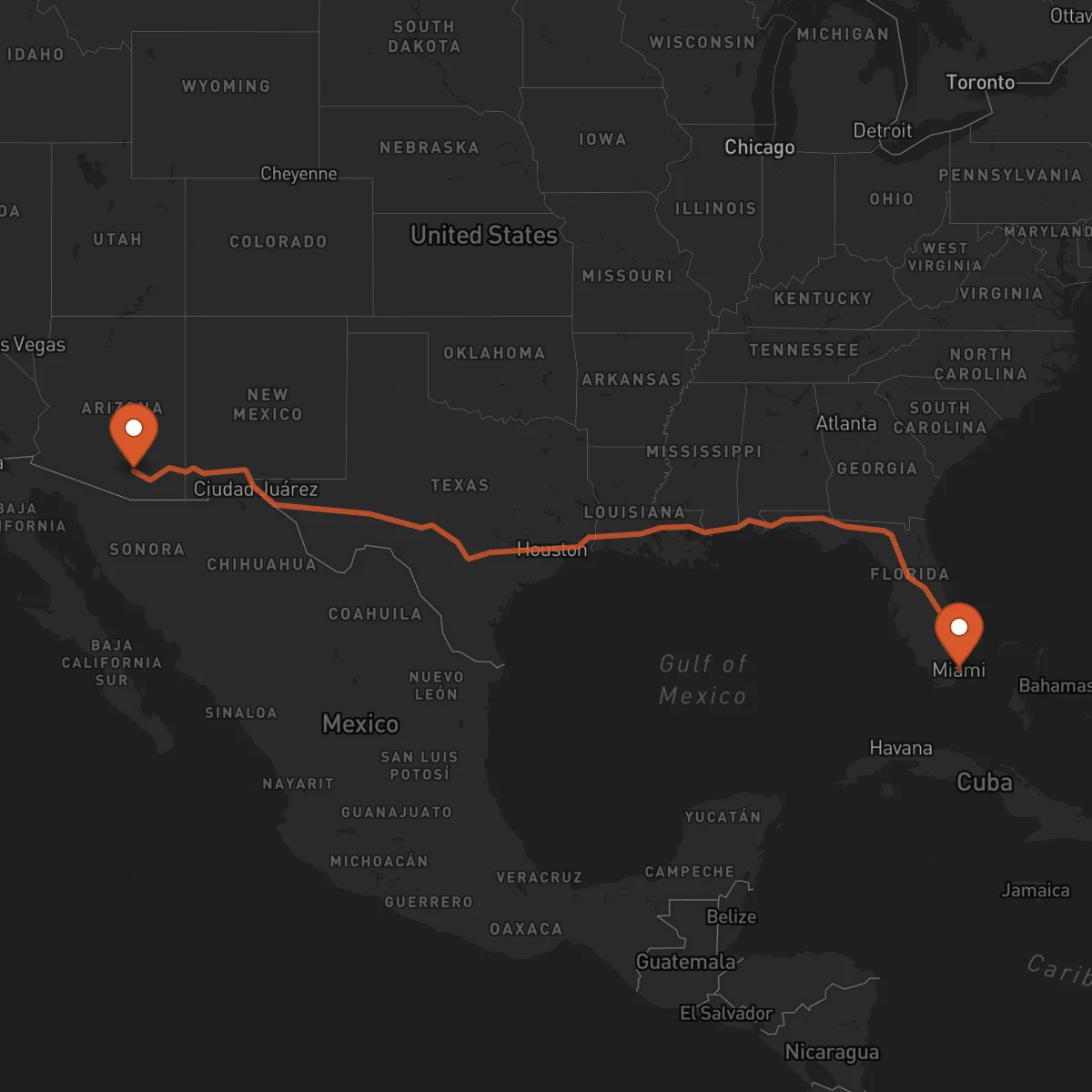
Miami to Tucson
Tucson → MiamiFTL freight transportation service between Miami and Tucson. Reliable logistics solutions for your business.
Route Description
Everything you need to know about the corridor Miami - Tucson
The Miami to Tucson corridor represents a vital logistics connection spanning over 3,000 kilometers across the southeastern United States. This east-west route traverses diverse terrains and connects two major economic hubs, facilitating the movement of goods between Florida's Atlantic coast and Arizona's growing industrial sector. The corridor serves as a critical link in the national supply chain, enabling efficient freight transportation from the Port of Miami to the southwestern interior.
The economic significance of this corridor extends beyond simple point-to-point transportation. Miami serves as a major gateway for international trade, while Tucson functions as a key distribution center for the southwestern United States and northern Mexico. This route supports numerous industries including automotive, electronics, pharmaceuticals, and agricultural products, making it essential for maintaining the flow of goods across multiple economic sectors.
Control Terrestre specializes in optimizing freight operations along this corridor through our extensive network of certified transportation providers. We understand the unique challenges of long-haul domestic transportation and provide tailored solutions that ensure timely and secure delivery of full truckload shipments. Our expertise in navigating this route allows us to offer reliable service that meets the demanding requirements of cross-country freight transportation.
Services for this Route
Available services for the corridor Miami - Tucson
 Origin
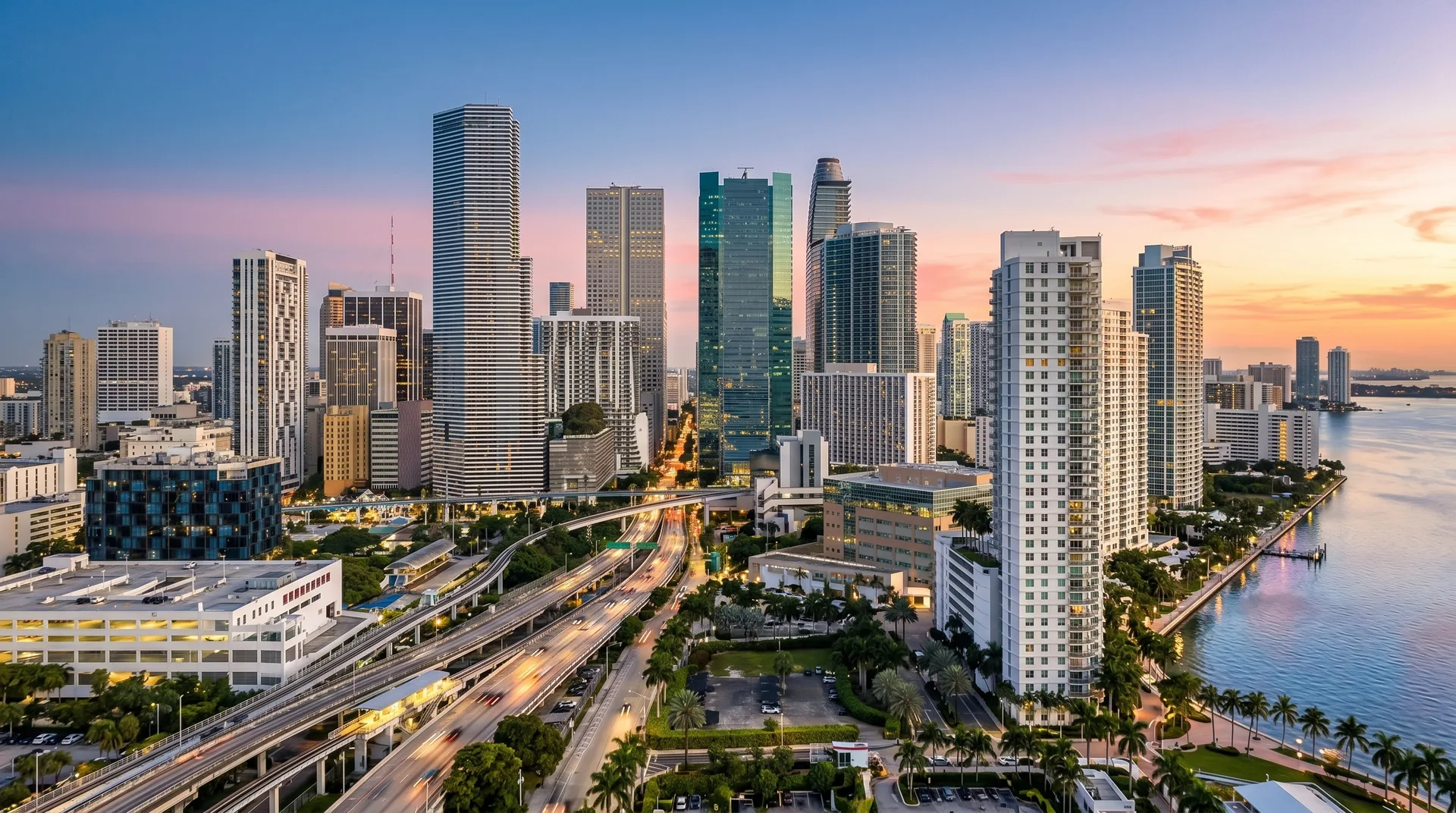
Miami
Miami stands as a strategic logistics powerhouse on the southeastern coast of Florida. The city's Port of Miami, known as the "Cargo Gateway of the Americas," handles millions of tons of cargo annually and serves as a crucial entry point for goods destined for the U.S. mainland. Miami's extensive transportation infrastructure includes major highways such as I-95, I-75, and the Florida Turnpike, providing seamless connections to the rest of the country. The city's international airport and rail connections further enhance its position as a multimodal logistics hub.
The Miami metropolitan area hosts a diverse range of industries, with particular strengths in international trade, finance, and technology. The region's proximity to Latin America and the Caribbean makes it a natural center for import/export activities, while its growing tech sector drives demand for specialized logistics services. Miami's warm climate also supports agricultural exports, particularly in the winter months when Florida produces a significant portion of the nation's fresh produce.
 Destination
Tucson
Tucson's strategic location in southern Arizona positions it as a critical logistics hub for the southwestern United States. The city sits at the intersection of major transportation routes, including I-10, which runs coast-to-coast from Los Angeles to Jacksonville, and I-19, connecting to the Mexican border. Tucson's Sky Harbor International Airport and extensive rail network, operated by major carriers like Union Pacific and BNSF, provide additional multimodal transportation options that support efficient freight movement.
The Tucson metropolitan area has experienced significant economic growth, particularly in aerospace and defense, optics and photonics, and advanced manufacturing sectors. The presence of major employers such as Raytheon, Honeywell, and the University of Arizona's tech incubator has created a robust demand for logistics services. Tucson's proximity to the U.S.-Mexico border, just 60 miles south, makes it an ideal location for companies engaged in cross-border trade, while its desert location requires specialized transportation solutions for temperature-sensitive goods.










