Miami to Saint Paul
Saint Paul → MiamiFTL freight transportation service between Miami and Saint Paul. Reliable logistics solutions for your business.
Route Description
Everything you need to know about the corridor Miami - Saint Paul
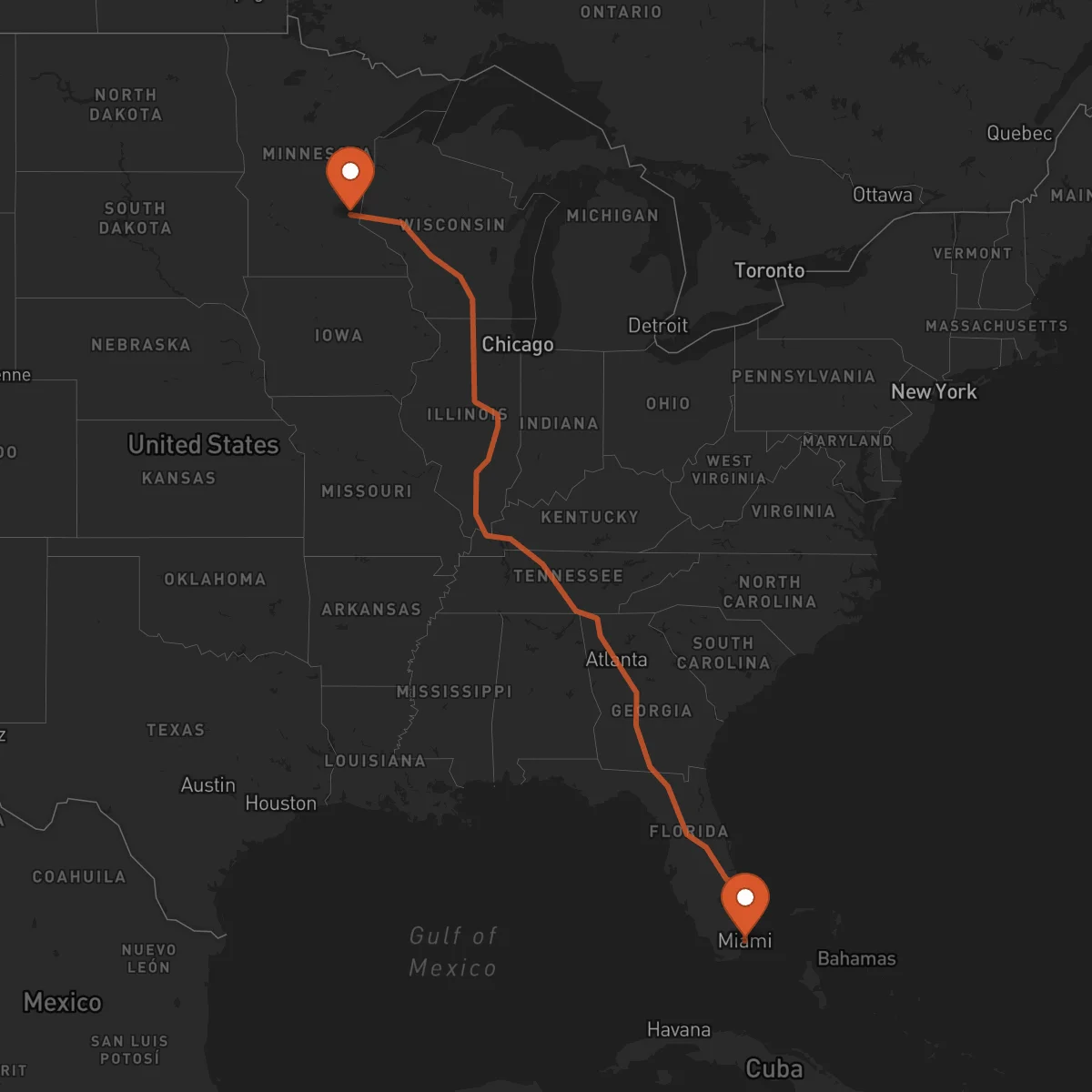
The Miami-Saint Paul corridor represents a vital domestic freight transportation route connecting Florida's major port and logistics hub with Minnesota's industrial and commercial center. This 2,427 km corridor traverses the heart of the United States, linking the southeastern coast with the Upper Midwest through a network of major interstate highways. The route serves as a critical supply chain artery for businesses moving goods between these two dynamic economic regions.
The economic significance of this corridor extends beyond its geographic span. Miami serves as a gateway for international trade, particularly with Latin America and the Caribbean, while Saint Paul functions as a key distribution point for the northern United States and Canadian markets. This complementary relationship creates substantial freight demand, with businesses requiring reliable full truckload (FTL) transportation services to move everything from consumer goods to industrial equipment along this north-south axis.
Major industries utilizing this corridor include retail distribution, automotive parts manufacturing, electronics, pharmaceuticals, and agricultural products. The route accommodates diverse cargo types, from temperature-sensitive goods requiring refrigerated transport to oversized equipment and hazardous materials shipments. Control Terrestre's specialized FTL services ensure that each shipment receives dedicated transportation, eliminating the risks associated with consolidated freight and providing faster, more secure delivery.
Control Terrestre facilitates seamless operations on this corridor through our extensive network of certified carriers and strategic partnerships. Our expertise in handling full truckload shipments ensures that businesses can rely on consistent capacity, competitive rates, and professional service. We understand the unique requirements of this route, including seasonal weather considerations and varying state regulations, allowing us to provide proactive solutions that keep supply chains moving efficiently from Miami to Saint Paul.
Services for this Route
Available services for the corridor Miami - Saint Paul
 Origin
Miami
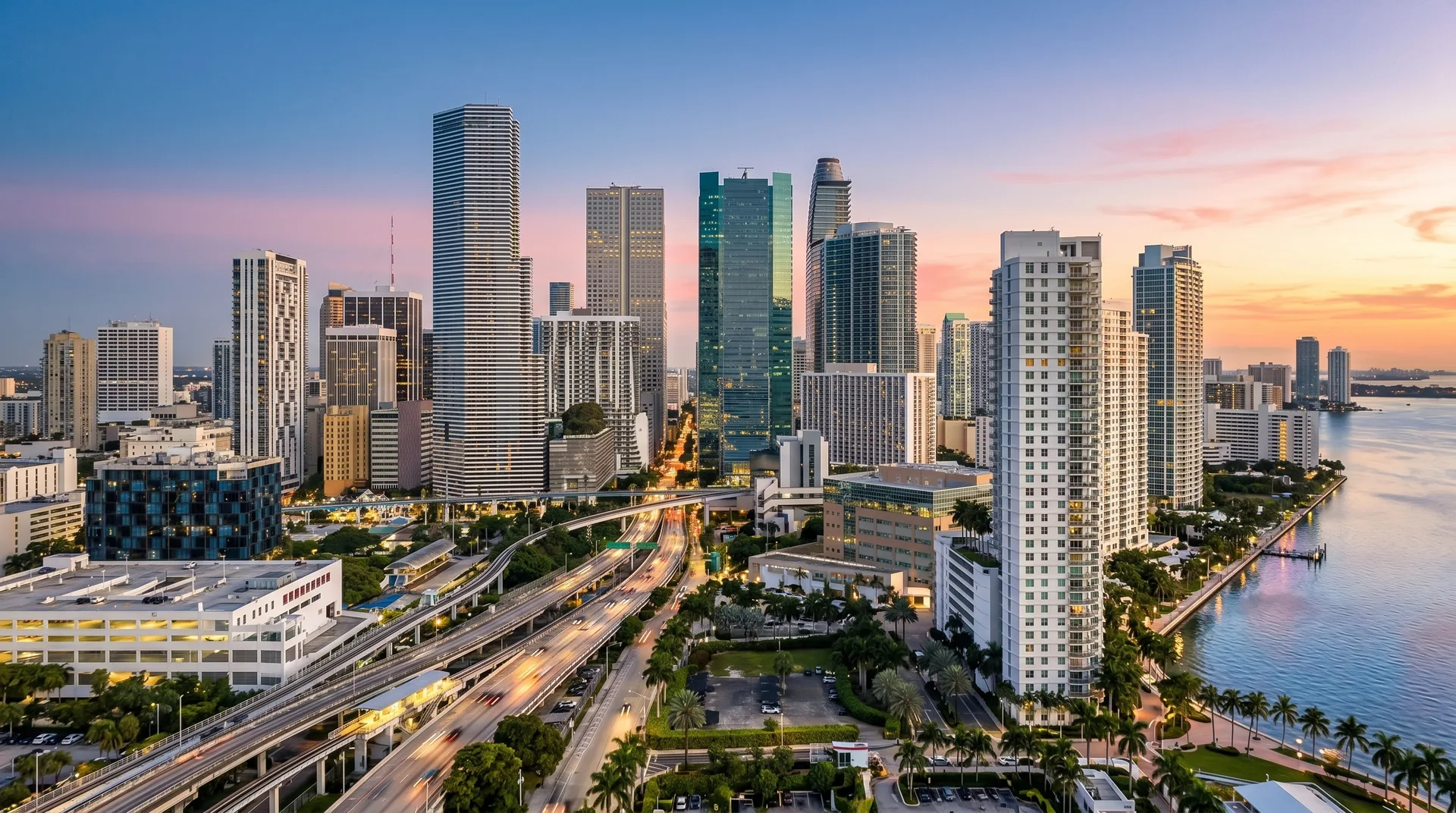
Miami stands as one of the most strategic logistics hubs in the United States, serving as the primary gateway to Latin America and the Caribbean. Located at the southeastern tip of Florida, Miami's PortMiami is the busiest cruise port in the world and a major container port, handling millions of tons of cargo annually. The city's geographic position makes it an ideal transshipment point for goods entering and exiting the U.S., with extensive air cargo operations at Miami International Airport complementing its maritime capabilities.
The region's economy is diverse and dynamic, with strong sectors in international trade, tourism, healthcare, and technology. Miami's logistics infrastructure includes multiple intermodal facilities, warehousing districts, and a comprehensive highway network connecting to the rest of the country via I-95 and the Florida Turnpike. The city's status as a multicultural business center attracts companies from around the world, creating substantial freight demand for both imports and exports. This robust economic activity, combined with Miami's role as a distribution center for Latin American markets, generates consistent transportation needs along corridors like Miami-Saint Paul.
 Destination
Saint Paul
Saint Paul, as part of the Minneapolis-Saint Paul metropolitan area, represents a crucial logistics and industrial center in the Upper Midwest. Located in eastern Minnesota along the Mississippi River, Saint Paul benefits from its strategic position at the crossroads of major transportation routes connecting the northern United States with the rest of the country. The city's logistics infrastructure includes extensive rail networks, the Minneapolis-Saint Paul International Airport, and direct access to interstate highways that facilitate efficient freight movement.
The region's economy is anchored by strong manufacturing, healthcare, technology, and retail sectors. Major corporations and distribution centers in the area create substantial freight demand, particularly for industrial equipment, consumer goods, and agricultural products. Saint Paul's proximity to Canada makes it an important distribution point for cross-border trade, while its central location provides efficient access to markets throughout the Midwest and beyond. The city's well-developed industrial parks and warehousing facilities support a robust logistics ecosystem that handles diverse cargo types, from standard freight to specialized shipments requiring temperature control or special handling.










