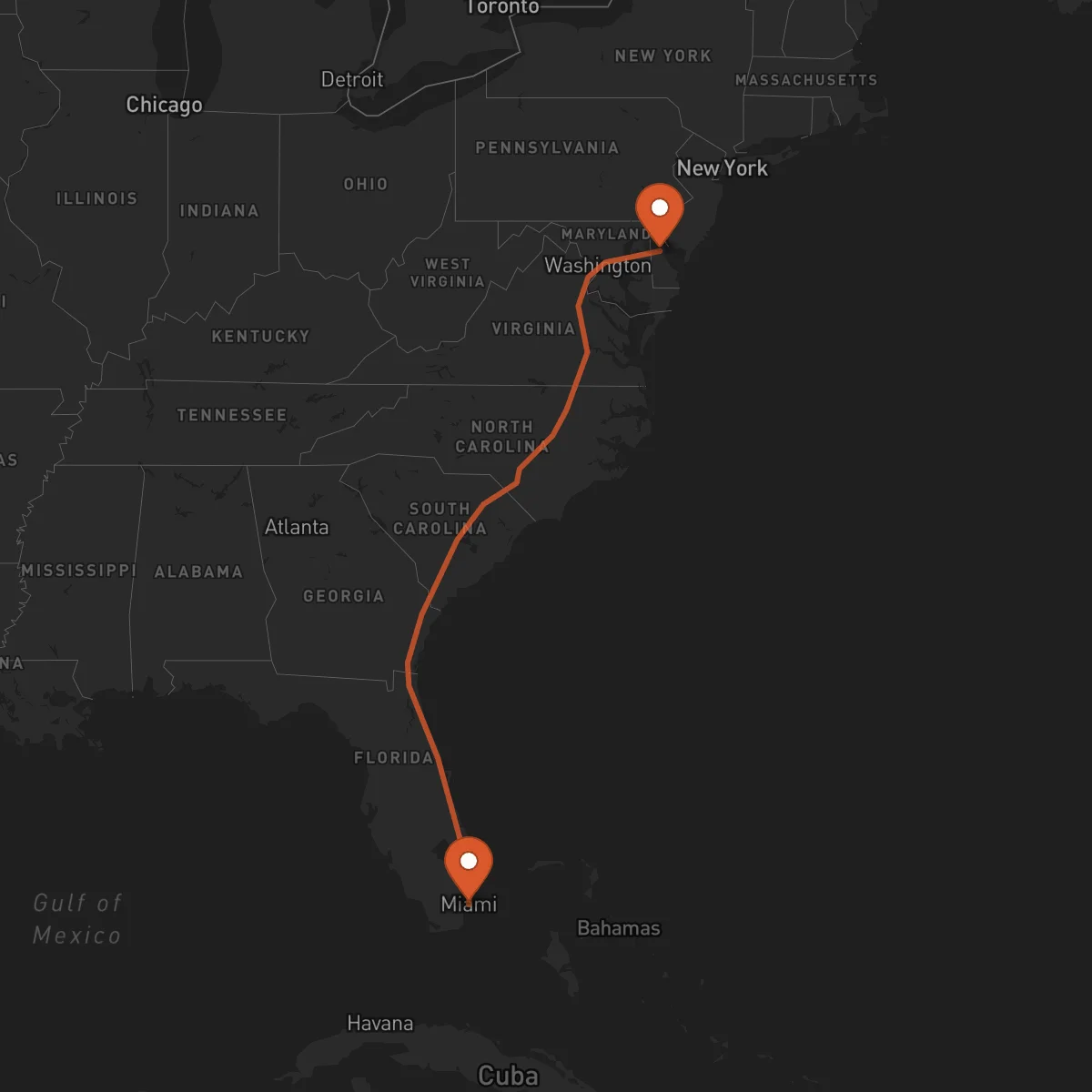
Miami to Dover
Dover → MiamiFTL freight transportation service between Miami and Dover. Reliable logistics solutions for your business.
Route Description
Everything you need to know about the corridor Miami - Dover
The logistics corridor between Miami, Florida and Dover, Delaware represents a vital connection between the southeastern and northeastern United States. This 1552 km route traverses diverse landscapes and industrial regions, connecting major economic hubs across the East Coast. The corridor links Florida's international trade gateway with the Mid-Atlantic industrial corridor, facilitating the movement of goods between these strategic regions.
The route primarily utilizes Interstate 95, the main north-south artery along the East Coast, which serves as a critical freight transportation corridor. This highway network connects major ports, industrial centers, and distribution hubs, making it essential for both domestic and international trade. The corridor passes through multiple states, offering access to various markets and industrial zones along the way.
Key industries utilizing this corridor include automotive, electronics, pharmaceuticals, and general manufacturing. Miami's role as a major port city and international trade hub complements Dover's position as a manufacturing and distribution center. The route also serves agricultural products moving from Florida's farms to markets in the Northeast, as well as consumer goods and industrial equipment traveling in both directions.
Control Terrestre provides comprehensive full truckload (FTL) transportation services along this corridor, ensuring reliable and efficient freight movement. Our strategic partnerships with certified carriers and our extensive network allow us to offer dedicated transportation solutions, meeting the specific needs of businesses shipping between Miami and Dover.
Services for this Route
Available services for the corridor Miami - Dover
 Origin
Miami
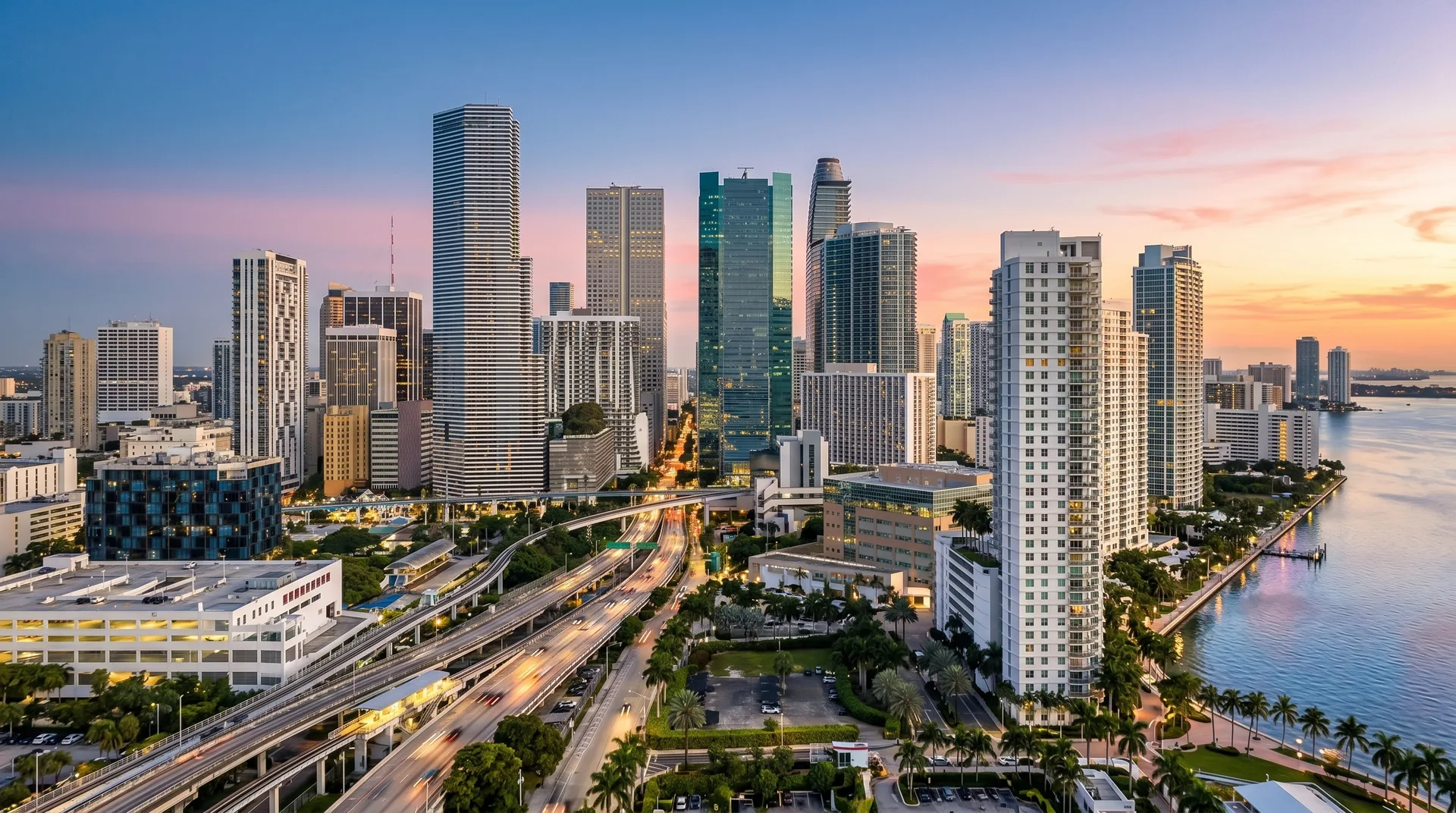
Miami, Florida serves as a crucial logistics hub on the southeastern coast of the United States. The city's strategic location provides access to major international trade routes through the Port of Miami, one of the busiest ports in the country. Miami International Airport complements this maritime access, offering extensive air cargo capabilities. The region's robust transportation infrastructure includes a comprehensive network of highways, including I-95, I-75, and the Florida Turnpike, facilitating efficient ground transportation throughout the state and beyond.
The Miami area is home to diverse industries, including international trade, tourism, healthcare, and technology. The region's strong manufacturing sector produces a wide range of goods, from electronics to pharmaceuticals. Miami's proximity to Latin American markets makes it a vital gateway for imports and exports, particularly for companies engaged in trade with Central and South America. The city's logistics infrastructure is further enhanced by numerous warehousing and distribution centers strategically located throughout the metropolitan area.
 Destination
Dover
Dover, Delaware, while smaller than Miami, plays a significant role in the Mid-Atlantic logistics network. The city's strategic location in the northeastern United States provides access to major markets in the region, including Philadelphia, Baltimore, and Washington D.C. Dover benefits from its proximity to major transportation arteries, including U.S. Route 13 and Delaware Route 1, which connect to the broader interstate highway system.
The Dover area has a diverse industrial base, with manufacturing, healthcare, and government services being key sectors. The region is home to several manufacturing facilities producing a variety of goods, from chemicals to automotive parts. Dover's location in the Mid-Atlantic region makes it an important distribution point for goods moving throughout the northeastern United States. The city's logistics infrastructure includes several warehousing and distribution centers that support the movement of goods to and from the area.










