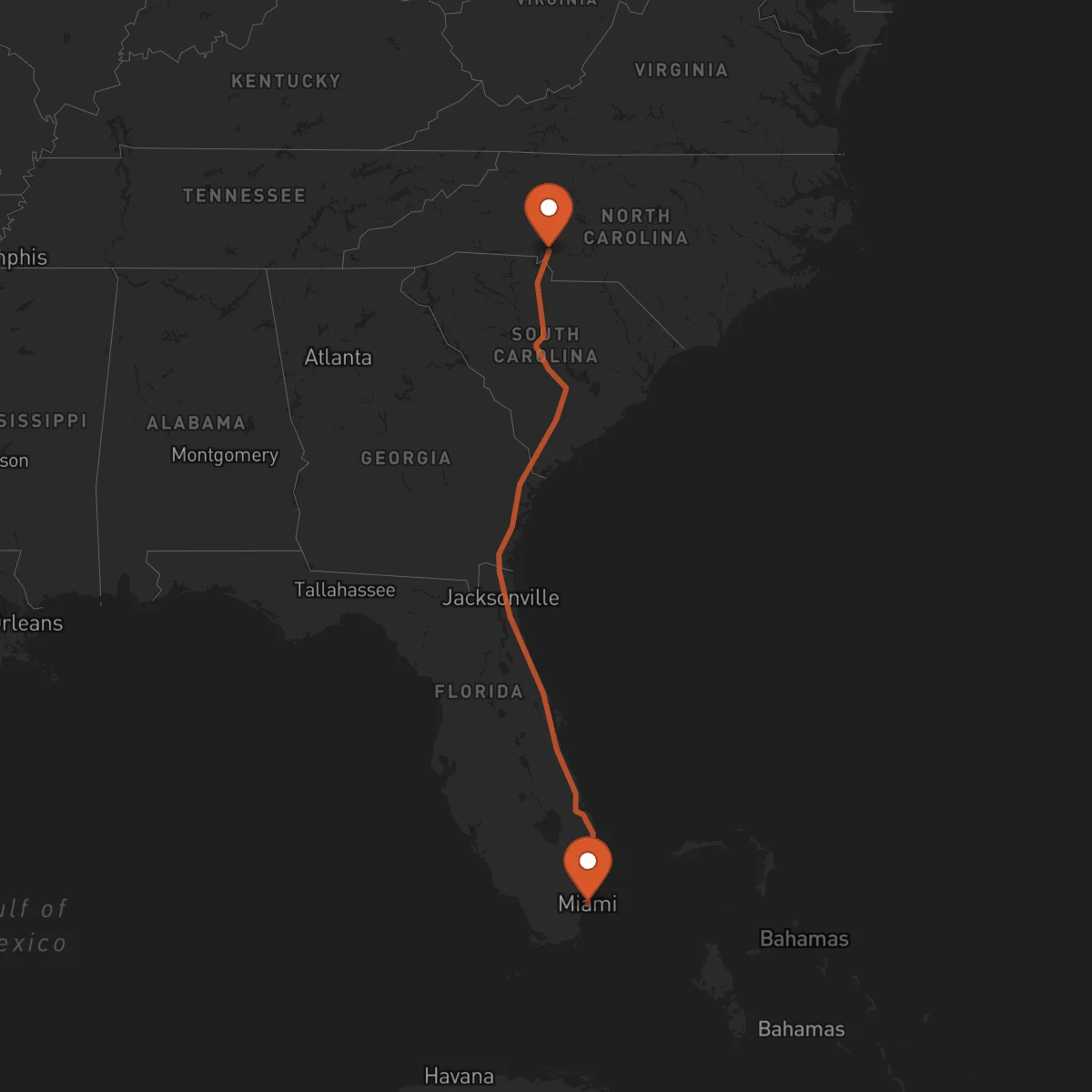
Miami to Charlotte
Charlotte → MiamiFTL freight transportation service between Miami and Charlotte. Reliable logistics solutions for your business.
Route Description
Everything you need to know about the corridor Miami - Charlotte
The Miami-Charlotte corridor represents a vital logistics connection between Florida's Atlantic coast and the industrial heart of North Carolina. This 1,054 km route links one of the busiest international ports in the United States with the thriving financial and manufacturing hub of Charlotte, creating a strategic supply chain pathway for businesses across multiple sectors. The corridor traverses diverse landscapes, from Florida's subtropical regions through Georgia's agricultural plains and into the Piedmont region of North Carolina, offering multiple routing options for optimized freight movement.
The economic significance of this corridor extends beyond its geographic span. Miami serves as a gateway for international trade, particularly with Latin America and the Caribbean, while Charlotte has emerged as a major financial center and manufacturing powerhouse. This complementary relationship drives substantial freight volumes along the route, supporting industries ranging from automotive and aerospace to pharmaceuticals and consumer goods. The corridor's importance is further amplified by its role in connecting coastal distribution networks with inland manufacturing and consumption centers.
Control Terrestre leverages this strategic corridor through our extensive network of certified carriers and specialized equipment. Our full truckload (FTL) services ensure dedicated capacity for your shipments, whether you're moving time-sensitive pharmaceuticals from Miami's biotech corridor or automotive components to Charlotte's manufacturing facilities. We understand the unique requirements of each industry along this route and provide tailored solutions that optimize transit times, maintain cargo integrity, and ensure regulatory compliance throughout the journey.
Services for this Route
Available services for the corridor Miami - Charlotte
 Origin
Miami
Miami stands as a premier logistics hub on the southeastern coast of Florida, strategically positioned as the primary gateway between the United States and Latin America. The city's PortMiami, known as the "Cargo Gateway of the Americas," handles millions of tons of freight annually, complemented by Miami International Airport's extensive cargo operations. Miami's logistics infrastructure includes major intermodal facilities, warehousing complexes, and a network of highways including I-95, I-75, and the Florida Turnpike, providing multiple routing options for efficient freight movement. The region's robust free trade zones and proximity to major shipping lanes make it an ideal origin point for both domestic and international freight.
The economic landscape of Miami is characterized by diverse industries including international trade, tourism, healthcare, and technology. The city hosts significant pharmaceutical and biotechnology operations, with numerous companies maintaining distribution centers for Latin American markets. Miami's manufacturing sector, though not as extensive as other major cities, includes specialized production in electronics, medical devices, and consumer goods. The presence of major corporations' Latin American headquarters and the city's role as a financial center for the region create substantial freight generation, particularly for high-value, time-sensitive cargo requiring dedicated transportation solutions.
 Destination
Charlotte
Charlotte, North Carolina, serves as a major logistics and distribution center in the southeastern United States, strategically positioned at the intersection of several major transportation corridors. The city's location in the Piedmont region provides excellent connectivity to both coastal ports and inland manufacturing centers. Charlotte's transportation infrastructure includes extensive highway networks (I-85, I-77, I-485), a major international airport with significant cargo operations, and proximity to inland ports along the South Carolina coast. The city's logistics ecosystem features numerous warehousing and distribution facilities, intermodal yards, and specialized freight handling capabilities, making it an ideal destination for diverse cargo types.
The economic profile of Charlotte is dominated by the financial services sector, with major banking institutions headquartered in the city. However, the region has also developed strong manufacturing capabilities, particularly in the automotive, aerospace, and energy sectors. Charlotte is home to several major manufacturing facilities, including automotive parts production and assembly operations. The city's growing technology sector and its role as a regional distribution center for major retailers further drive freight demand. Charlotte's combination of financial services, manufacturing, and distribution creates a dynamic logistics environment that requires reliable, full truckload transportation solutions to support its diverse industrial base.










