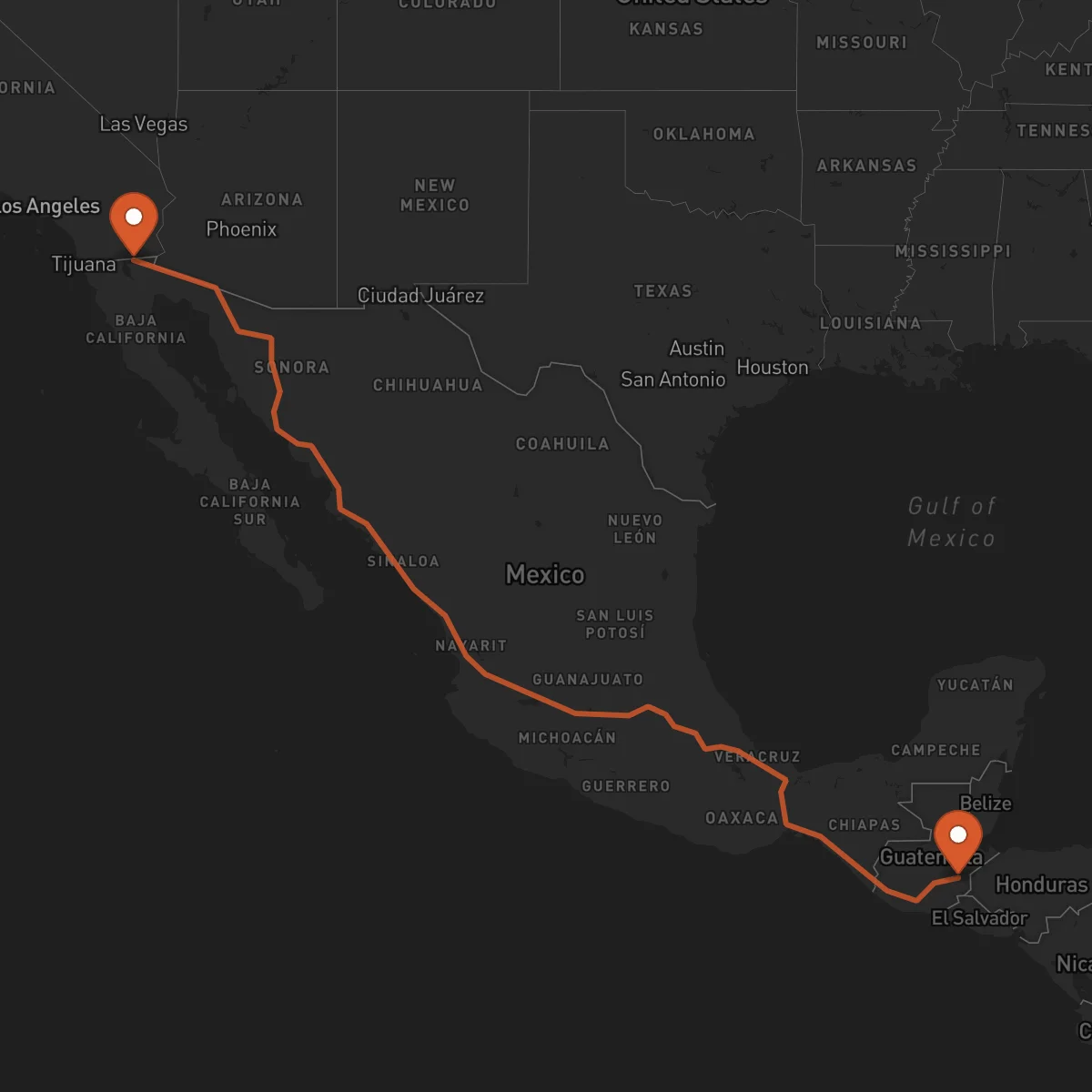
Mexicali to Zacapa
Zacapa → MexicaliFTL freight transportation service between Mexicali and Zacapa. Reliable logistics solutions for your business.
Route Description
Everything you need to know about the corridor Mexicali - Zacapa
The Mexicali-Zacapa corridor represents a vital North-South logistics artery connecting the manufacturing powerhouse of Northern Mexico with the growing industrial and agricultural hubs of Central America. Spanning approximately 3,270 km, this cross-border route is strategically crucial for supply chains requiring efficient movement of goods between the U.S. border and Guatemala. The corridor facilitates trade across multiple countries, leveraging Mexico's extensive manufacturing base and Guatemala's position as a gateway to the broader Central American market.
Economically, the corridor services regions defined by robust industrial activity. Northern Baja California, anchored by Mexicali, is a major hub for aerospace, medical devices, electronics, and automotive manufacturing, driven by its proximity to California and a large, skilled workforce. In Guatemala, the Zacapa region is significant for sugar production, agricultural exports (like melons and papaya), and emerging textile and light manufacturing sectors. This creates a consistent demand for both raw material inbound and finished goods outbound freight.
Key industries utilizing this corridor include automotive parts suppliers, electronics manufacturers, agricultural conglomerates, and consumer goods distributors. The primary transportation infrastructure relies on a network of major highways: from Mexicali, routes like Mexico Federal Highway 2 and 15 connect southward through the interior of Mexico, transitioning to the Pan-American Highway (CA-1) through Guatemala to reach Zacapa. The most critical border crossing for this corridor is typically between Mexico and Guatemala at Ciudad Hidalgo/Tecún Umán, a major customs point for Central American trade.
Customs and regulatory considerations are paramount. Control Terrestre leverages our alliance of certified providers holding C-TPAT, FAST, and BASC credentials to ensure streamlined cross-border processes at the Mexico-Guatemala frontier. Our expertise in documentation, duty management, and compliance with each nation's regulations mitigates delays. We facilitate seamless operations on this corridor by providing dedicated Full Truckload (FTL) solutions, including specialized equipment for refrigerated, dry van, and flatbed cargo, ensuring a single, secure shipment from door in Mexicali to door in Zacapa without consolidation.
Services for this Route
Available services for the corridor Mexicali - Zacapa
 Origin
Mexicali
Mexicali, the capital of Baja California, is a strategic logistics epicenter due to its direct border crossing with Calexico, California. This location provides immediate access to the vast U.S. consumer and industrial markets, making it a primary manufacturing and distribution hub for Northern Mexico. The city's economy is dominated by advanced manufacturing, particularly aerospace, medical device production, and electronics, supported by a highly skilled labor force and numerous maquiladoras. Key transportation infrastructure includes the Mexicali International Airport for air cargo and the Calexico-Mexicali port of entry for road and rail. Major highways like Federal Highway 2 (along the border) and Federal Highway 15 (running south to Guadalajara and Mexico City) originate here, forming the initial arteries for north-south and cross-border freight movement into Mexico's interior and beyond.
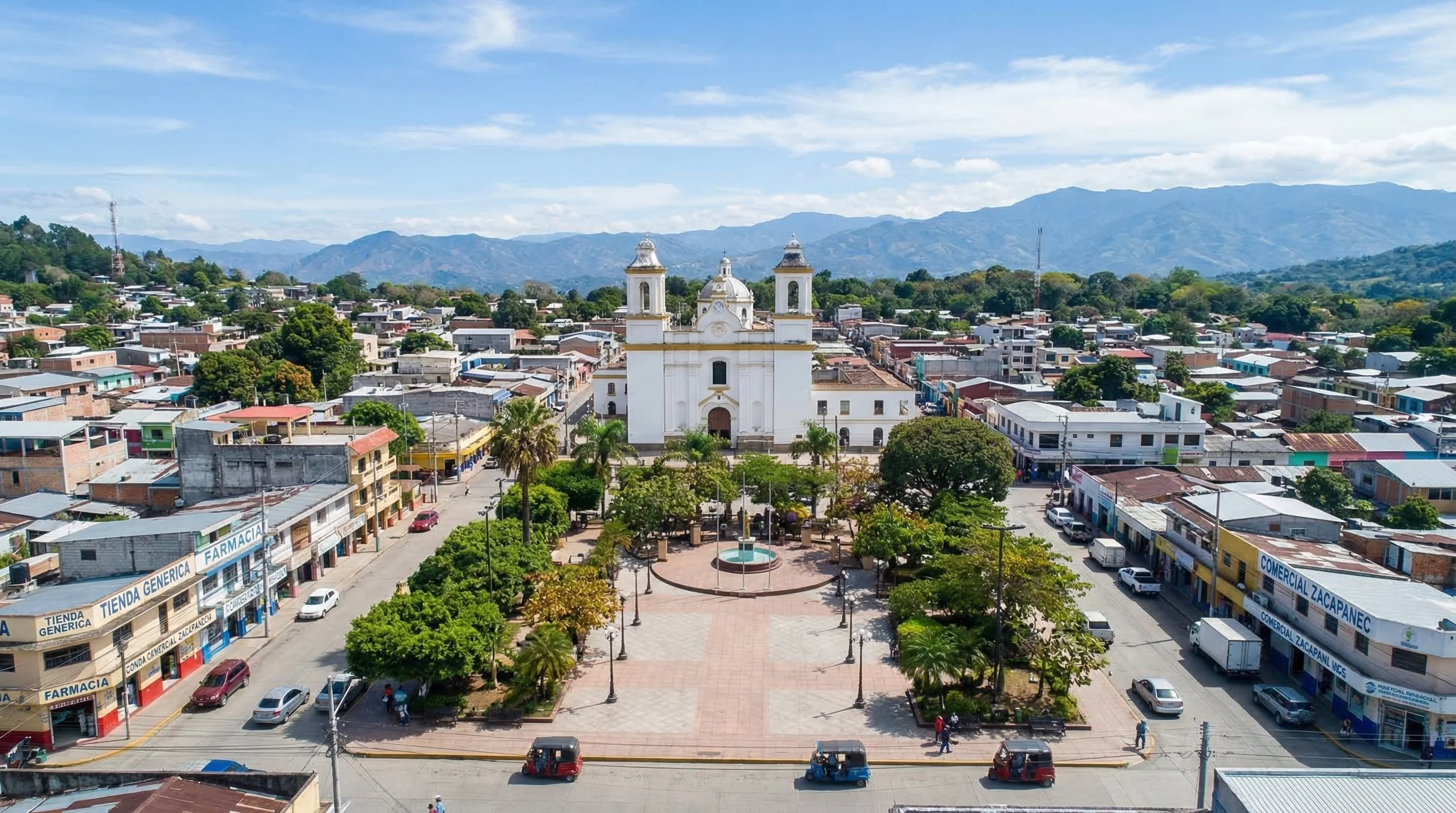 Destination
Zacapa, the capital of the department of Zacapa in eastern Guatemala, is a strategically important agricultural and commercial center. Its location in the Motagua River valley places it on the crucial CA-1 highway of the Pan-American network, providing direct land connectivity to Honduras, El Salvador, and the rest of Central America. The region's economy is heavily based on agriculture, especially sugarcane (with major mills and refineries), tropical fruits (melons, papaya), and coffee. It also has a growing presence in light manufacturing and textiles. The primary transportation infrastructure is the CA-1 highway, which handles the vast majority of commercial freight. The nearby port of Puerto Barrios on the Caribbean coast offers additional multimodal options for maritime connections, though overland trucking via the CA-1 remains the dominant mode for freight arriving from Mexico and points north.










