Mesa to Milwaukee
Milwaukee → MesaFTL freight transportation service between Mesa and Milwaukee. Reliable logistics solutions for your business.
Route Description
Everything you need to know about the corridor Mesa - Milwaukee
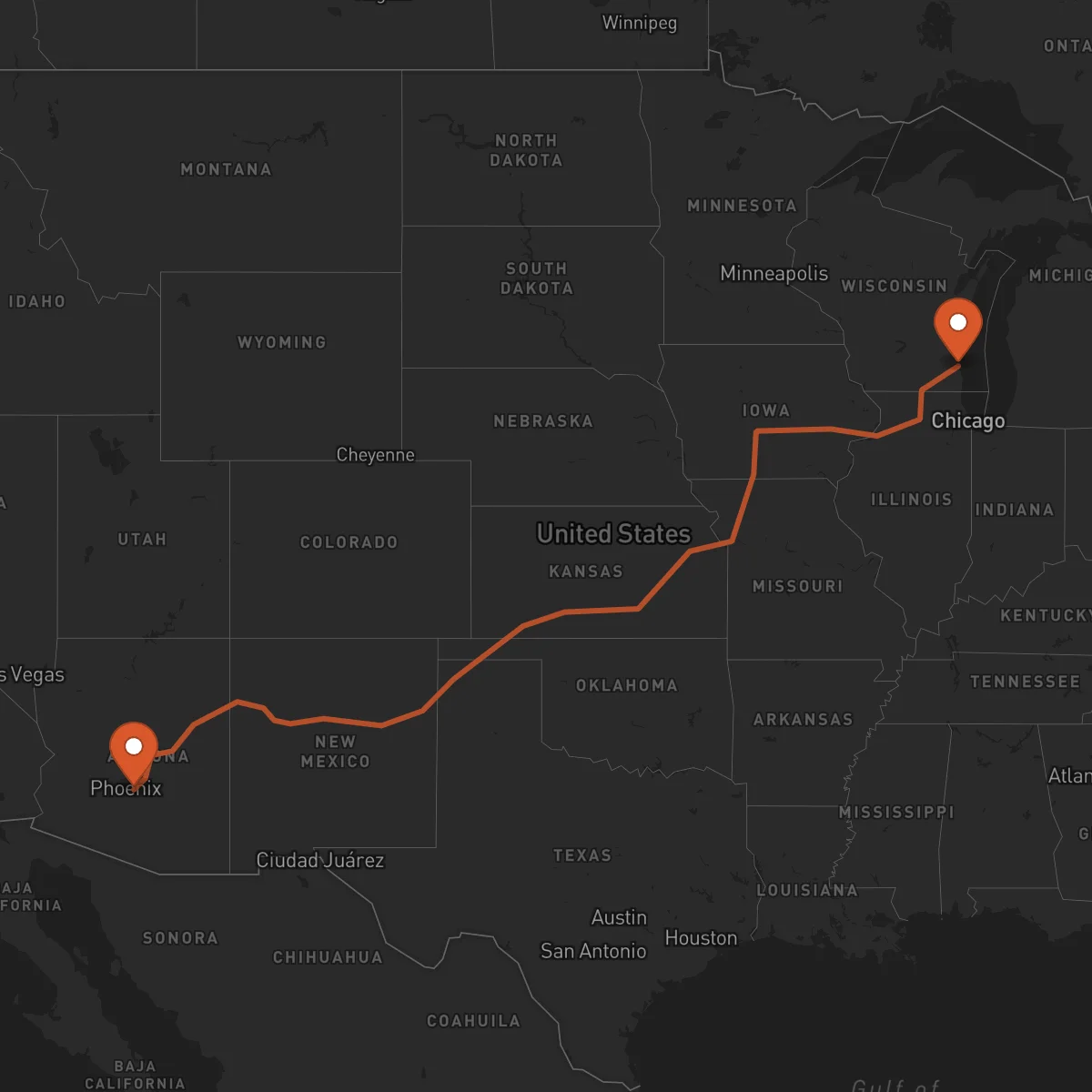
The Mesa, Arizona to Milwaukee, Wisconsin corridor represents a vital domestic freight artery connecting the dynamic Southwest to the industrial heartland of the Midwest. Spanning approximately 1,450 miles, this route bridges two major economic regions, enabling essential movement of goods between burgeoning distribution hubs and established manufacturing centers. Its strategic importance lies in facilitating cross-continental supply chain flows, supporting industries from aerospace components in Arizona to automotive parts in Wisconsin, while serving as a critical link for retailers and agricultural producers across North America.
Economically, this corridor traverses diverse landscapes of opportunity. The Phoenix-Mesa region thrives as a logistics magnet for electronics manufacturing, aerospace innovation, and perishable goods distribution, while Milwaukee anchors the Midwest as a powerhouse for machinery, medical devices, and food processing. Industries frequently utilizing this route include automotive suppliers shipping components, agricultural businesses transporting seasonal produce, and manufacturers moving industrial equipment, creating consistent demand for reliable full truckload capacity between these key nodes.
Transportation infrastructure along this corridor is robust, primarily following major interstate highways: I-10 east to I-17 north, connecting to I-40 through New Mexico and Texas, then transitioning to I-35 through Oklahoma and Missouri, before merging onto I-90/I-94 across Illinois into Wisconsin. This well-established network ensures efficient passage through critical freight gateways while accommodating specialized equipment needs for diverse cargo types.
Control Terrestre leverages its strategic alliance of certified transportation providers to optimize operations on this corridor. Through our exclusive FTL solutions—including dedicated services, refrigerated units for temperature-sensitive goods, and specialized equipment for oversized or hazardous materials—we deliver tailored logistics support. Our carriers' certifications (C-TPAT, FAST, BASC) ensure cross-border readiness where applicable, while our commitment to sustainable practices and responsive communication provides companies with a human-centered partnership for navigating this essential domestic freight pathway.
Services for this Route
Available services for the corridor Mesa - Milwaukee
 Origin
Mesa
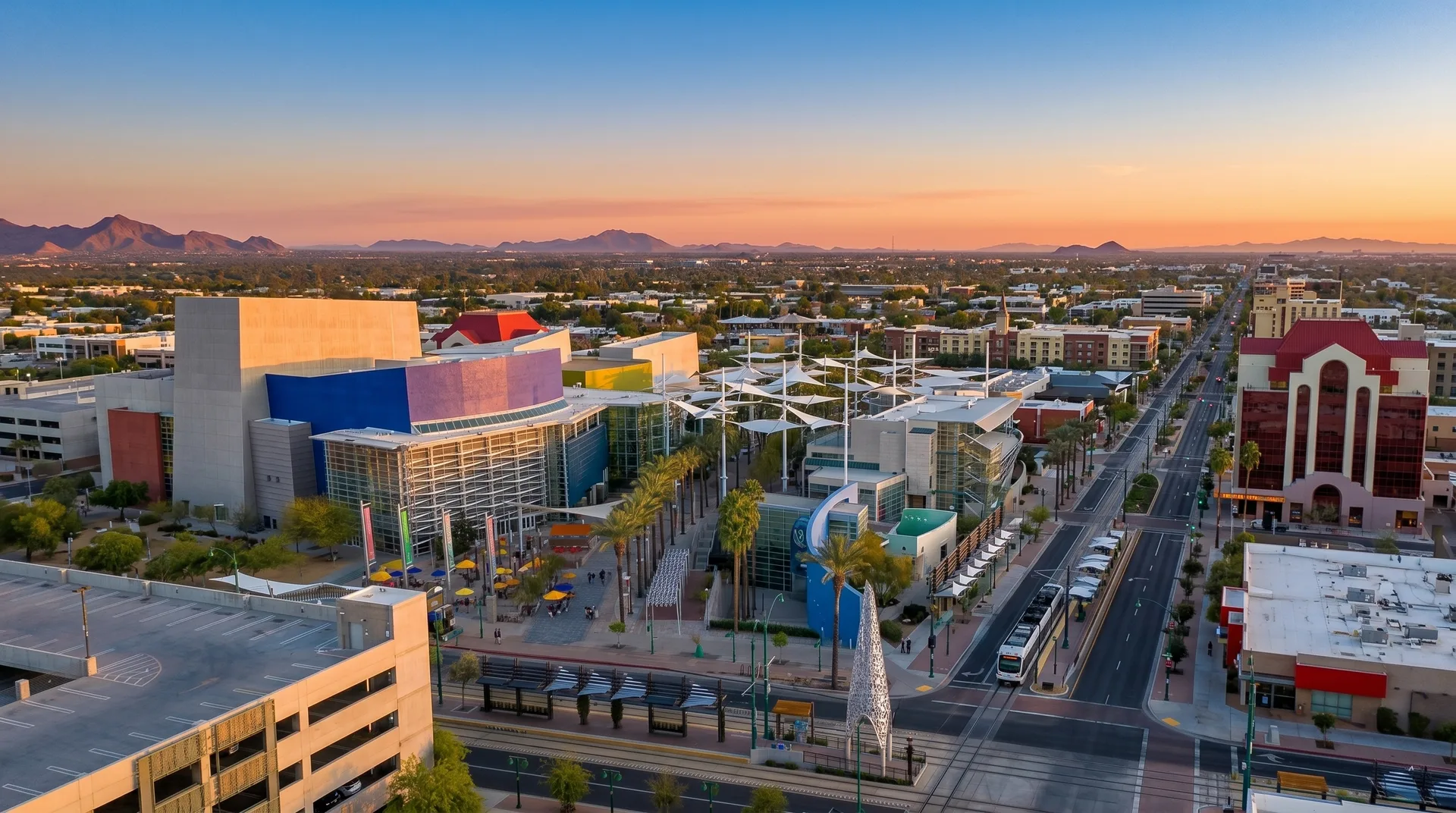
Mesa, Arizona serves as a strategic logistics gateway within the Phoenix metropolitan area, positioned at the convergence of major interstate corridors including I-10, I-17, and US-60. Its proximity to Sky Harbor International Airport and intermodal facilities makes it a critical Southwest distribution hub, particularly for companies serving Western markets. The region's economy thrives on aerospace manufacturing (with major defense contractors), electronics production, and agricultural distribution—especially during peak harvest seasons for citrus and cotton. Transportation infrastructure features extensive highway connectivity, rail access through BNSF and Union Pacific networks, and growing cold storage facilities supporting perishable goods movement, establishing Mesa as a pivotal starting point for domestic freight operations across North America.
 Destination
Milwaukee
Milwaukee, Wisconsin functions as a premier Midwest logistics nexus, strategically located on Lake Michigan with direct access to Great Lakes shipping routes and major interstate highways including I-94, I-43, and I-794. This port city serves as a vital gateway for industrial goods movement throughout the Upper Midwest and into Canada. Dominated by manufacturing sectors such as heavy machinery, automotive components, medical devices, and food processing (notably dairy and brewing), Milwaukee's economy relies heavily on efficient freight connections. The region boasts multimodal infrastructure including the Port of Milwaukee, Mitchell International Airport cargo facilities, extensive rail networks via BNSF and Canadian Pacific, and numerous intermodal terminals, making it an essential endpoint for full truckload shipments serving the industrial corridor.










