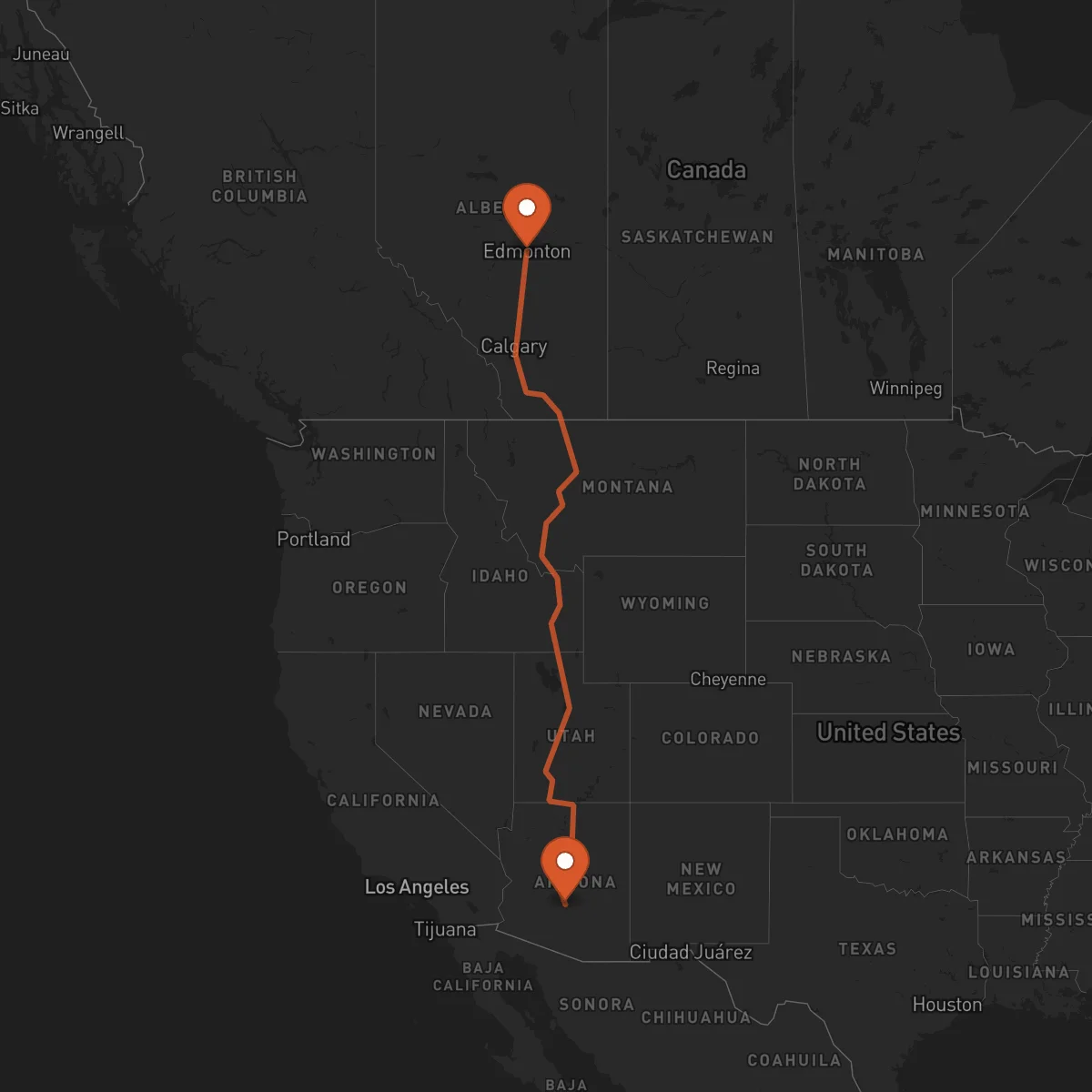
Mesa to Edmonton
Edmonton → MesaFTL freight transportation service between Mesa and Edmonton. Reliable logistics solutions for your business.
Route Description
Everything you need to know about the corridor Mesa - Edmonton
The Mesa, Arizona to Edmonton, Alberta corridor represents a vital cross-border freight route connecting the southwestern United States with Canada's northern Alberta region. This 2,242-kilometer transportation link facilitates the movement of goods between two major economic zones, traversing diverse landscapes from the Sonoran Desert through the Rocky Mountains and into the Canadian prairies. The corridor serves as a critical supply chain artery for industries requiring reliable transportation between these strategic markets.
This route connects Arizona's manufacturing and distribution hubs with Alberta's energy, agriculture, and industrial sectors. Mesa serves as a key logistics center in the Phoenix metropolitan area, while Edmonton functions as Alberta's capital and a major distribution point for northern Canada. The corridor supports industries including automotive parts, electronics, consumer goods, agricultural products, and energy-related equipment. Both regions benefit from their complementary economic activities, with Mesa's manufacturing capabilities meeting Edmonton's resource-based economy needs.
Transportation along this corridor primarily utilizes Interstate 17 and Interstate 15 northbound from Mesa, connecting to Interstate 15 through Montana and continuing on Alberta Highway 2 to Edmonton. The main border crossing at Sweetgrass, Montana/Port of Coutts, Alberta offers efficient processing for commercial freight. Control Terrestre's expertise in cross-border operations ensures seamless customs clearance and compliance with both US and Canadian regulations, providing dedicated full truckload services that maintain cargo integrity throughout the journey.
Services for this Route
Available services for the corridor Mesa - Edmonton
 Origin
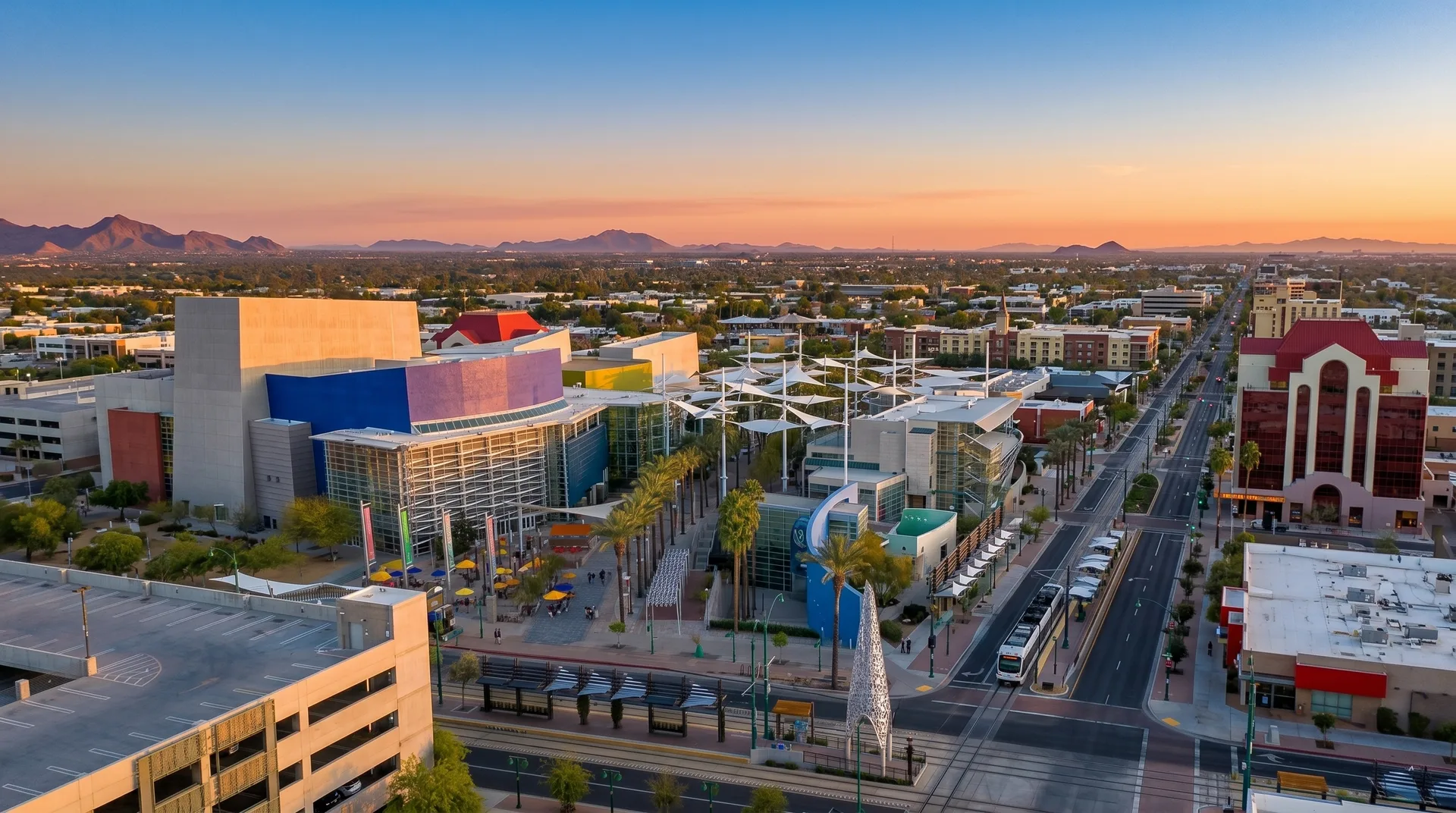
Mesa
Mesa, Arizona serves as a strategic logistics hub within the Phoenix metropolitan area, offering excellent connectivity to major transportation networks. Located in Maricopa County, Mesa benefits from proximity to Phoenix Sky Harbor International Airport and multiple interstate highways including I-10, I-17, and Loop 202. The city's infrastructure supports efficient freight movement with extensive warehousing and distribution facilities catering to e-commerce, manufacturing, and retail sectors. Mesa's location in the Sonoran Desert provides year-round operational reliability with minimal weather-related disruptions.
The region's economy centers on aerospace, electronics manufacturing, healthcare, and tourism industries. Major employers include Boeing, Banner Health, and various technology companies that require consistent freight transportation for just-in-time inventory management. Mesa's industrial parks and intermodal facilities provide seamless connections between road, rail, and air transportation modes. The city's business-friendly environment and skilled workforce make it an ideal origin point for cross-border freight destined for Canadian markets, particularly for time-sensitive and high-value shipments.
 Destination
Edmonton, Alberta stands as a crucial logistics center in western Canada, strategically positioned for distribution throughout the Prairie provinces and northern territories. Located on the North Saskatchewan River, Edmonton serves as Alberta's capital and second-largest city, with robust transportation infrastructure including Edmonton International Airport and major highway connections. The city's location provides access to the Alaska Highway and serves as a gateway to northern Canada's resource-rich regions.
The Edmonton economy thrives on energy, particularly oil and gas, along with agriculture, forestry, and manufacturing sectors. The region's industrial base requires consistent supply of specialized equipment, parts, and materials from southern markets. Edmonton's Yellowhead Trail corridor and ring road system facilitate efficient freight distribution within the city and to surrounding communities. The city's cold climate necessitates reliable transportation for temperature-sensitive goods, while its growing technology and research sectors create demand for specialized freight services. Edmonton's position as a major distribution hub makes it an essential destination for cross-border freight from the southwestern United States.










