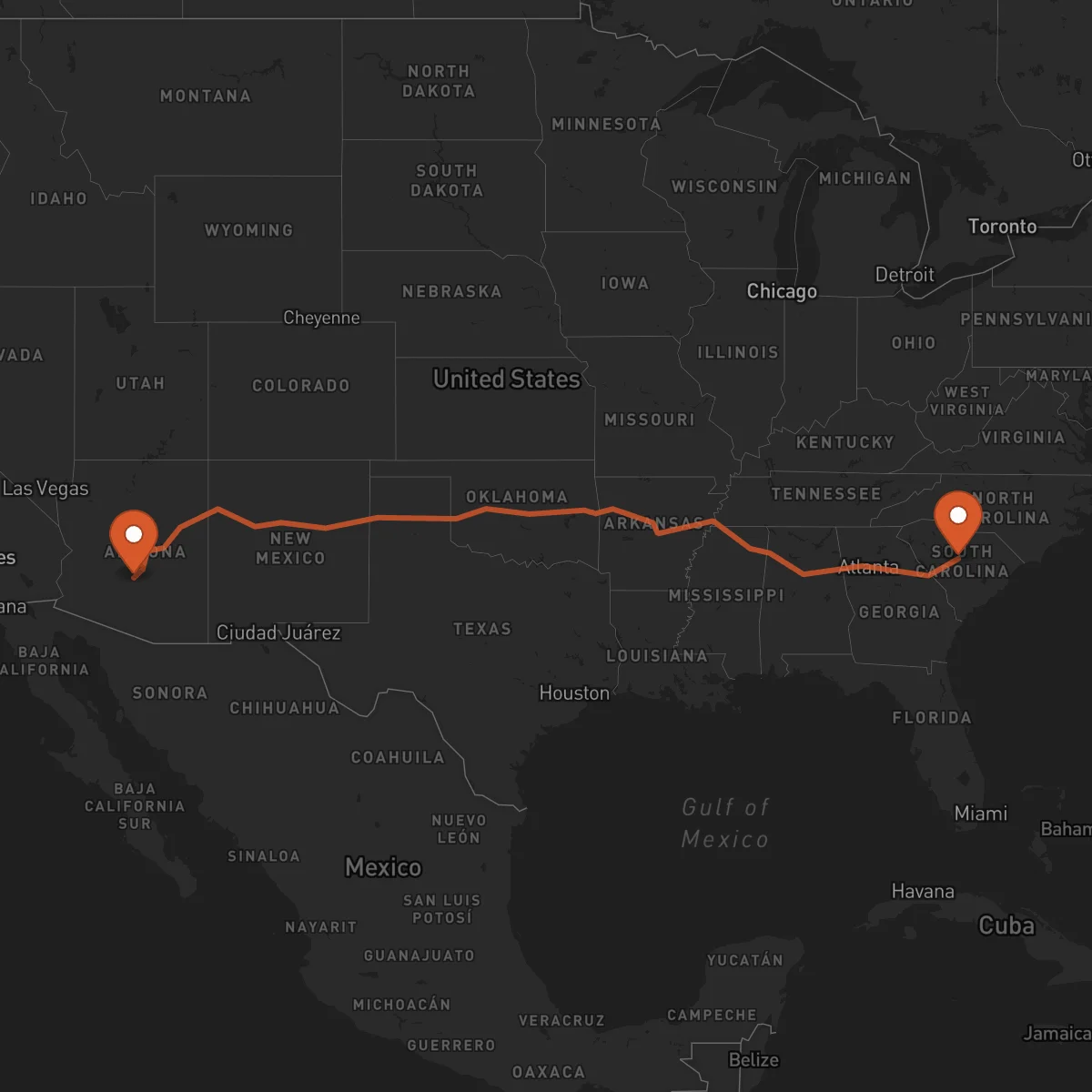
Mesa to Columbia
Columbia → MesaFTL freight transportation service between Mesa and Columbia. Reliable logistics solutions for your business.
Route Description
Everything you need to know about the corridor Mesa - Columbia
The Mesa, Arizona to Columbia, South Carolina corridor represents one of the most important domestic freight routes in the United States, connecting the southwestern and southeastern regions of the country across a distance of approximately 2,839 kilometers. This transcontinental route is crucial for companies that need to move goods efficiently between the Pacific and Atlantic coasts, passing through key states that are vital to the national economy.
The corridor traverses a diverse industrial landscape, from Arizona's technology and aerospace manufacturing hubs to Texas's energy and petrochemical sectors, and finally to South Carolina's automotive and textile industries. Companies along this route benefit from access to major distribution centers, manufacturing plants, and ports that facilitate both domestic and international trade. The route's strategic importance is underscored by its role in supporting just-in-time inventory systems and supply chain optimization for businesses across multiple sectors.
Key transportation infrastructure includes Interstate 10, which runs from Mesa through major Texas cities like El Paso, San Antonio, and Houston, before connecting to Interstate 20 and eventually Interstate 77 into Columbia. This highway network provides reliable, high-capacity freight movement with multiple lanes, rest areas, and fueling stations designed specifically for commercial transportation. The route also offers alternative paths through rail intermodal connections and air cargo facilities at major airports along the way.
Control Terrestre facilitates seamless operations on this corridor through our network of certified transportation providers who understand the unique challenges of cross-country freight movement. Our expertise in full truckload services ensures that your cargo moves efficiently from origin to destination, with real-time tracking, dedicated equipment options, and experienced drivers who navigate this extensive route with precision and reliability.
Services for this Route
Available services for the corridor Mesa - Columbia
 Origin
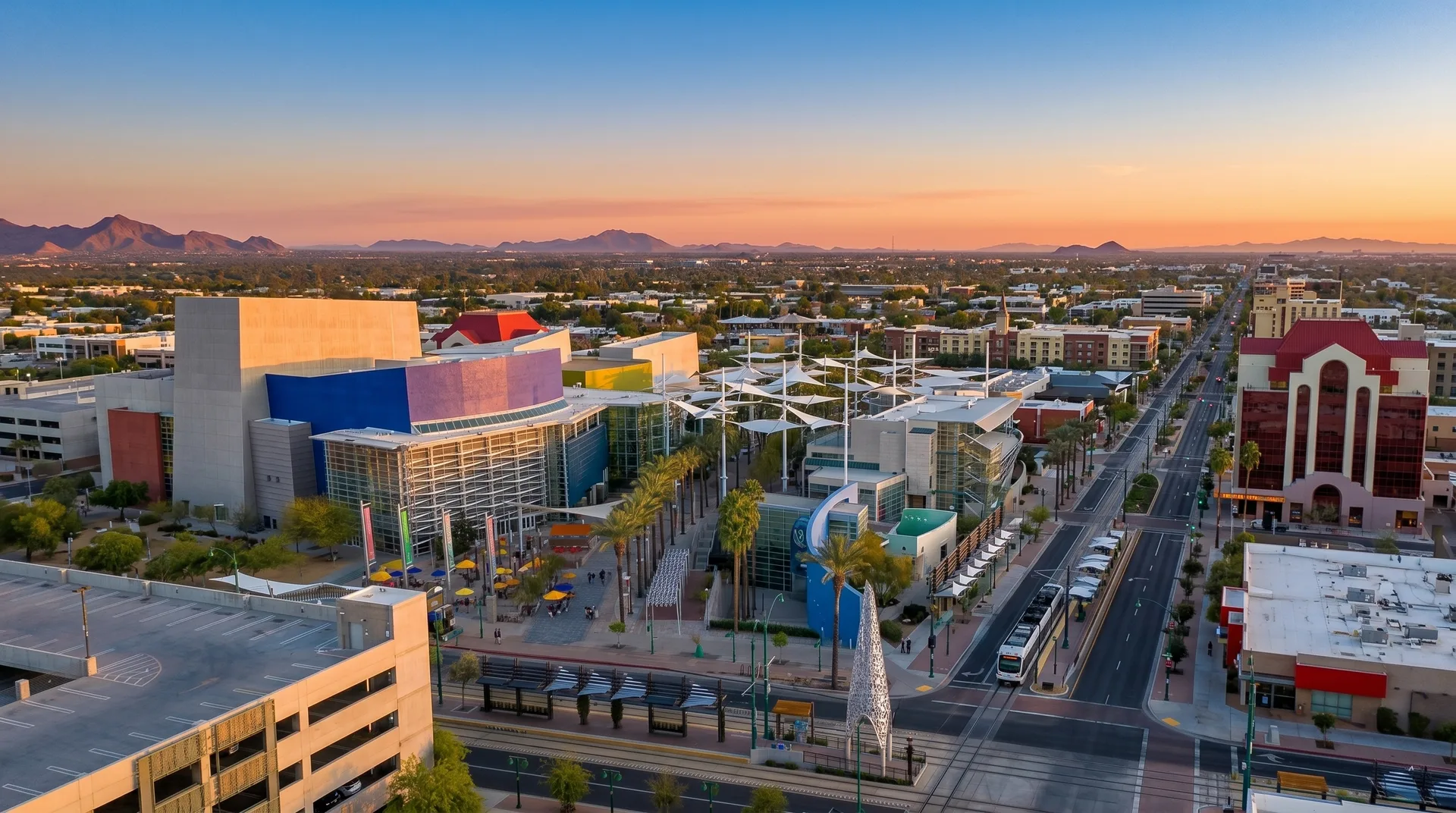
Mesa
Mesa, Arizona serves as a strategic logistics hub in the southwestern United States, benefiting from its proximity to Phoenix and the broader Arizona technology corridor. The city's location provides excellent access to major transportation networks, including Interstate 10, which connects directly to the national freight system. Mesa's infrastructure includes Phoenix-Mesa Gateway Airport, which handles significant cargo operations, and its position near major rail yards facilitates intermodal transportation options.
The region's economy is diverse, with strong presence in aerospace manufacturing, electronics, and semiconductor production. Mesa is home to numerous technology companies and research facilities, creating substantial demand for specialized freight services that can handle sensitive and high-value cargo. The area also supports a growing logistics and distribution sector, with several large warehouses and fulfillment centers serving both regional and national markets.
 Destination
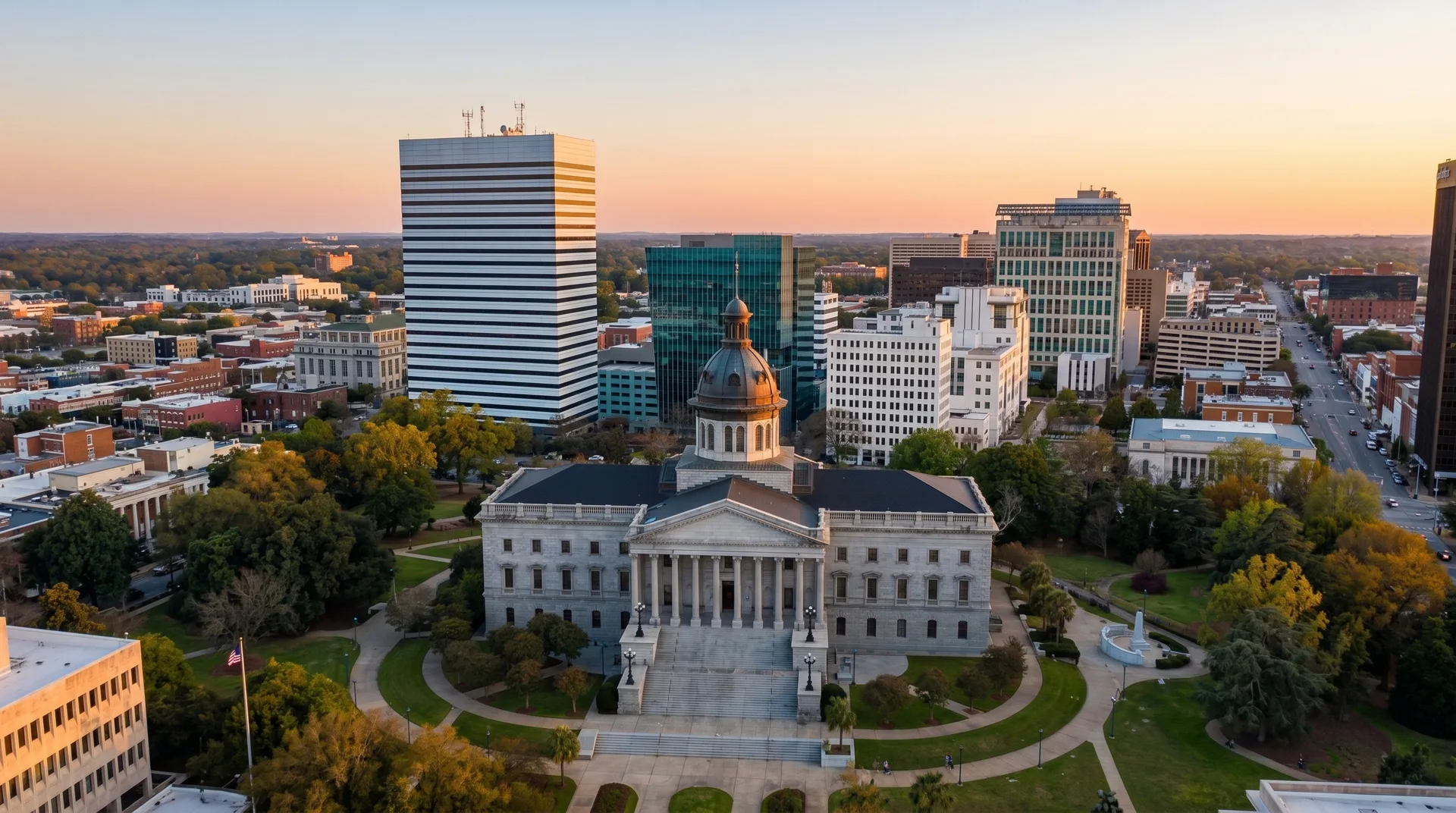
Columbia
Columbia, South Carolina is strategically positioned in the southeastern United States as a major logistics and distribution center. The city benefits from its location at the intersection of major transportation corridors, including Interstate 20 and Interstate 77, providing excellent connectivity to regional and national markets. Columbia Metropolitan Airport offers air cargo services, while the nearby Port of Charleston provides ocean freight access for international shipments.
The region's economy is anchored by automotive manufacturing, with major facilities from companies like BMW and Volvo creating significant freight movement. Additionally, Columbia supports a strong presence in textiles, advanced manufacturing, and healthcare industries. The area's logistics infrastructure includes multiple industrial parks, warehousing facilities, and a growing network of third-party logistics providers that support the region's manufacturing and distribution needs.










