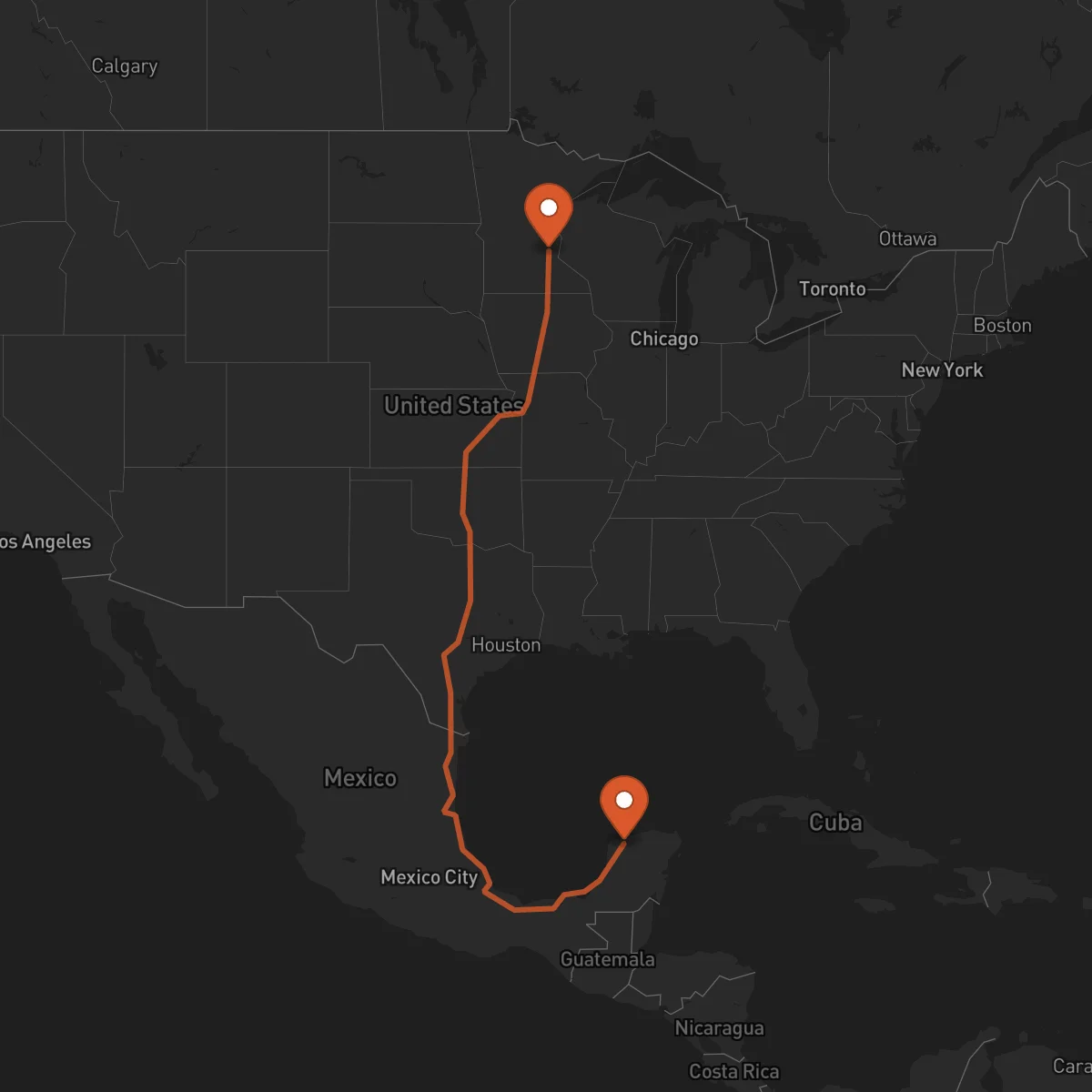
Mérida to Minneapolis
Minneapolis → MéridaFTL freight transportation service between Mérida and Minneapolis. Reliable logistics solutions for your business.
Route Description
Everything you need to know about the corridor Mérida - Minneapolis
The Mérida-Minneapolis logistics corridor represents a strategic connection between the southeastern region of Mexico and the Midwest of the United States. This route spans approximately 2,691 kilometers, traversing diverse terrain and crossing key economic zones that facilitate the movement of goods between two important markets. Control Terrestre operates this corridor with a focus on efficiency and reliability, ensuring seamless cross-border operations that meet the demanding needs of our clients.
The economic significance of this corridor is substantial, linking Yucatán's growing industrial base with Minnesota's robust manufacturing and distribution sectors. Mérida serves as an important hub for automotive, aerospace, and agricultural exports, while Minneapolis stands as a critical center for food processing, medical technology, and retail distribution. This complementary economic relationship creates consistent freight volumes moving in both directions, making the corridor particularly attractive for full truckload (FTL) operations.
Transportation infrastructure along this route includes Mexico's Federal Highway 180 and Federal Highway 45, which connect to major U.S. interstates including I-35W upon crossing at Laredo/Nuevo Laredo. This border crossing is one of the busiest in North America and is equipped with modern customs facilities. Control Terrestre's expertise in cross-border documentation and compliance ensures smooth transit through these critical checkpoints, minimizing delays and maintaining cargo security throughout the journey.
Services for this Route
Available services for the corridor Mérida - Minneapolis
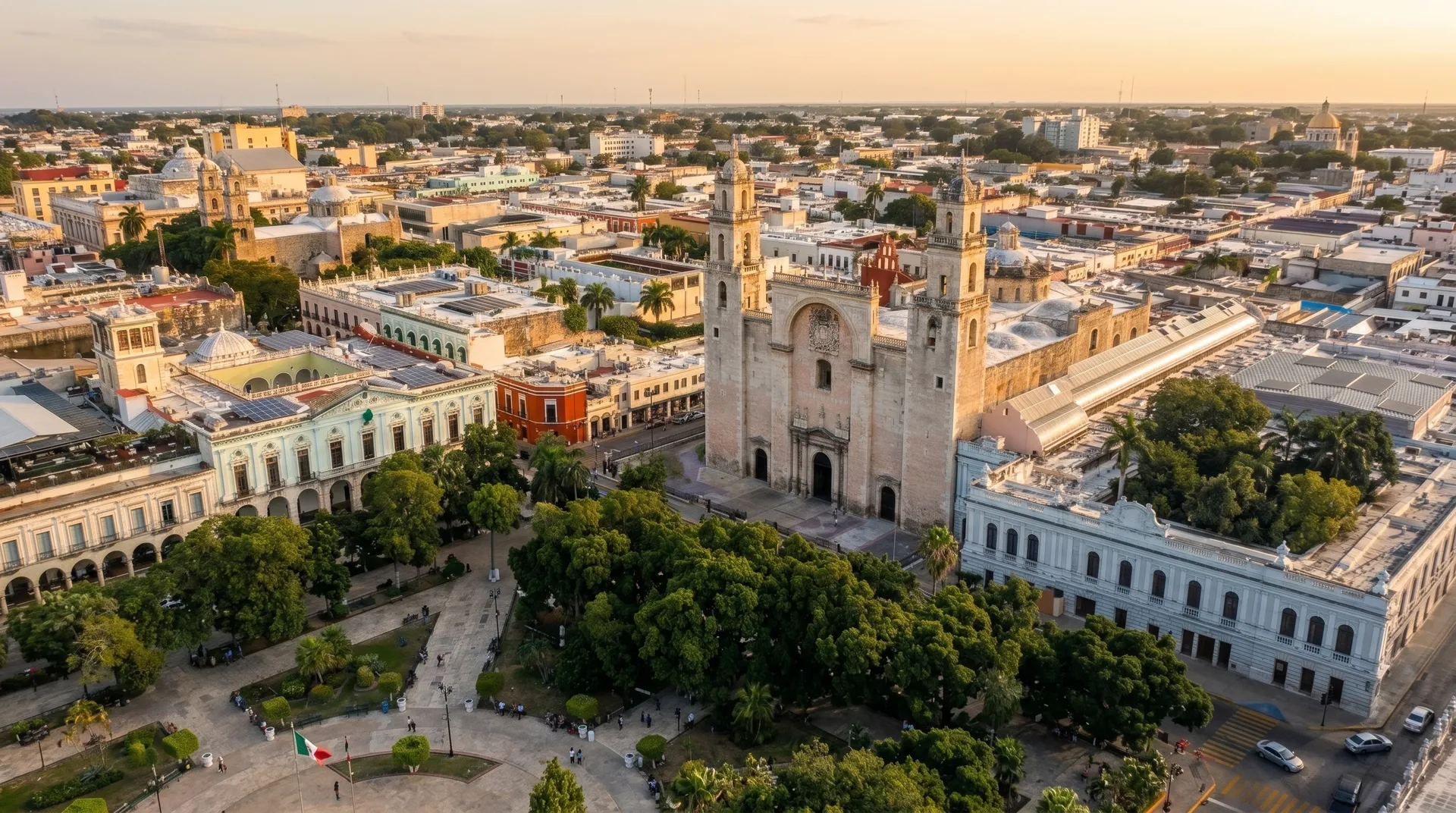 Origin
Mérida, the capital of Yucatán, serves as a strategic logistics gateway to southeastern Mexico and the Yucatán Peninsula. Its location provides access to key industrial parks housing automotive suppliers, aerospace manufacturers, and food processing facilities. The city's infrastructure includes the Manuel Crescencio Rejón International Airport and the nearby port of Progreso, creating multimodal transportation options. Mérida's growing economy is driven by manufacturing, tourism, and agriculture, with increasing exports of products like henequén, honey, and processed foods. The city's road network connects efficiently to major Mexican highways, facilitating outbound freight movements to both U.S. and Central American markets.
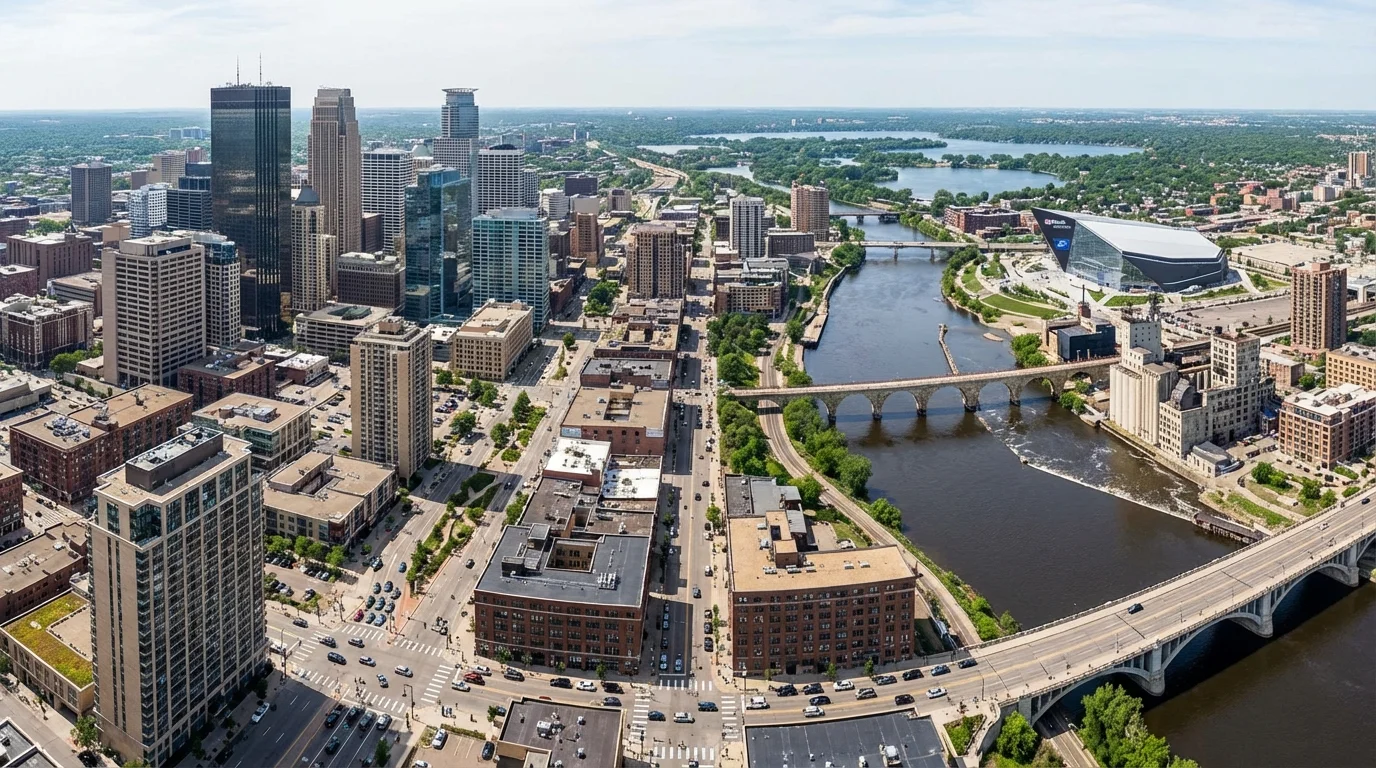 Destination
Minneapolis
Minneapolis represents a critical logistics hub in the Upper Midwest, strategically positioned to serve the Great Lakes region and beyond. The Minneapolis-Saint Paul metropolitan area hosts numerous Fortune 500 companies and serves as a major distribution center for retail, food processing, and medical technology industries. The city benefits from excellent transportation infrastructure, including the Minneapolis-Saint Paul International Airport, extensive railroad networks, and direct access to the Mississippi River for barge transportation. The region's cold climate and agricultural surroundings make it a key center for refrigerated storage and food distribution. Minneapolis's location at the intersection of major interstate highways provides efficient connections to both coastal ports and inland markets.










