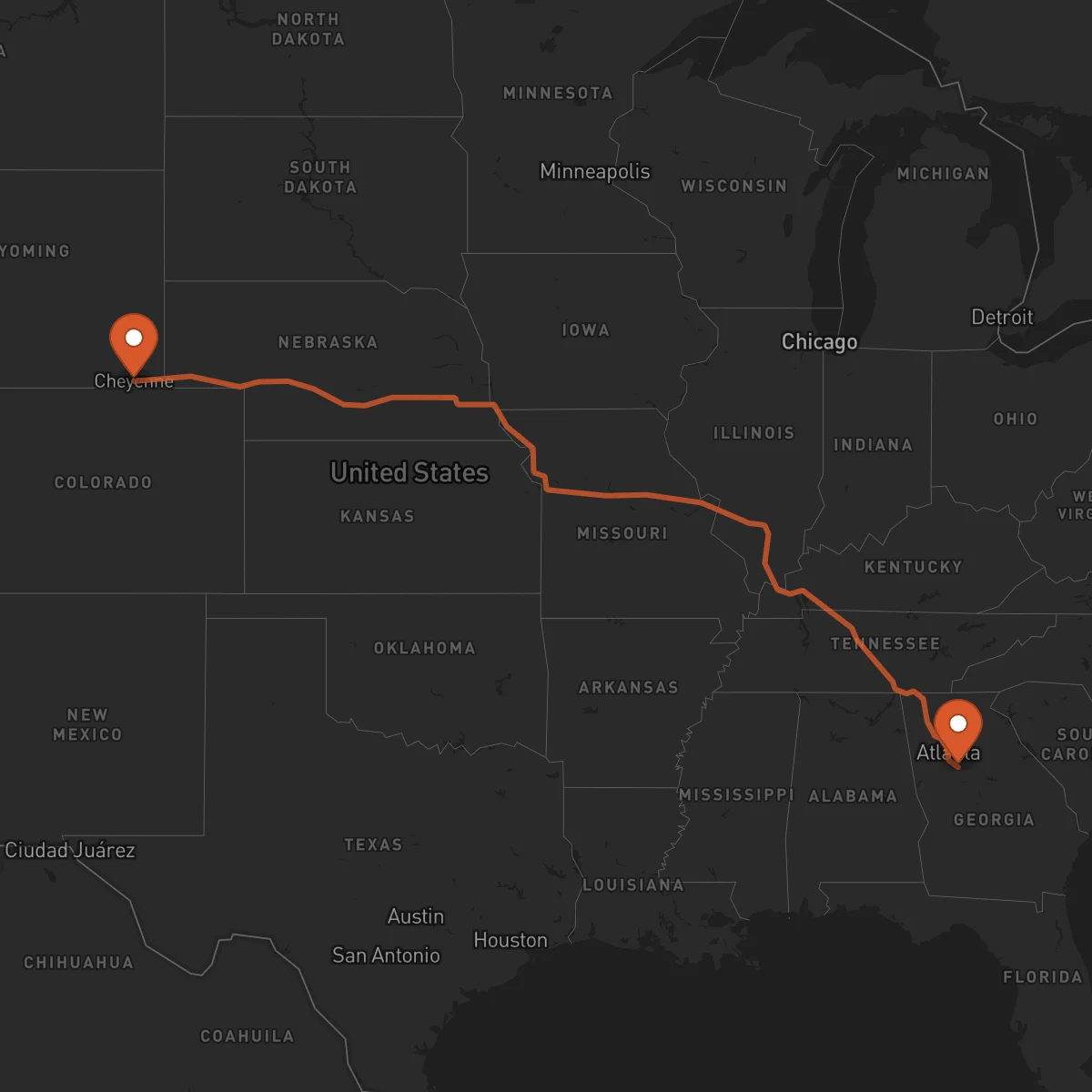
McDonough to Cheyenne
Cheyenne → McDonoughFTL freight transportation service between McDonough and Cheyenne. Reliable logistics solutions for your business.
Route Description
Everything you need to know about the corridor McDonough - Cheyenne
The logistics corridor connecting McDonough, Georgia, to Cheyenne, Wyoming, represents a vital transportation link across the southeastern and central United States. This 2,012-kilometer route traverses diverse economic regions, connecting the industrial heartland of Georgia with the energy and agricultural centers of Wyoming. The corridor serves as a crucial artery for freight movement between the Atlantic Southeast and the Mountain West, facilitating the flow of goods between major economic hubs.
The region along this corridor encompasses a wide range of economic activities, from McDonough's position in the Atlanta metropolitan area's logistics network to Cheyenne's role as a key distribution center for the Rocky Mountain region. The route passes through multiple states, crossing various industrial zones and agricultural areas, making it essential for both manufacturing and agricultural supply chains. This corridor particularly benefits from the complementary economic strengths of both endpoints - McDonough's manufacturing and distribution capabilities and Cheyenne's energy sector and agricultural production.
Key industries utilizing this corridor include automotive parts manufacturing, agricultural equipment, energy sector components, and general consumer goods. The route primarily follows major interstate highways, including I-85, I-70, and I-25, providing reliable and efficient transportation infrastructure. Control Terrestre optimizes operations on this corridor by leveraging our extensive network of certified carriers, ensuring consistent service quality and capacity availability for full truckload shipments. Our strategic partnerships enable us to provide seamless transportation solutions, maintaining the flow of critical goods between these important economic regions.
Services for this Route
Available services for the corridor McDonough - Cheyenne
 Origin
McDonough
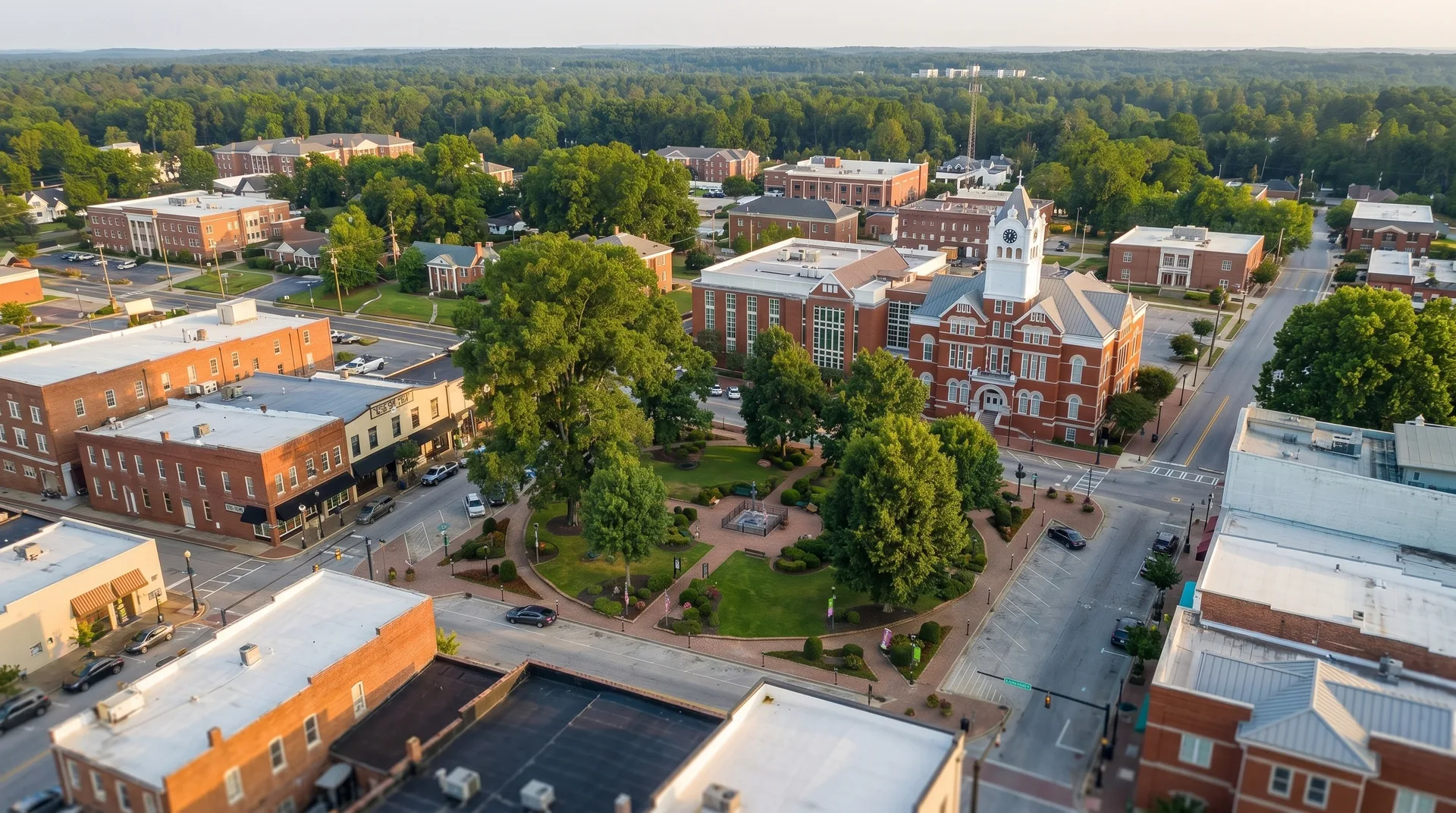
McDonough, located in Henry County, Georgia, serves as a strategic logistics hub in the southeastern United States. Situated approximately 30 miles southeast of Atlanta, McDonough benefits from its proximity to major transportation infrastructure while offering more economical operating costs than the central metropolitan area. The city has experienced significant growth in warehousing and distribution facilities, making it an ideal origin point for freight transportation across the country.
The region's economy is diverse, with strong presence in manufacturing, particularly in automotive and aerospace sectors, as well as robust retail and e-commerce distribution networks. McDonough's location within the Atlanta logistics ecosystem provides access to multiple Class I railroads and major interstate highways, including I-75 and I-285. The area's transportation infrastructure includes Hartsfield-Jackson Atlanta International Airport within reasonable proximity, offering additional multimodal shipping options for time-sensitive cargo.
 Destination
Cheyenne
Cheyenne, Wyoming, serves as the state's capital and largest city, positioned strategically at the crossroads of major transportation routes in the Rocky Mountain region. Located at the intersection of Interstates 25 and 80, Cheyenne functions as a critical distribution center for both Wyoming and neighboring states. The city's elevation of 6,000 feet and central location make it an important logistics hub for the Mountain West region.
The local economy is anchored by government operations, military installations, and a growing technology sector, complemented by traditional industries such as agriculture, mining, and energy production. Cheyenne's strategic location provides access to major rail lines, including Union Pacific's main transcontinental route, and its proximity to Denver International Airport (approximately 100 miles south) enhances its multimodal transportation capabilities. The region's industrial base, particularly in energy and agriculture, creates consistent demand for reliable freight transportation services to and from major population centers across the country.










