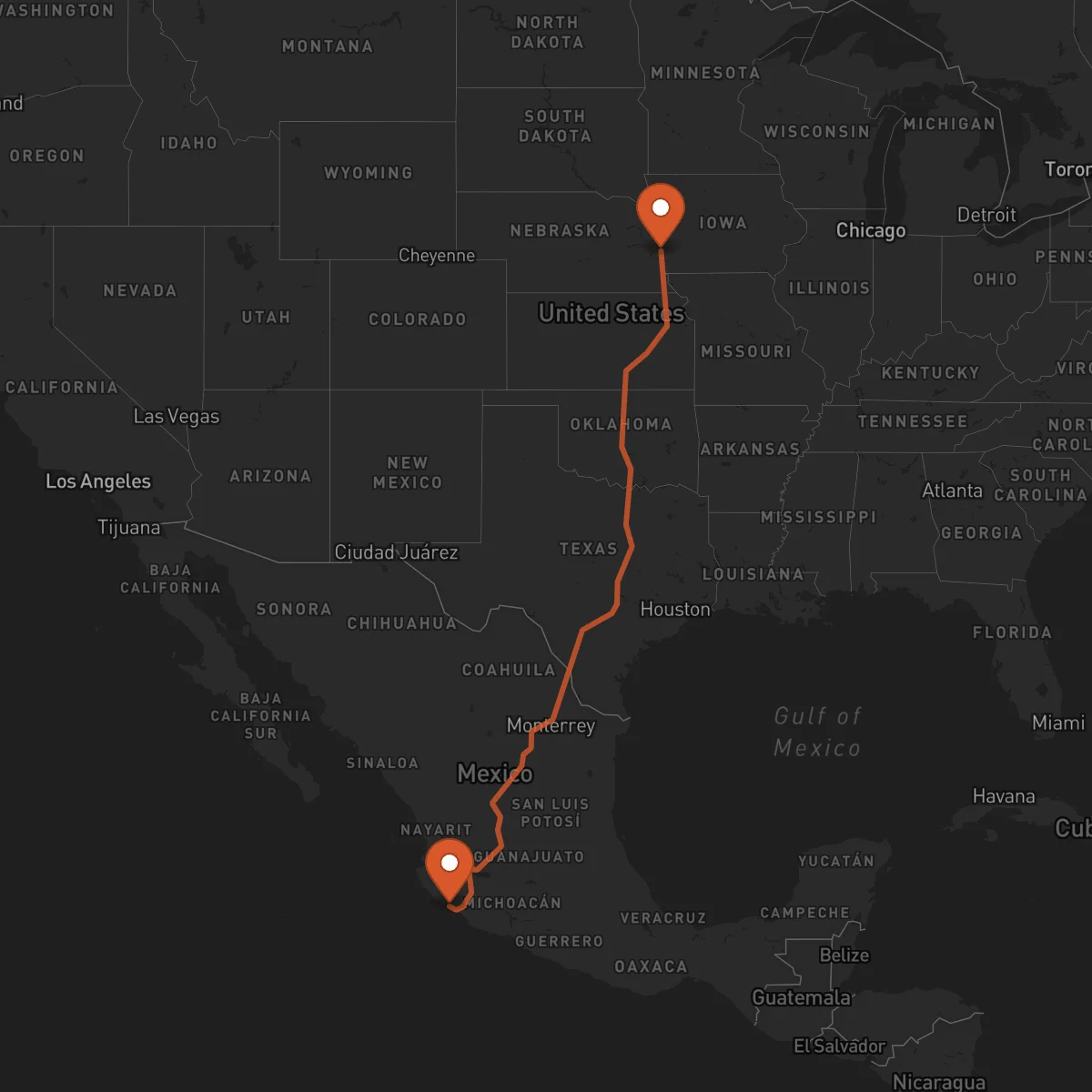
Manzanillo to Omaha
Omaha → ManzanilloFTL freight transportation service between Manzanillo and Omaha. Reliable logistics solutions for your business.
Route Description
Everything you need to know about the corridor Manzanillo - Omaha
The logistics corridor connecting Manzanillo, Colima, to Omaha, Nebraska, represents a vital trade link between Mexico's Pacific coast and the central United States. This 2,594 km cross-border route facilitates the movement of goods from Mexico's largest cargo port to one of America's key distribution hubs in the Midwest. The corridor's strategic importance lies in its ability to connect maritime shipping with inland distribution networks, enabling efficient supply chain operations for companies engaged in North American trade.
The economic context of this corridor reflects the complementary industrial strengths of both regions. Manzanillo serves as a gateway for Mexican exports including automotive parts, electronics, agricultural products, and manufactured goods, while Omaha functions as a major distribution center for retail, food processing, and agricultural commodities. This creates a dynamic flow of goods in both directions, with manufacturing inputs moving south and finished products or agricultural goods moving north.
Key transportation infrastructure along this corridor includes Mexico's Federal Highway 54D and Federal Highway 40, connecting to major U.S. interstates such as I-35 and I-29. The primary border crossing is typically through Laredo or El Paso, depending on the specific route chosen. Control Terrestre facilitates seamless operations across this corridor through our network of certified carriers, ensuring compliance with customs requirements and providing real-time tracking capabilities for full truckload shipments throughout the journey.
Services for this Route
Available services for the corridor Manzanillo - Omaha
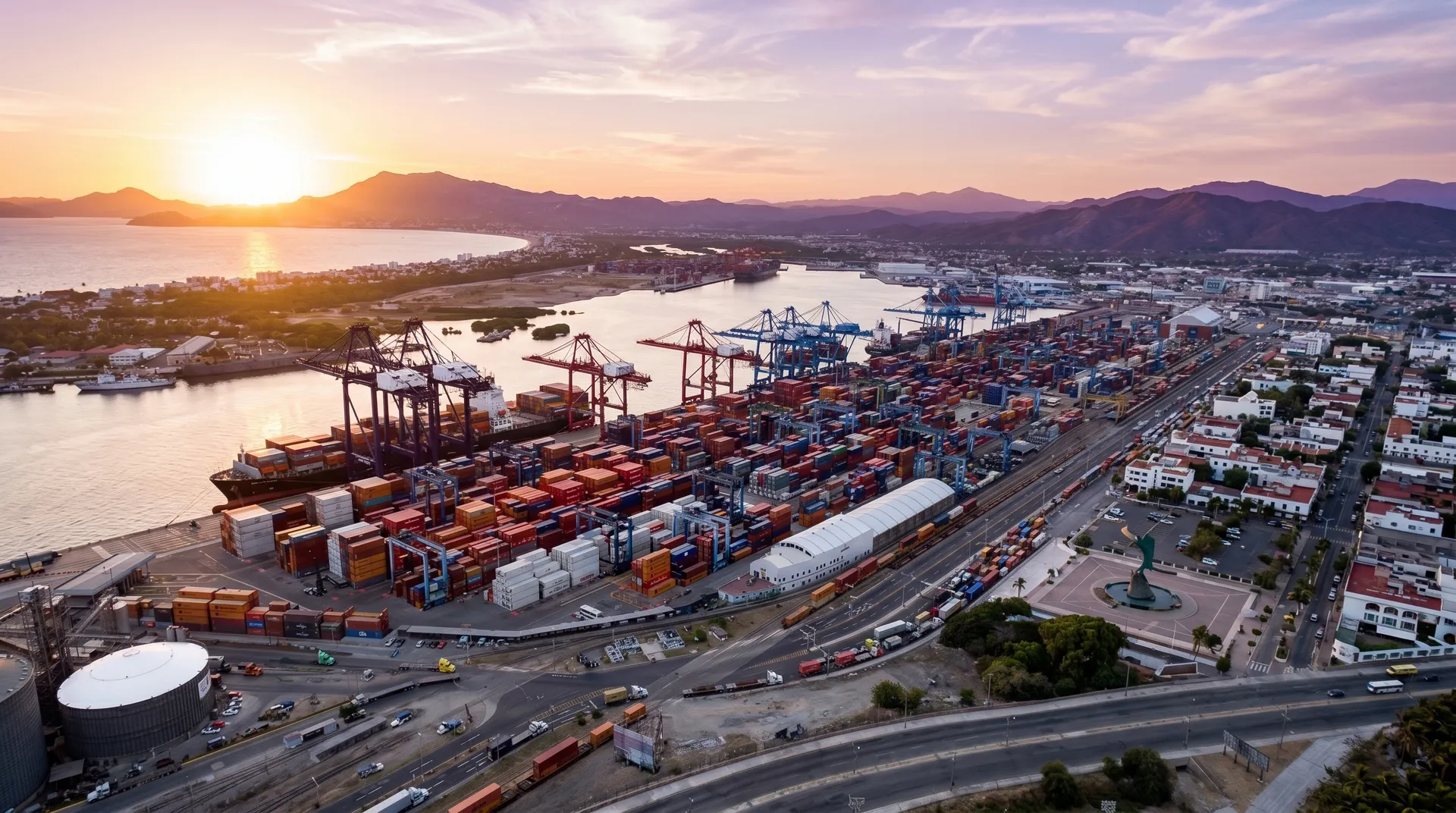 Origin
Manzanillo, located on Mexico's Pacific coast in the state of Colima, stands as the country's busiest cargo port and a strategic logistics hub. The city's port complex handles over 2.5 million TEUs annually, serving as a critical gateway for international trade between Asia and North America. Its deep-water facilities can accommodate the largest container vessels, making it an essential node in global supply chains.
The region's economy centers around port activities, fishing, and tourism, but has diversified significantly with the development of industrial parks and manufacturing facilities. Key industries include automotive parts production, electronics assembly, agricultural processing (particularly fruits and vegetables), and mining-related exports. The port's Free Trade Zone status attracts numerous companies seeking efficient import-export operations. Transportation infrastructure includes the port's extensive facilities, connections to major Mexican highways, and a rail terminal that links to the national network, providing multiple options for cargo movement to inland destinations.
 Destination
Omaha
Omaha, Nebraska, serves as a strategic logistics hub in the American Midwest, positioned at the crossroads of major transportation networks. The city's location provides excellent access to the central United States, with proximity to Interstate 80, one of the nation's primary east-west corridors. Omaha's Eppley Airfield and extensive rail connections through Union Pacific further enhance its role as a distribution center.
The local economy is diverse, with strong presence in financial services, insurance, telecommunications, and food processing. Major employers include Berkshire Hathaway, Union Pacific, and several Fortune 500 companies that maintain significant operations in the area. The region is particularly strong in agribusiness, with food processing facilities and agricultural commodity trading playing crucial roles. Omaha's distribution infrastructure includes modern warehousing facilities, cross-docking operations, and a well-developed last-mile delivery network, making it an ideal destination for goods arriving from international markets and requiring distribution throughout the central United States.










