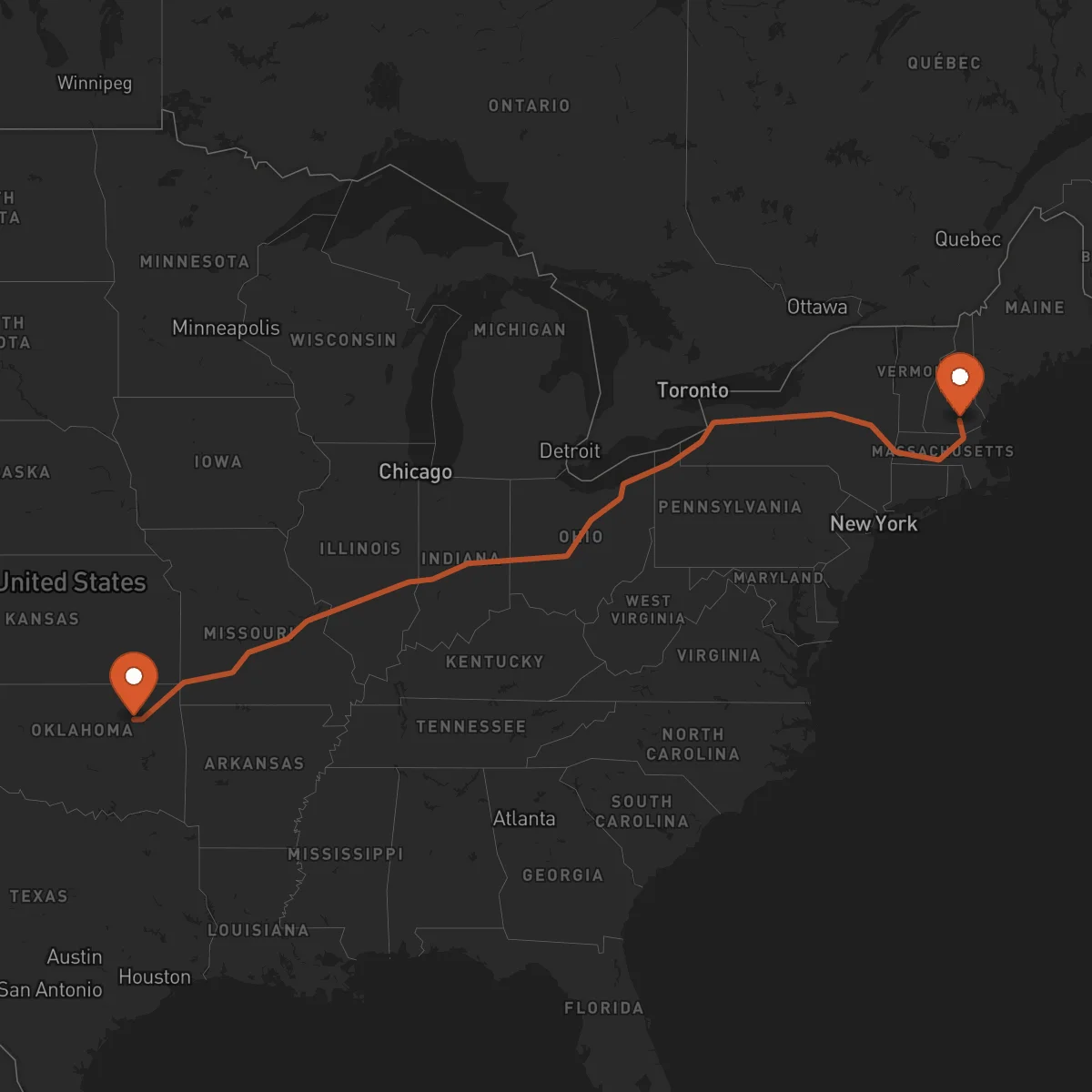
Manchester to Tulsa
Tulsa → ManchesterFTL freight transportation service between Manchester and Tulsa. Reliable logistics solutions for your business.
Route Description
Everything you need to know about the corridor Manchester - Tulsa
The logistics corridor connecting Mánchester, New Hampshire to Tulsa, Oklahoma represents a critical transportation link spanning approximately 2,226 kilometers across the eastern United States. This east-west route traverses diverse geographic and economic regions, connecting the industrial Northeast with the energy and manufacturing hub of the Midwest. The corridor serves as a vital artery for freight movement between these two distinct economic centers, facilitating the flow of goods across multiple state lines and economic zones.
The route primarily follows major interstate highways including I-90, I-80, and I-44, providing reliable and efficient transportation infrastructure. This well-established path allows for consistent transit times and multiple routing options to accommodate various cargo types and delivery schedules. The corridor passes through key metropolitan areas including Albany, Buffalo, St. Louis, and Oklahoma City, offering numerous opportunities for strategic stops, transloading, or distribution along the way.
Control Terrestre specializes in optimizing this corridor through our network of certified transportation partners. We understand the unique challenges of this long-haul route, including varying state regulations, weather considerations, and the need for specialized equipment for different cargo types. Our expertise in full truckload (FTL) services ensures that your freight moves efficiently and securely from origin to destination, with dedicated equipment and professional drivers who understand the nuances of interstate commerce along this important route.
Services for this Route
Available services for the corridor Manchester - Tulsa
 Origin
Manchester
Mánchester, New Hampshire serves as a strategic gateway for freight movement in the northeastern United States. Located in the heart of New England, Mánchester benefits from its proximity to major economic centers like Boston while offering more competitive logistics costs. The city has developed strong industrial and manufacturing sectors, particularly in advanced materials, electronics, and precision manufacturing. Its location provides excellent access to the Port of Boston and other major transportation hubs in the region.
The transportation infrastructure in Mánchester includes multiple interstate connections, notably I-93 and I-89, which provide direct access to the broader northeastern transportation network. The city's Manchester-Boston Regional Airport supports air freight operations, while the nearby Port of Boston handles significant ocean freight volume. These multimodal capabilities make Mánchester an ideal origin point for freight destined for markets across the United States, particularly for businesses seeking efficient access to both coastal and inland destinations.
 Destination
Tulsa
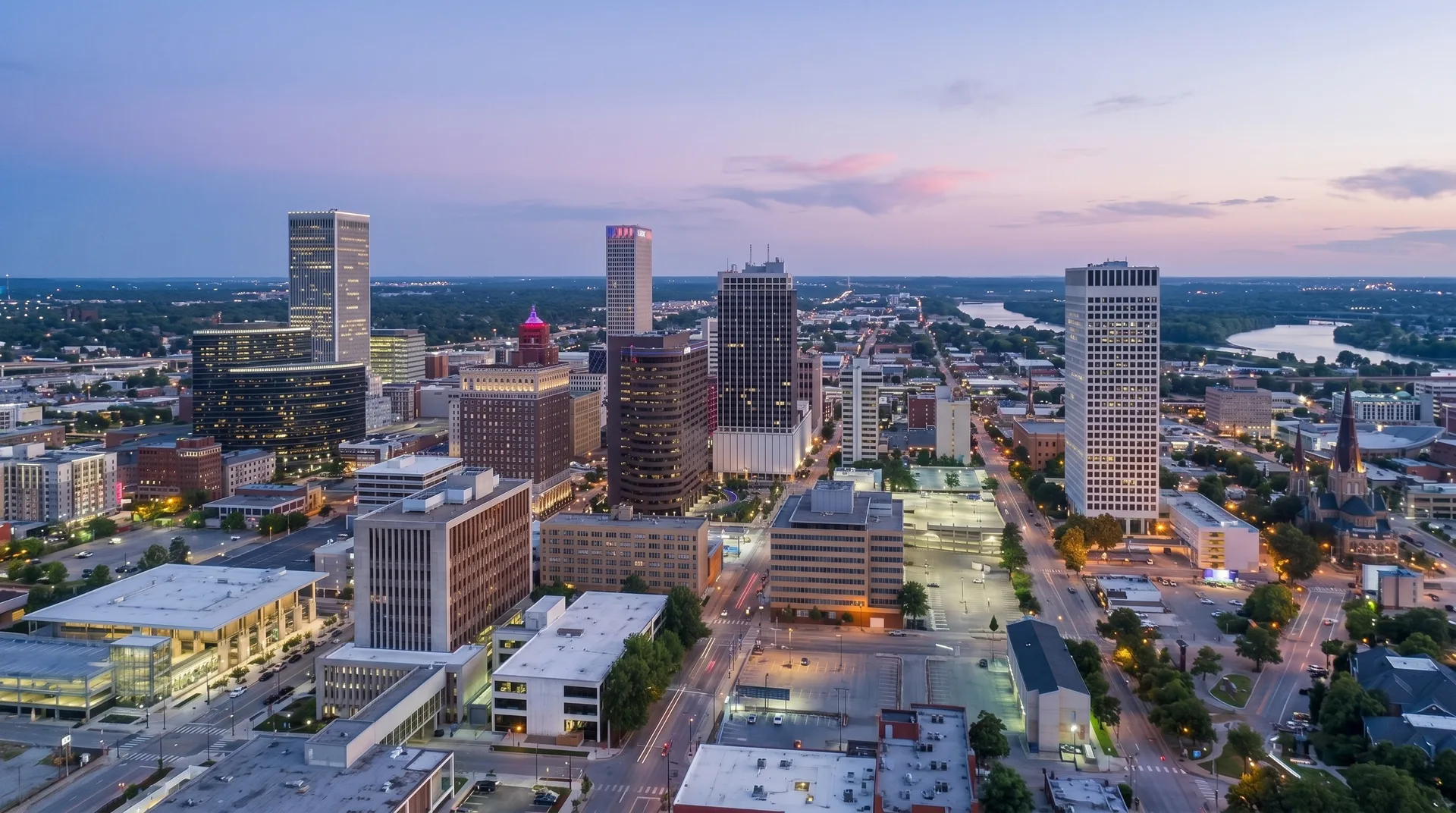
Tulsa, Oklahoma stands as a major logistics and distribution center in the central United States, strategically positioned at the crossroads of multiple interstate highways. As the second-largest city in Oklahoma, Tulsa has evolved into a significant energy and manufacturing hub, with strong presence in aerospace, telecommunications, and logistics industries. The city's location provides excellent access to markets throughout the Midwest, South, and Southwest regions.
The transportation infrastructure in Tulsa is exceptionally well-developed, featuring direct access to I-44, I-35, and I-40, creating a robust network for freight movement. Tulsa International Airport supports substantial air cargo operations, while the Tulsa Port of Catoosa provides inland waterway access via the McClellan-Kerr Arkansas River Navigation System. This multimodal capability, combined with Tulsa's central location, makes it an ideal destination for freight distribution to surrounding states and beyond. The city's logistics ecosystem includes numerous warehousing and distribution facilities, supporting efficient last-mile delivery and regional distribution operations.










