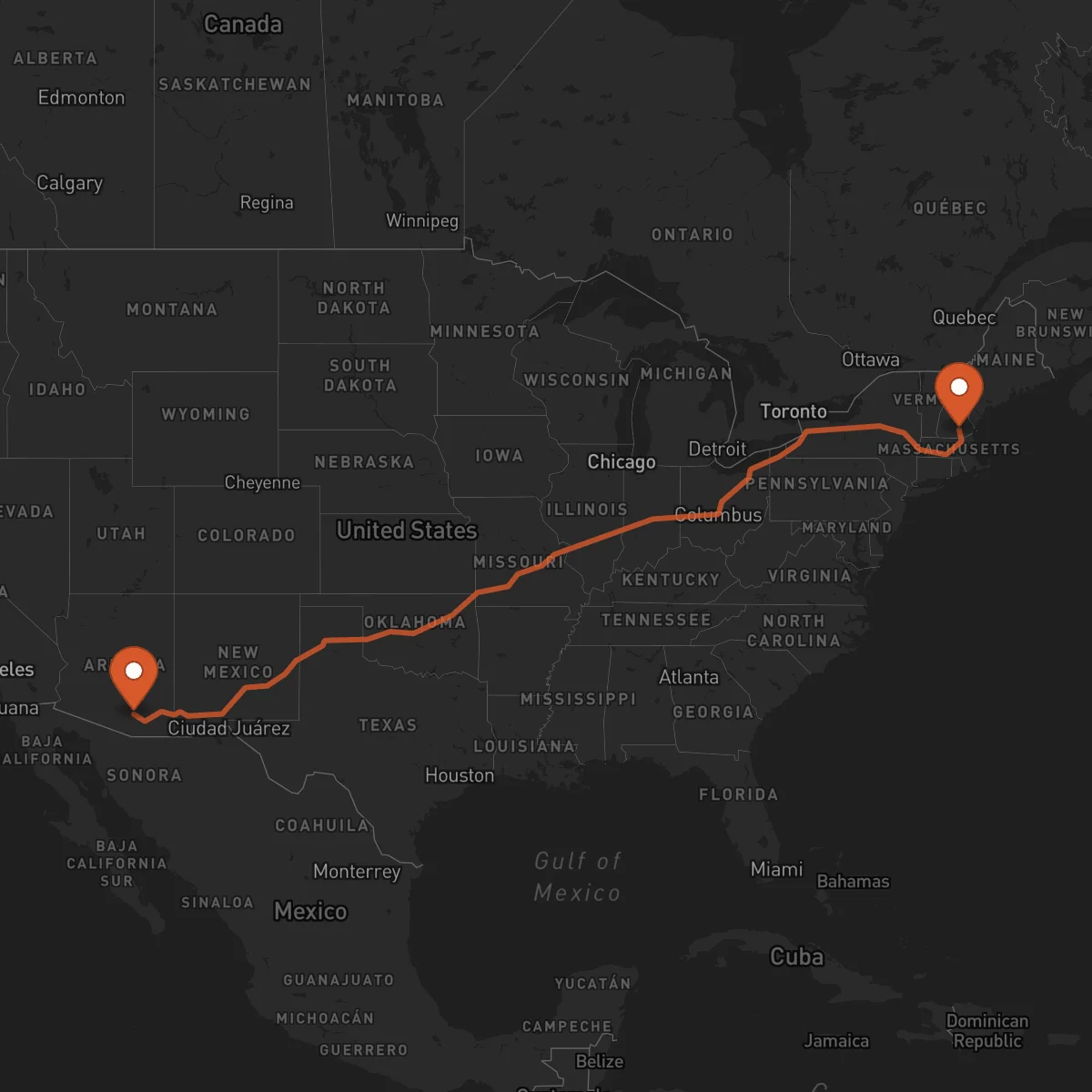
Manchester to Tucson
Tucson → ManchesterFTL freight transportation service between Manchester and Tucson. Reliable logistics solutions for your business.
Route Description
Everything you need to know about the corridor Manchester - Tucson
The freight corridor between Mánchester, New Hampshire and Tucson, Arizona represents a critical domestic transportation route spanning approximately 3,641 kilometers across the United States. This east-west corridor connects the industrial Northeast with the growing Southwest, facilitating the movement of goods between two distinct economic regions. The route traverses diverse geographic and economic zones, from the manufacturing centers of New England through the agricultural Midwest to the technology and defense hubs of the Southwest. Control Terrestre provides specialized FTL (Full Truckload) services along this corridor, ensuring that freight moves efficiently and securely between these strategic locations. Our experienced carriers utilize the most efficient routes, primarily using I-90 and I-10, to deliver reliable transportation solutions for businesses requiring full truckload capacity between Mánchester and Tucson.
Services for this Route
Available services for the corridor Manchester - Tucson
 Origin
Manchester
Mánchester, located in southern New Hampshire, serves as a strategic logistics hub for the New England region. The city's proximity to major metropolitan areas like Boston and its access to interstate highways (I-93 and I-89) make it an ideal origin point for freight distribution. Mánchester's economy is diverse, with strong manufacturing, healthcare, and technology sectors. The city is home to numerous industrial parks and warehouses that support regional distribution networks. Its location provides excellent connectivity to both Canadian markets via I-89 and the broader northeastern United States, making it a strategic starting point for cross-country freight movements.
 Destination
Tucson
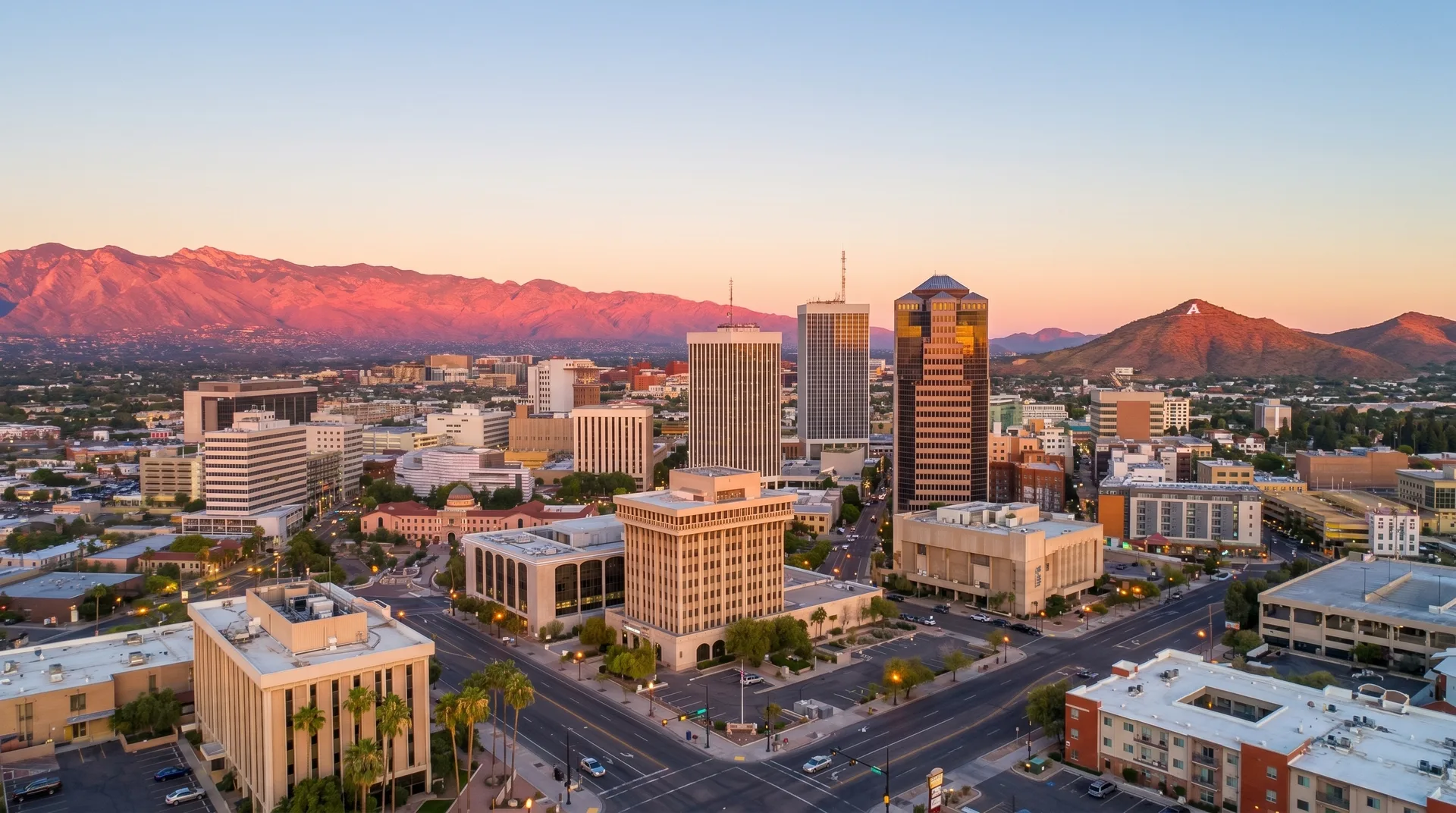
Tucson, Arizona, located in the Sonoran Desert, is a growing logistics and economic center in the Southwest United States. The city's strategic position near the Mexican border and its proximity to major transportation routes, including I-10, make it a crucial distribution point for both domestic and international freight. Tucson's economy is driven by aerospace and defense industries, healthcare, and technology sectors. The city's Sky Harbor International Airport and its connection to major rail lines enhance its logistics capabilities. Tucson's growing population and economic development have increased the demand for efficient freight transportation services, particularly for industries requiring reliable supply chain solutions.










