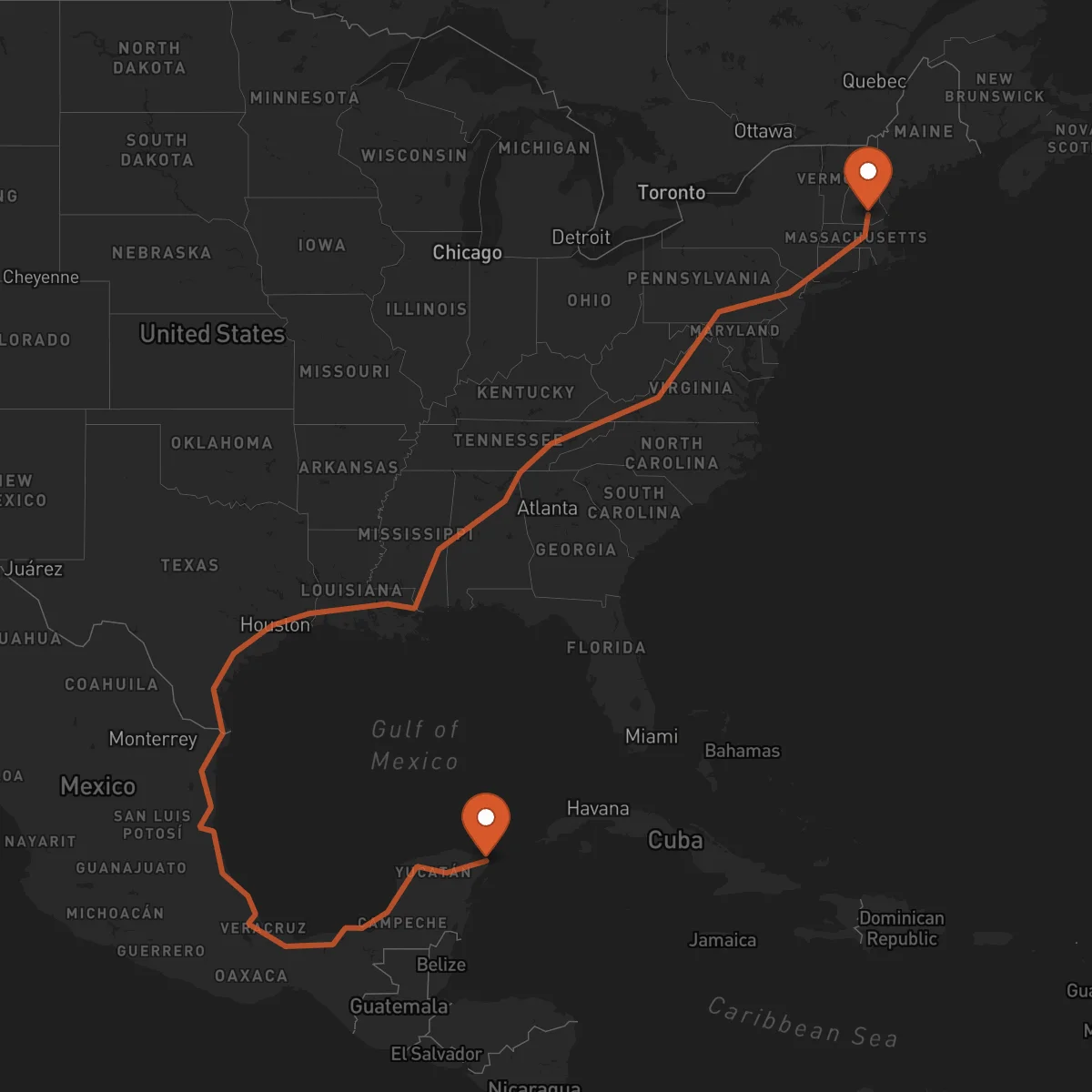
Manchester to Cancún
Cancún → ManchesterFTL freight transportation service between Manchester and Cancún. Reliable logistics solutions for your business.
Route Description
Everything you need to know about the corridor Manchester - Cancún
The logistics corridor connecting Mánchester, New Hampshire, to Cancún, Quintana Roo, represents a vital cross-border freight transportation route spanning approximately 2,818 kilometers. This corridor serves as a strategic link between the northeastern United States manufacturing and distribution hub and Mexico's premier Caribbean tourism destination. The route traverses diverse terrain and crosses multiple state and international borders, requiring specialized logistics expertise to ensure efficient cargo movement.
The corridor's significance stems from the complementary economic activities of both regions. Mánchester serves as a key distribution center for New England, with strong manufacturing, technology, and retail sectors that require reliable outbound freight services. Cancún, as Mexico's leading tourist destination, demands consistent supply of goods ranging from construction materials for ongoing development to consumer products for the hospitality industry. The route facilitates essential trade flows supporting both economies.
Transportation along this corridor primarily utilizes major interstate highways including I-95 South through the northeastern United States, connecting to I-10 West toward Texas, before transitioning to Mexican Federal Highway 180 to reach Cancún. The primary border crossing is typically Laredo/Nuevo Laredo, one of North America's busiest commercial ports of entry. Control Terrestre's expertise in cross-border operations ensures seamless customs clearance and regulatory compliance, with our C-TPAT and FAST certified carriers providing expedited processing through these critical checkpoints.
Services for this Route
Available services for the corridor Manchester - Cancún
 Origin
Manchester
Mánchester, located in southern New Hampshire, serves as a strategic logistics hub for the northeastern United States. The city's proximity to major markets in Boston, New York, and Montreal, combined with its position along key transportation corridors, makes it an ideal origin point for freight distribution. Mánchester benefits from excellent ground transportation infrastructure, including direct access to I-93 and I-89, facilitating efficient connections to major interstate highways. The region's robust economy spans advanced manufacturing, healthcare technology, education, and retail distribution sectors. Several industrial parks and warehousing facilities in the area provide consolidated shipping points for diverse cargo types. The city's international airport also offers air-cargo capabilities for time-sensitive shipments, while rail connections through Pan Am Railways provide intermodal options. These multimodal transportation assets, combined with New Hampshire's business-friendly regulatory environment, position Mánchester as a reliable origin for cross-border freight movements to destinations throughout North America.
 Destination
Cancún
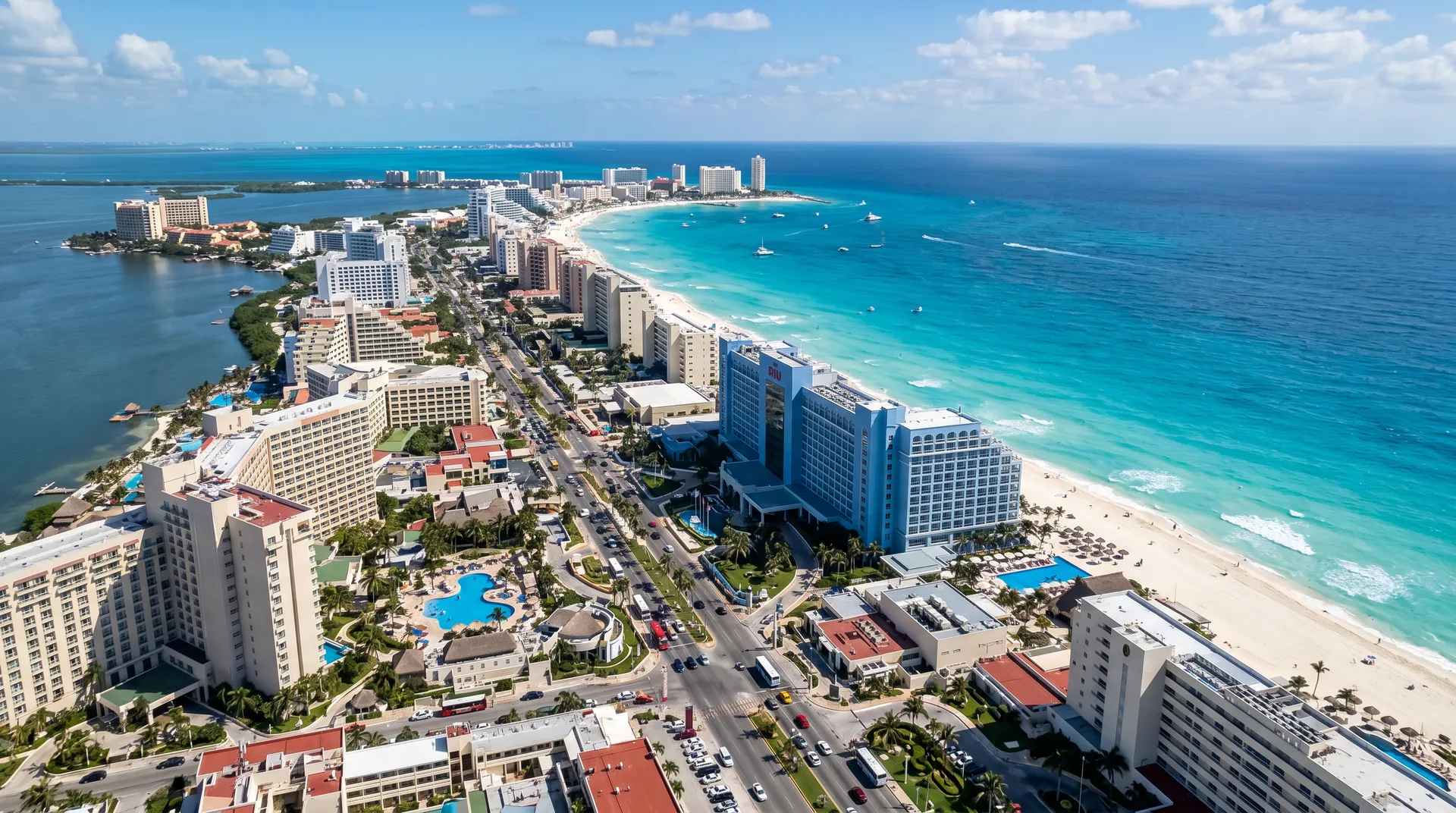
Cancún stands as a strategic logistics gateway to Mexico's Yucatán Peninsula and the broader Caribbean region. Located in Quintana Roo on Mexico's eastern coast, Cancún serves as the primary commercial hub for the Riviera Maya and surrounding areas. The city's growing industrial base complements its world-renowned tourism sector, creating diverse freight transportation needs. Cancún International Airport, one of Mexico's busiest, handles significant cargo volumes alongside passenger traffic. The region's highway network, centered on Federal Highway 180 and connections to Highway 307, provides reliable ground transportation links to other major Mexican cities and ports. Cancún's port facilities support both commercial cargo and cruise tourism operations, while ongoing infrastructure development continues to enhance the region's logistics capabilities. The city's strategic location makes it an ideal distribution point for goods destined throughout the Yucatán Peninsula, including the states of Yucatán and Campeche, as well as for export to Central American markets via maritime routes.










