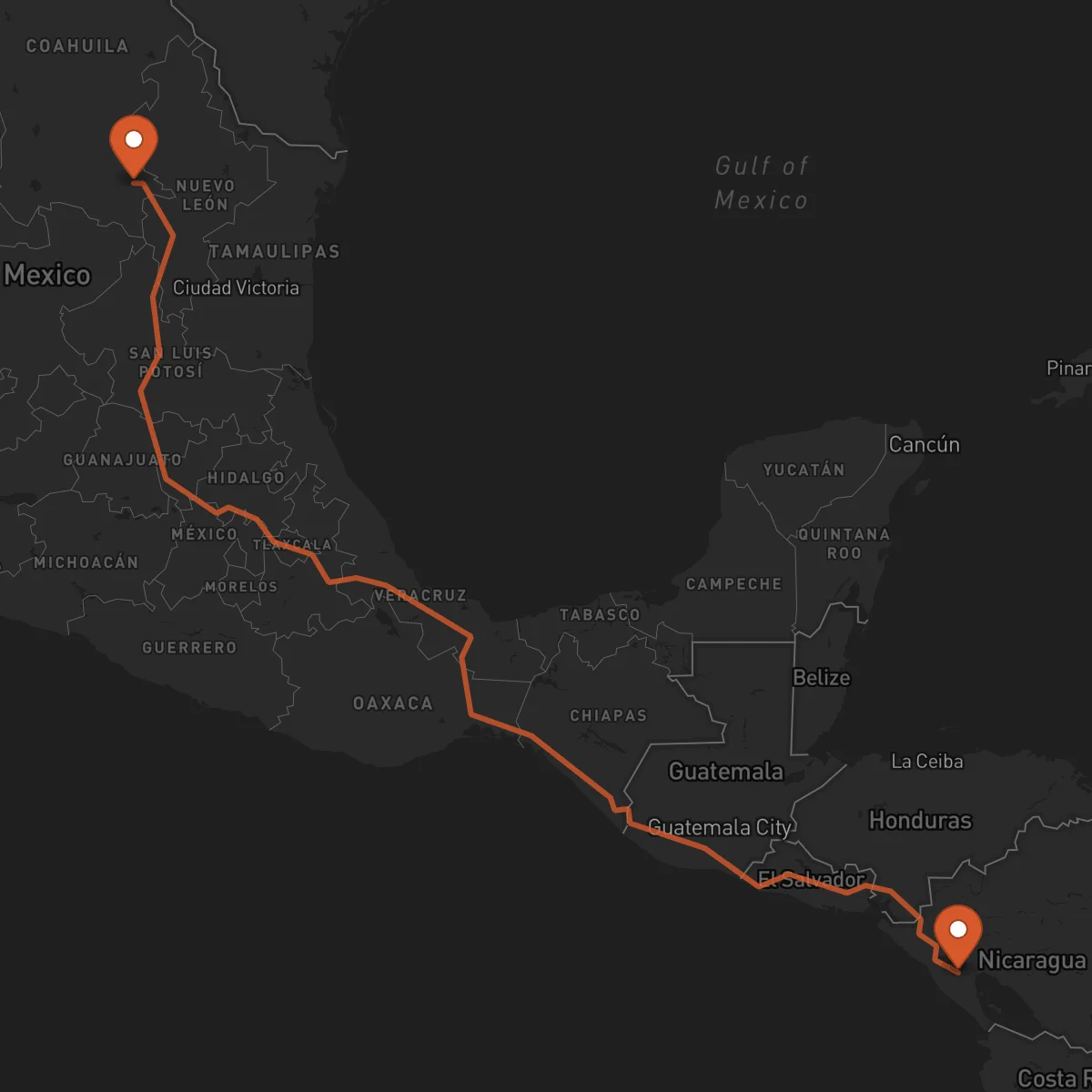
Managua to Saltillo
Saltillo → ManaguaFTL freight transportation service between Managua and Saltillo. Reliable logistics solutions for your business.
Route Description
Everything you need to know about the corridor Managua - Saltillo
The Managua to Saltillo corridor represents a vital North American trade artery connecting Nicaragua's capital with one of Mexico's key industrial hubs in Coahuila. This strategic cross-border route spans approximately 2,141 kilometers, serving as a critical link for supply chains moving goods between Central America and the industrial heartland of northern Mexico. The economic context is defined by Saltillo's status as a major automotive and manufacturing center, which generates consistent demand for inbound raw materials, components, and outbound finished goods. This corridor is heavily utilized by industries such as automotive manufacturing, industrial machinery, and consumer goods production that rely on seamless, just-in-time logistics. The primary transportation infrastructure follows a well-established network of highways, including Mexico's Federal Highway 57 (Carretera Federal 57), a crucial north-south corridor that connects the border region directly to the Saltillo metropolitan area. The most significant border crossing for this route is typically at the Nicaragua-Honduras border (e.g., Las Manos/El Guasaule) and then through subsequent Central American crossings before reaching the Mexico-Guatemala border (e.g., Ciudad Hidalgo/Tecún Umán). Each crossing presents unique customs and regulatory considerations, requiring expertise in documentation, compliance with programs like C-TPAT and FAST, and coordination with local authorities. At Control Terrestre, we facilitate efficient operations on this corridor through our robust alliance of certified transportation providers. Our network ensures dedicated capacity for your full truckload (FTL) shipments, leveraging providers with certifications such as C-TPAT, BASC, and Clean Transportation to navigate cross-border complexities securely and compliantly. We manage the entire door-to-door process, from Managua's logistics parks to Saltillo's industrial zones, providing a single point of contact for your specialized cargo, including oversized or temperature-controlled freight, optimizing your supply chain across this international trade lane.
Services for this Route
Available services for the corridor Managua - Saltillo
 Origin
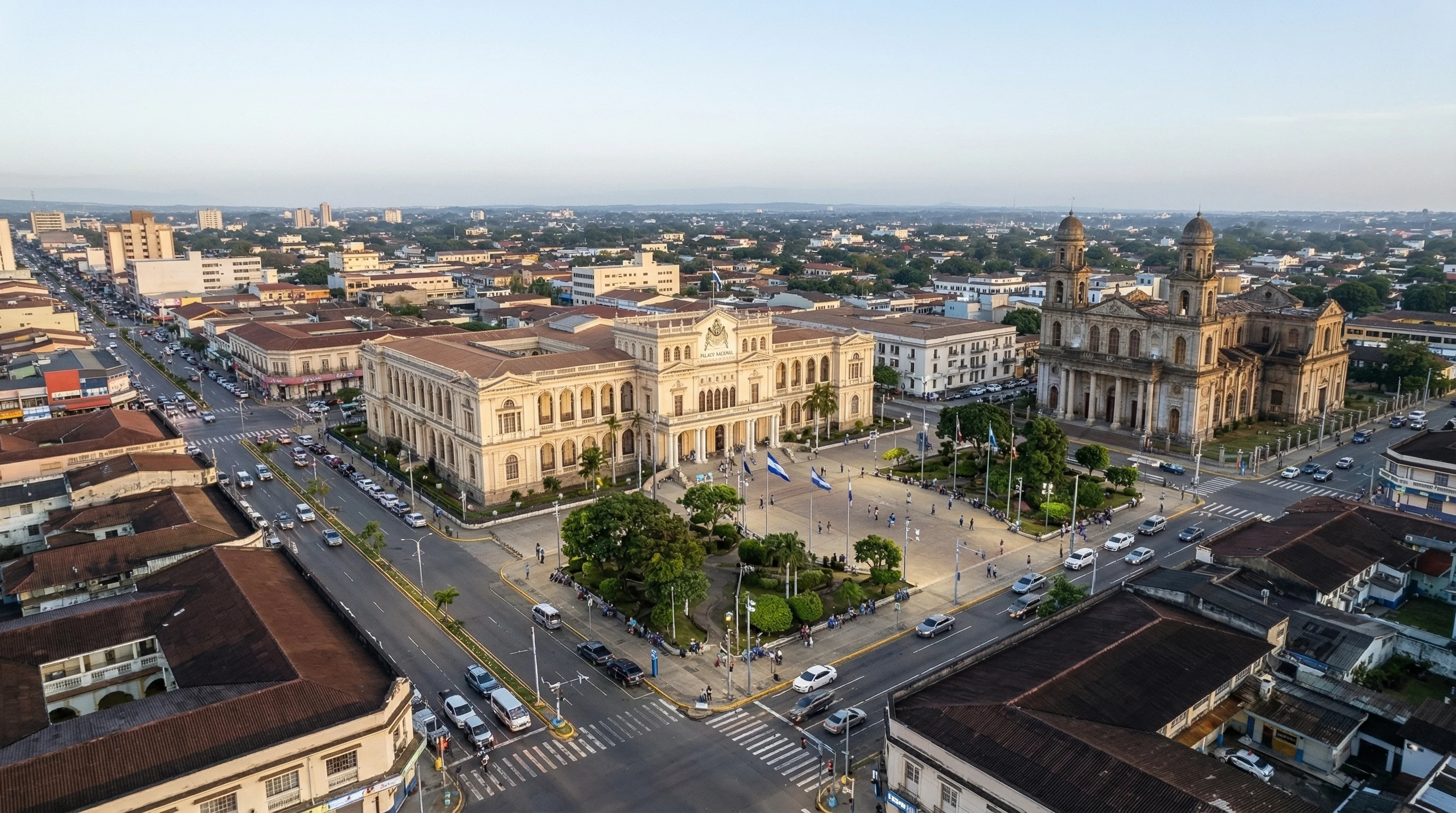
Managua, the capital of Nicaragua, serves as a pivotal logistics and distribution hub for Central America, strategically positioned along major north-south trade routes. Its economic landscape is diverse, with key sectors including agriculture (coffee, beef, sugar), light manufacturing, and services. The city's infrastructure supports regional freight movement, featuring direct access to the Port of Corinto on the Pacific coast for maritime connections and a network of paved highways that radiate outward to connect with Honduras, Costa Rica, and the broader region. Key highways like the Pan-American Highway ( Nicaragua's portion of RN-1) facilitate overland transport north and south. For businesses, Managua offers a concentration of logistics services, warehousing, and a large consumer market, making it an essential origin point for goods destined for Mexico, the United States, and Canada. The city's airport, Augusto C. Sandino International Airport, also provides ancillary air cargo options for high-value or time-sensitive goods, though ground transport remains the dominant mode for bulk FTL freight exiting the region.
 Destination
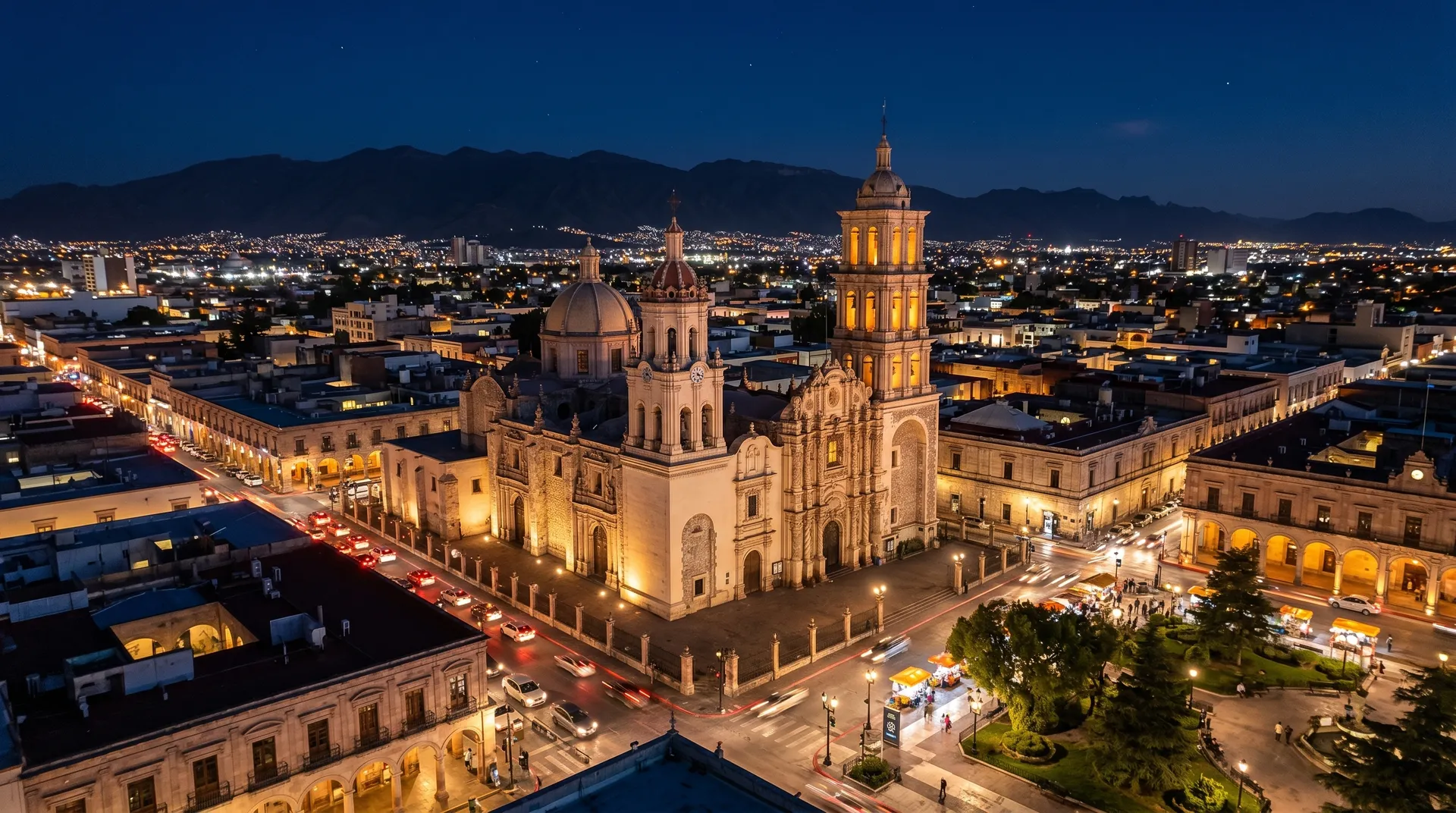
Saltillo, the capital of Coahuila, Mexico, is a premier industrial and manufacturing epicenter with exceptional strategic logistics value. Its economy is dominated by the automotive industry, hosting major assembly plants for General Motors, Stellantis, and a vast ecosystem of Tier 1, 2, and 3 suppliers. This generates immense volume for inbound logistics (parts, materials) and outbound logistics (vehicles, components). Beyond automotive, sectors like metal mechanics, aerospace, and appliances are significant. Saltillo's infrastructure is world-class, featuring direct, high-capacity access to the U.S. border via Federal Highway 57, which leads to major crossings like Laredo/World Trade Bridge. It is also a critical junction for rail freight, with multiple Class I railroads (Union Pacific, Kansas City Southern) providing intermodal options. The city is surrounded by numerous industrial parks with dedicated logistics facilities and is within a day's drive of the U.S. manufacturing border states, making it an indispensable destination for cross-border and domestic FTL freight. Its well-developed road network and proximity to multiple border crossings ensure reliable connectivity for supply chains targeting the U.S. market.










