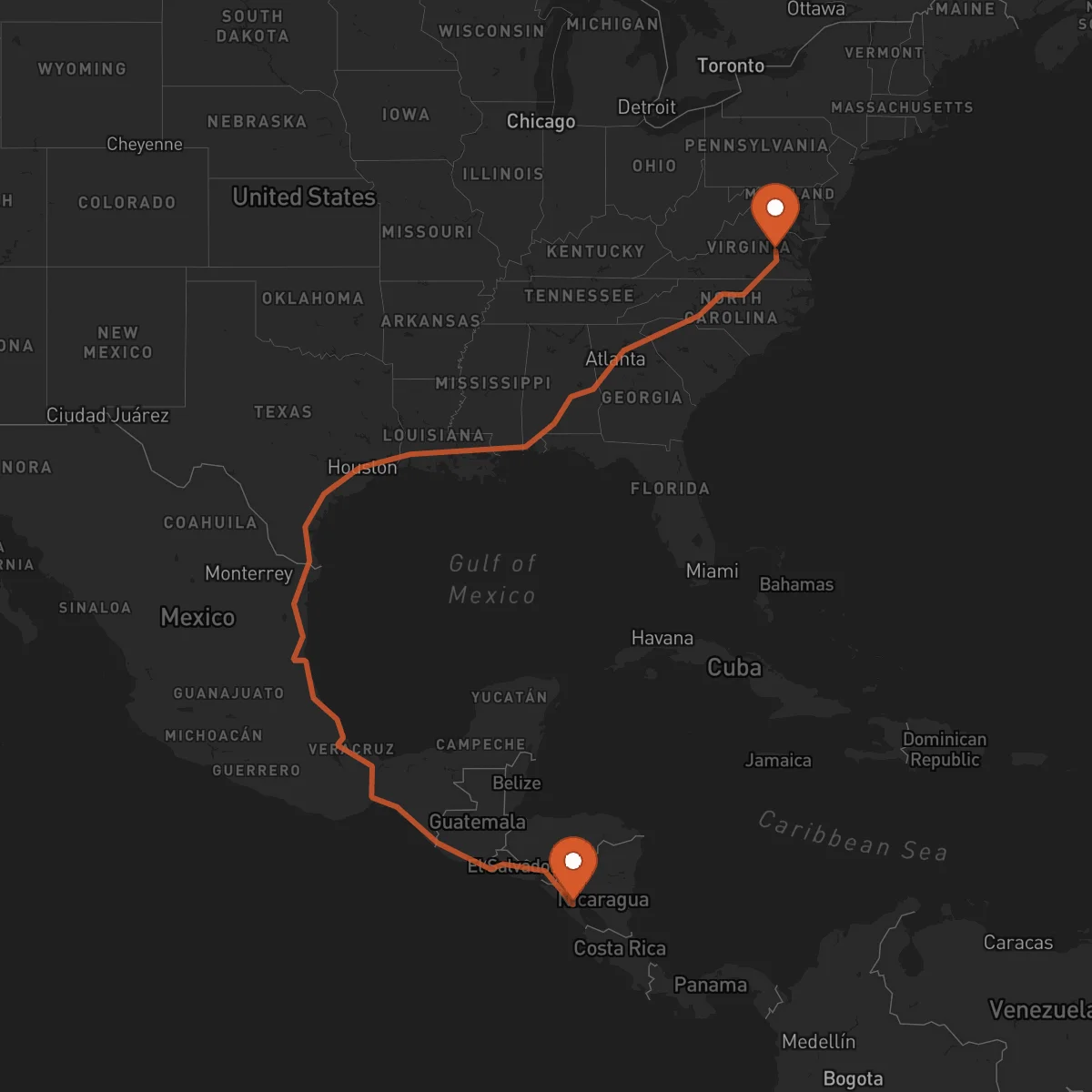
Managua to Richmond
Richmond → ManaguaFTL freight transportation service between Managua and Richmond. Reliable logistics solutions for your business.
Route Description
Everything you need to know about the corridor Managua - Richmond
The Managua to Richmond corridor is a critical cross-border artery connecting Central America's heartland with the industrial and consumer markets of the U.S. East Coast. This route serves as a vital economic bridge, facilitating the flow of goods between Nicaragua and the densely populated Eastern Seaboard, supporting regional trade under frameworks like CAFTA-DR. The corridor's strategic value lies in its ability to move full truckload (FTL) freight efficiently across diverse geopolitical and logistical landscapes.
Key industries leveraging this corridor include agriculture (coffee, beef, sugar), manufacturing and textiles, and processed foods from Nicaragua, destined for distribution centers, manufacturing plants, and retail hubs in Virginia and beyond. The return leg often carries finished goods, machinery, and consumer products southward. The primary transportation infrastructure relies on a network of major highways, including Nicaragua's RN1 and RN4, traversing Honduras and Guatemala before entering Mexico. The route then utilizes Mexico's extensive toll road system (e.g., Circuito Interior, Autopista México-Veracruz) to reach the U.S. border.
Critical border crossings, such as those at Honduras-Guatemala (e.g., Agua Caliente) and the Mexico-U.S. border (primarily through Laredo/El Paso for eastbound traffic), require meticulous customs compliance. Control Terrestre's alliance of providers holds essential certifications like C-TPAT, FAST, and BASC, which streamline customs procedures and enhance security for our clients' cargo. We manage the complex documentation and regulatory adherence, ensuring seamless transitions at each international boundary.
We facilitate operations on this corridor by providing dedicated, expert coordination from a single point of contact. Our network's specialized equipment—including 53' dry vans, reefers, and flatbeds—matches the diverse cargo needs. By handling the entire door-to-door sequence through our vetted partners, we offer a reliable, human-centric solution for FTL shipments, optimizing supply chains without the complexity of dealing with multiple, disconnected carriers.
Services for this Route
Available services for the corridor Managua - Richmond
 Origin
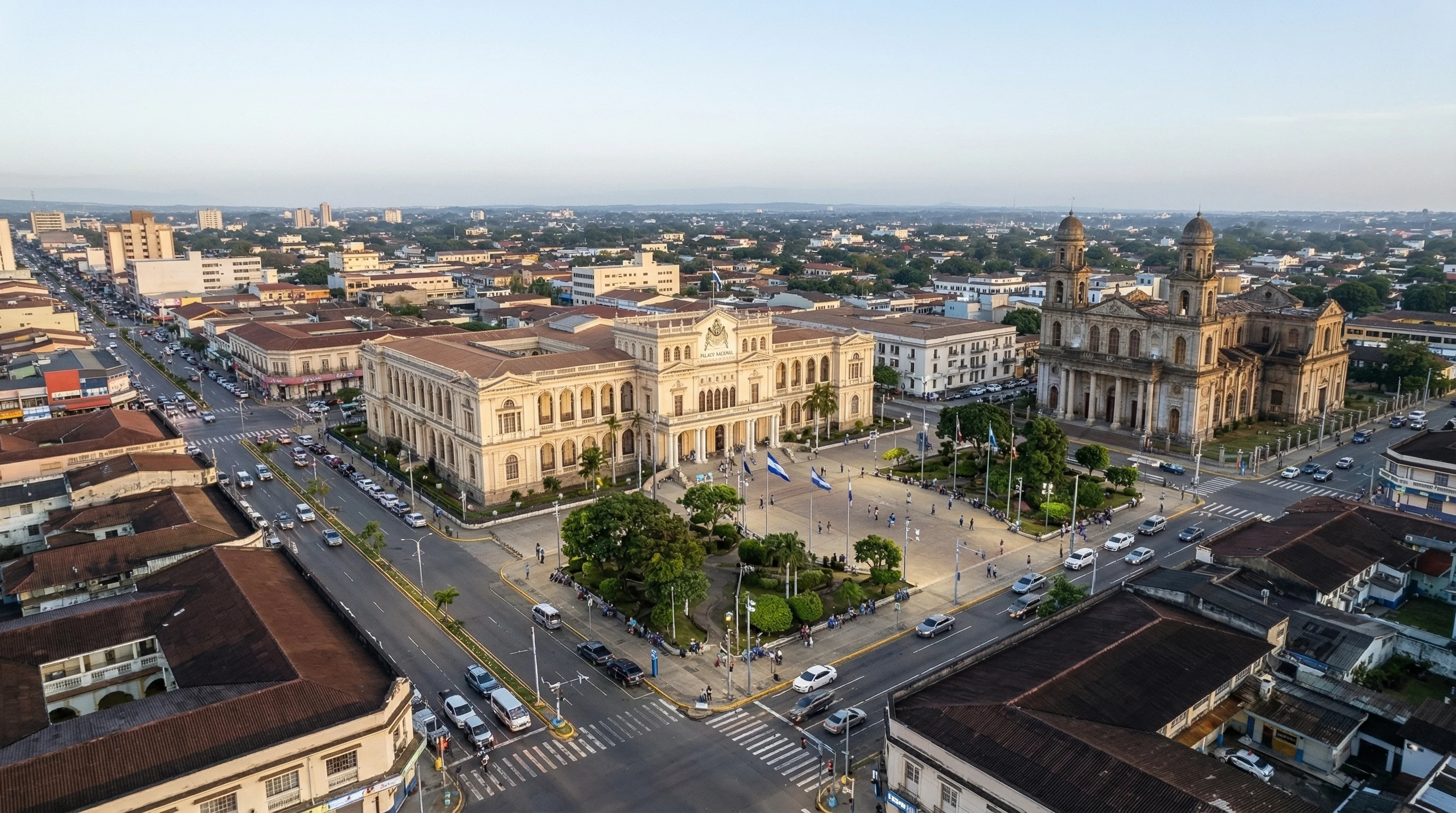
Managua, the capital of Nicaragua, serves as the nation's primary logistics and distribution hub. Its strategic location in the country's central region provides direct highway access to both the Pacific coast ports (like Corinto) and the northern and southern borders. The city is the nucleus for Nicaragua's key economic sectors, which include robust agricultural exports (coffee, beef, peanuts, sugar), a significant textile and apparel manufacturing industry, and food processing. The surrounding region produces a wide array of goods requiring efficient northbound freight transport.
Infrastructure around Managua is anchored by the Pan-American Highway (RN1), which is the main north-south artery connecting to the Honduran border at Las Manos. The RN4 provides a vital east-west link to the Caribbean coast. The nearby Port of Corinto handles containerized cargo, though the majority of FTL freight to the U.S. moves via land corridors. Managua's airport (Augusto C. Sandino International) also supports high-value or urgent air freight integrations. For Control Terrestre, Managua represents a key origin node where we consolidate FTL shipments, leveraging local expertise to ensure cargo is properly prepared for the complex international journey ahead, with equipment suited for agricultural, manufactured, and general freight.
 Destination
Richmond
Richmond, Virginia, is a major logistics and industrial hub for the U.S. East Coast, offering exceptional strategic value as a destination. Its central location within the Virginia Piedmont region provides direct access to the massive consumer markets of the Northeast (via I-95) and the Southeast, making it a prime distribution point. The city is a center for advanced manufacturing, particularly in chemicals, pharmaceuticals, and plastics, and is surrounded by fertile agricultural land producing tobacco, poultry, and grains. Major industries also include finance, technology, and a strong warehousing and distribution sector.
Richmond's infrastructure is world-class, featuring direct interstate access via I-95 (the primary East Coast corridor), I-64, and I-295. The Port of Virginia in nearby Hampton Roads is one of the deepest and most efficient container ports on the East Coast, often integrated into the supply chain. The city is also a key rail hub with Class I railroad terminals. For Control Terrestre, Richmond is a high-volume destination where our FTL services deliver to manufacturing plants, distribution centers, and warehouses. Our providers' familiarity with local regulations, traffic patterns, and delivery requirements ensures that freight arriving from Central America is efficiently and professionally tendered to its final consignee.










