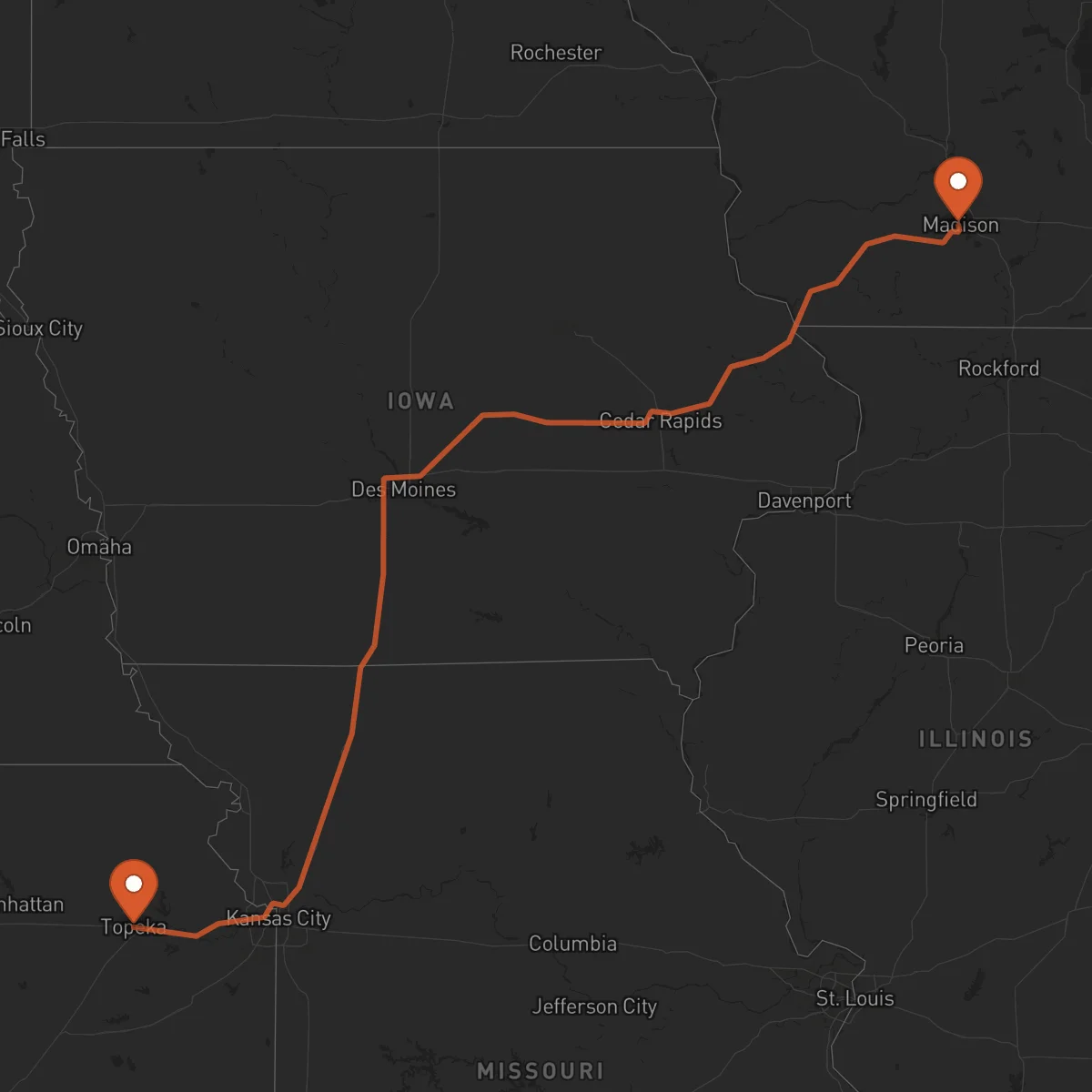
Madison to Topeka
Topeka → MadisonFTL freight transportation service between Madison and Topeka. Reliable logistics solutions for your business.
Route Description
Everything you need to know about the corridor Madison - Topeka
The logistics corridor between Madison, Wisconsin, and Topeka, Kansas, represents a vital transportation link connecting the Upper Midwest with the Central Plains. This 690-kilometer route traverses diverse economic regions, facilitating the movement of goods between two important industrial and agricultural centers. The corridor serves as a crucial artery for supply chain operations, connecting manufacturing hubs, agricultural producers, and distribution centers across multiple states.
The economic significance of this corridor cannot be overstated. Madison serves as a major center for biotechnology, healthcare, and advanced manufacturing, while Topeka anchors a robust agricultural and food processing industry. This complementary economic relationship creates substantial freight demand, with goods flowing in both directions to support regional economic integration. The corridor benefits from its position connecting the Great Lakes industrial region with the agricultural heartland of Kansas.
Key industries utilizing this corridor include agricultural equipment manufacturing, food processing, pharmaceuticals, and consumer goods distribution. The route accommodates a diverse range of freight types, from refrigerated food products to industrial machinery and raw materials. Control Terrestre's specialized FTL services ensure that these varied cargo types reach their destinations efficiently and securely, supporting the continuous flow of commerce between these strategic markets.
Transportation infrastructure along this corridor includes major interstate highways that provide reliable, year-round access. The route leverages the extensive highway network connecting Wisconsin to Kansas, ensuring consistent transit times and minimal disruptions. Control Terrestre's expertise in managing this corridor means our clients benefit from optimized routing, real-time tracking, and dedicated service that keeps their supply chains moving smoothly across this important North American trade route.
Services for this Route
Available services for the corridor Madison - Topeka
 Origin
Madison
Madison, Wisconsin, serves as a strategic logistics hub in the Upper Midwest, offering exceptional connectivity for freight transportation. Located in south-central Wisconsin, Madison benefits from its position near major transportation corridors including Interstate 90/94, which provides direct access to both Chicago and Minneapolis markets. The city's infrastructure includes multiple rail connections and proximity to major airports, creating a multimodal transportation environment that enhances freight movement capabilities.
The economic base of Madison is diverse and robust, anchored by education, healthcare, and advanced manufacturing sectors. The University of Wisconsin-Madison drives significant research and biotechnology activity, while the surrounding region is known for dairy production and food processing. These industries generate substantial freight demand, particularly for specialized equipment, temperature-controlled products, and industrial components. The city's growing technology sector also contributes to increased demand for just-in-time logistics services, making efficient transportation solutions essential for local businesses.
 Destination
Topeka
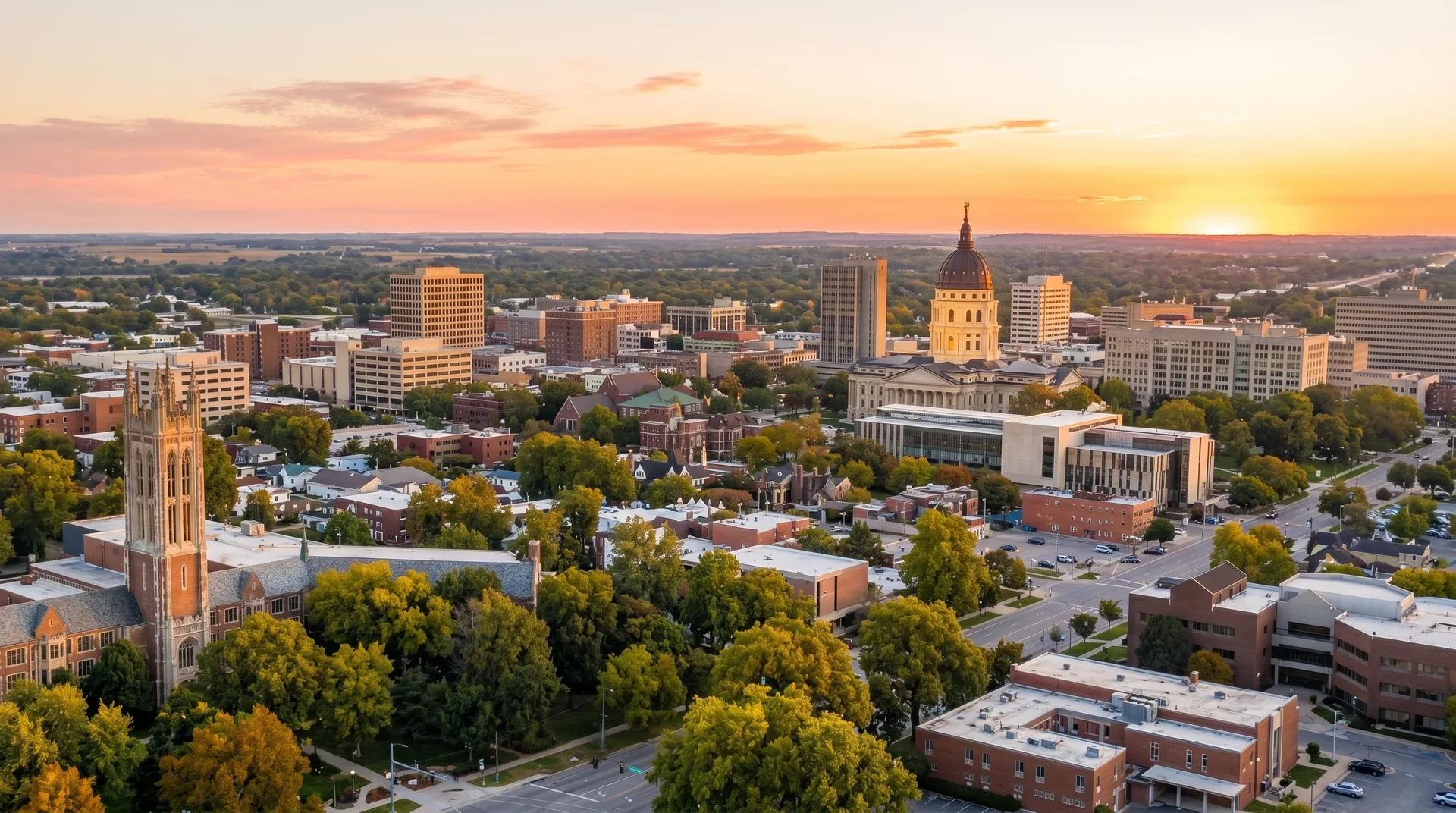
Topeka, Kansas, occupies a strategic position in the Central Plains, serving as a key logistics and distribution center for the region. Located in northeastern Kansas along Interstate 70, Topeka provides excellent connectivity to major markets across the Midwest and beyond. The city's transportation infrastructure includes direct highway access, rail connections through the Union Pacific and BNSF networks, and proximity to Kansas City International Airport, creating a comprehensive logistics ecosystem.
The economic landscape of Topeka is anchored by state government operations, healthcare services, and a strong agricultural foundation. The region is a major producer of wheat, corn, and soybeans, with significant food processing and agricultural equipment manufacturing activity. These industries generate substantial freight movement, particularly for bulk commodities, agricultural inputs, and finished products. Topeka's role as a regional distribution center is enhanced by its central location within the continental United States, making it an ideal point for cross-country freight consolidation and distribution operations.










