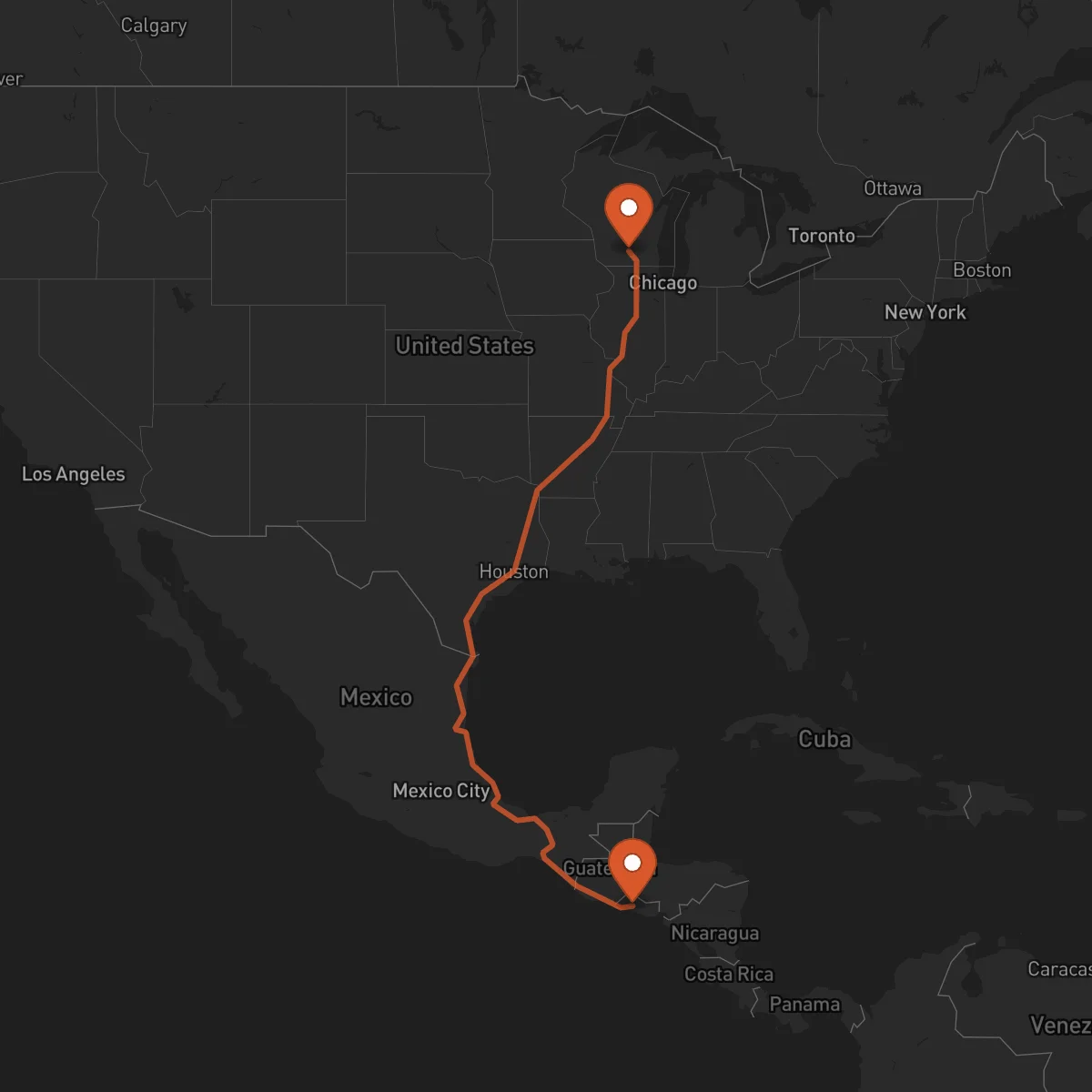
Madison to San Salvador
San Salvador → MadisonFTL freight transportation service between Madison and San Salvador. Reliable logistics solutions for your business.
Route Description
Everything you need to know about the corridor Madison - San Salvador
The Madison to San Salvador corridor represents a vital North-South trade artery connecting the industrial Midwest of the United States with the dynamic economic heart of Central America. This cross-border route, spanning approximately 3,266 km, facilitates the movement of goods critical to both regional economies, leveraging a complex network of highways and multiple international border crossings. Its strategic importance lies in enabling efficient supply chain links between U.S. manufacturing and agricultural hubs and the consumption and production markets of El Salvador and the broader region. Economically, the corridor supports the flow of industrial machinery, automotive parts, processed foods, and raw materials from Wisconsin's robust manufacturing and agricultural sectors to meet demand in El Salvador's growing industrial and retail landscapes. Conversely, it carries back textiles, apparel, seafood, and agricultural exports from El Salvador to U.S. markets. The primary industries utilizing this route include food and beverage processing, plastics and rubber manufacturing, agricultural inputs, and consumer goods distribution. The transportation infrastructure relies heavily on the U.S. Interstate Highway System, notably I-90 and I-94 eastward from Madison to Chicago, then south via I-55 through Missouri and Arkansas, connecting to I-20 and I-10 towards the Texas/Mexico border. South of the U.S., the route traverses Mexico's federal highway network, such as routes 57, 85, and 190, before crossing into Guatemala. From there, key routes like CA-1 and CA-9 lead through Guatemala to the El Salvador border at San Cristóbal Las Minas, culminating on highways like the RN-5 into San Salvador. Critical border considerations include customs clearance at the U.S.-Mexico border (Laredo/El Paso corridors), the Mexico-Guatemala border (Ciudad Hidalgo/Tecún Umán), and the Guatemala-El Salvador border. Each crossing requires meticulous documentation, compliance with customs regulations, and adherence to specific import/export protocols of each nation. Control Terrestre facilitates seamless operations on this complex corridor through our strategic alliance of certified transportation providers. Our network's certifications, including C-TPAT and FAST for U.S. border expedited processing, and BASC for security standards in Mexico and Central America, help navigate customs efficiently. We coordinate dedicated full truckload (FTL) movements, managing the multi-country transition with expertise in cross-border documentation and carrier handoffs. Our available equipment, from 53' dry vans and reefers to flatbeds for oversized cargo, ensures we can handle the diverse freight needs of this corridor, providing a single point of contact for a door-to-door solution across three borders.
Services for this Route
Available services for the corridor Madison - San Salvador
 Origin
Madison
Madison, Wisconsin, serves as a strategic logistics origin in the upper Midwest, boasting a robust multi-modal infrastructure anchored by its central location within the U.S. industrial belt. The city is a primary hub for Wisconsin's diverse economy, which is heavily driven by advanced manufacturing, particularly in machinery, automotive components, and medical devices. The surrounding Dane County and broader region are also major agricultural producers, with significant output in dairy, corn, and specialty crops, generating consistent freight volumes for both raw materials and finished goods. Transportation infrastructure is comprehensive: Madison is directly served by Interstates 90 and 94, providing direct east-west corridors to Chicago, Minneapolis, and the Great Lakes ports. I-90 connects efficiently to I-39/90/94 southward, linking to the critical I-55 corridor that serves as the main artery for southbound traffic toward the U.S.-Mexico border. The Port of Milwaukee on Lake Michigan offers intermodal Great Lakes shipping options, and the region is well-served by major Class I railroads (Union Pacific, Canadian Pacific) with extensive railyards, providing vital intermodal connections. Dane County Regional Airport also supports air cargo for high-value, time-sensitive shipments. This convergence of highway, rail, and waterway infrastructure makes Madison an optimal consolidation point for FTL freight destined for Mexico, Central America, and beyond, allowing shippers to leverage efficient linehaul routes to primary border crossings like Laredo, TX.
 Destination
San Salvador
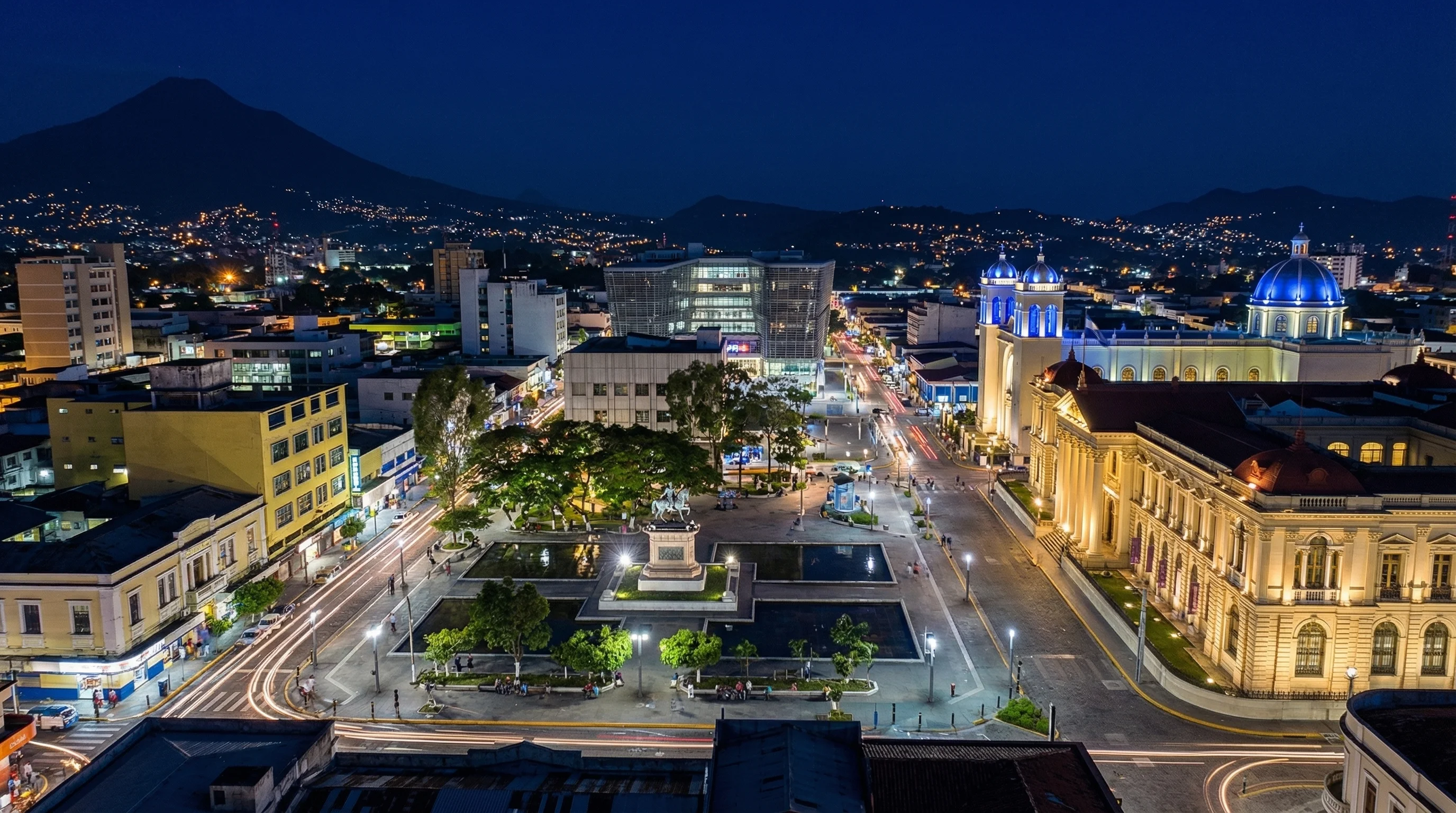
San Salvador, the capital of El Salvador, is the nation's primary economic, industrial, and distribution nucleus, acting as the ultimate destination and transshipment hub for the corridor. Its strategic location within Central America provides relative accessibility to regional markets, though the final leg of the journey involves navigating the region's road networks. The city's economy is powered by a mix of services, manufacturing, and commerce. Key industries include food and beverage processing, textiles and apparel (a major export sector), pharmaceuticals, plastics, and construction materials. The metropolitan area houses extensive warehousing and distribution centers that serve the country's retail sector and act as staging points for regional exports. The critical transportation infrastructure includes the Port of Acajutla, El Salvador's principal Pacific Ocean port, located about 80 km west of San Salvador. This port is a vital node for maritime connections, handling both imports for the domestic market and exports of coffee, sugar, and textiles. For land-based logistics, the RN-5 (Autopista Comalapa) is the main highway connecting San Salvador to the port and the international airport (Monseñor Óscar Arnulfo Romero International Airport), which has cargo facilities. Crucially, the city is the terminus for the CA-1 Pan-American Highway and is connected to the Guatemalan border via the RN-21 and RN-4, forming the final overland segment of the U.S.-bound corridor. This network supports the movement of goods into and out of the capital, though traffic congestion within the city and on approach routes requires careful planning for time-sensitive deliveries. San Salvador's role as the main consumption center and its port access make it a indispensable endpoint for full truckload freight entering the Salvadoran market.


Ready to ship your cargo?
Get a personalized quote for your freight.
Quote Now Madison - San Salvador








