Madison to Cheyenne
Cheyenne → MadisonFTL freight transportation service between Madison and Cheyenne. Reliable logistics solutions for your business.
Route Description
Everything you need to know about the corridor Madison - Cheyenne
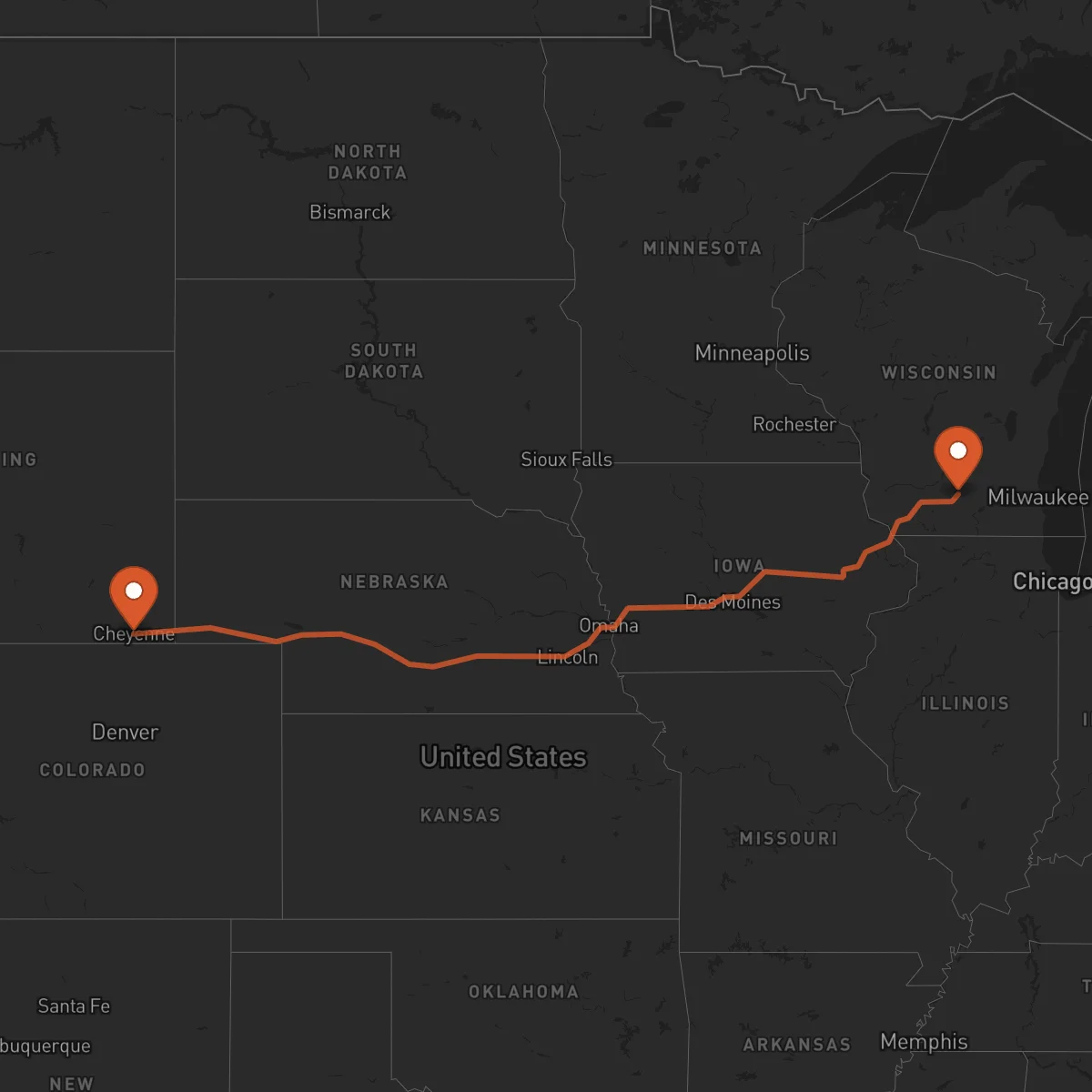
The logistics corridor connecting Madison, Wisconsin to Cheyenne, Wyoming represents a vital freight transportation route spanning approximately 1,288 kilometers across the American Midwest and Mountain West. This domestic corridor traverses diverse terrain and connects two strategically positioned cities that serve as economic hubs for their respective regions. The route facilitates the movement of goods between Wisconsin's manufacturing centers and Wyoming's energy and agricultural sectors, creating essential supply chain links that support both regional and national commerce.
The corridor follows major interstate highways including I-90 and I-25, providing reliable transportation infrastructure for freight movement. This route passes through key states including Wisconsin, Minnesota, South Dakota, and Wyoming, connecting industrial centers, agricultural regions, and energy production areas. The geographical positioning of this corridor makes it particularly valuable for companies requiring efficient transportation between the Upper Midwest's manufacturing base and the Rocky Mountain region's resource extraction and distribution networks.
Control Terrestre specializes in optimizing freight transportation along this corridor through our network of certified transportation providers. Our full truckload (FTL) services ensure dedicated capacity for your cargo, eliminating the delays and handling risks associated with consolidated freight. We provide consistent, reliable transportation solutions that maintain the integrity of your supply chain while offering the flexibility to accommodate specialized cargo requirements, including refrigerated goods, hazardous materials, and oversized shipments. Our strategic partnerships along this route enable us to provide competitive transit times and exceptional service quality for all your Madison to Cheyenne freight needs.
Services for this Route
Available services for the corridor Madison - Cheyenne
 Origin
Madison
Madison, Wisconsin serves as a strategic logistics hub in the Upper Midwest, combining its position as the state capital with a strong industrial and technological base. The city's location in south-central Wisconsin provides excellent connectivity to major transportation networks, including interstate highways I-90 and I-94, which facilitate efficient freight movement throughout the region. Madison's economy is characterized by a diverse mix of manufacturing, information technology, healthcare, and agricultural processing industries, creating consistent demand for reliable freight transportation services. The city benefits from proximity to major manufacturing centers in Wisconsin and neighboring states, as well as access to the Great Lakes shipping network via nearby ports. Madison's transportation infrastructure includes multiple freight rail connections and a well-developed highway system that supports both regional distribution and long-haul freight movements. The presence of the University of Wisconsin-Madison also contributes to specialized logistics needs, including time-sensitive shipments of research materials and equipment.
 Destination
Cheyenne
Cheyenne, Wyoming occupies a strategic position as the capital city and largest metropolitan area in the state, serving as a critical logistics gateway to the Rocky Mountain region. Located at the intersection of major interstate highways I-25 and I-80, Cheyenne provides unparalleled access to freight distribution networks serving Wyoming, Colorado, and surrounding states. The city's elevation and geographic position make it a natural transshipment point for goods moving between the Midwest and the Mountain West.
The local economy is anchored by government services, energy production, and transportation-related industries, with significant activity in oil, natural gas, and coal sectors. Cheyenne's infrastructure includes the Warren Air Force Base, multiple freight rail lines operated by Union Pacific, and a modern highway system that supports efficient cargo movement. The city's proximity to major energy production areas and agricultural regions creates consistent demand for specialized freight services, including the transportation of heavy equipment, industrial materials, and temperature-sensitive products.










