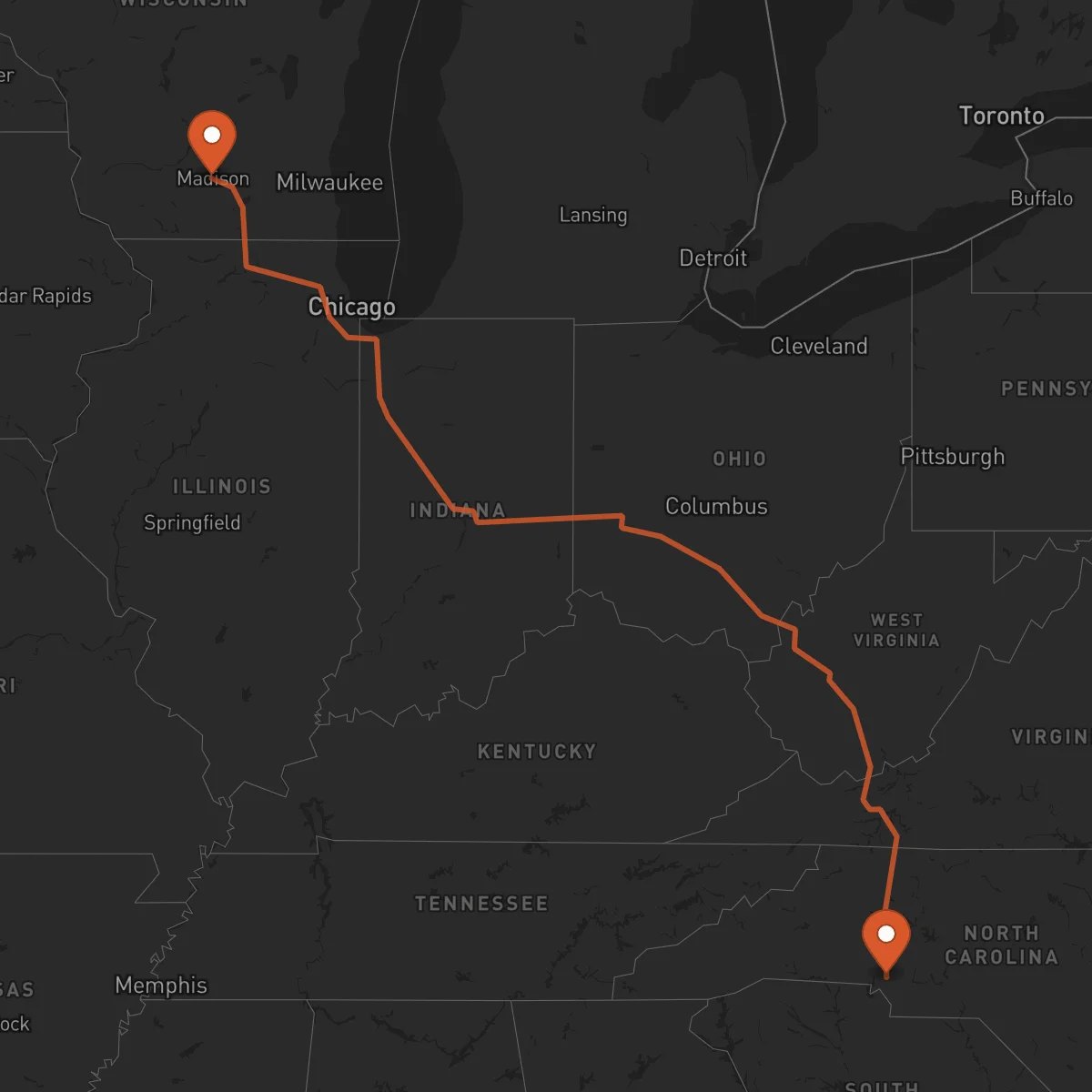
Madison to Charlotte
Charlotte → MadisonFTL freight transportation service between Madison and Charlotte. Reliable logistics solutions for your business.
Route Description
Everything you need to know about the corridor Madison - Charlotte
The logistics corridor between Madison, Wisconsin, and Charlotte, North Carolina, spans approximately 1,141 kilometers and represents a vital domestic freight route connecting the Midwest to the Southeast United States. This corridor serves as a critical link between two economically dynamic regions, facilitating the movement of goods between Wisconsin's industrial heartland and North Carolina's manufacturing and financial centers.
The route traverses through major economic regions, connecting the Great Lakes industrial corridor with the Southeast's growing manufacturing base. Along the way, it passes through key states including Illinois, Indiana, Ohio, West Virginia, and Virginia, each contributing to the diverse economic landscape of this freight corridor. The Madison-Charlotte route is particularly significant for companies requiring reliable full truckload (FTL) transportation services between these regions.
Control Terrestre specializes in providing dedicated FTL transportation services along this corridor, offering companies a reliable solution for moving full truckloads between Madison and Charlotte. Our strategic alliance with experienced transportation providers ensures consistent service quality, competitive pricing, and the flexibility to handle various cargo types including specialized and time-sensitive freight. We understand the unique requirements of this route and provide tailored solutions to meet the specific needs of our clients operating between these two important markets.
Services for this Route
Available services for the corridor Madison - Charlotte
 Origin
Madison
Madison, Wisconsin, serves as a strategic logistics hub in the Midwest, located in Dane County with excellent transportation connectivity. The city benefits from its position near major highways including I-90, I-94, and I-39, providing direct access to Chicago, Minneapolis, and other key Midwest markets. Madison's transportation infrastructure includes the Dane County Regional Airport and rail connections through Union Pacific and Canadian National railways, making it a multimodal logistics center.
The Madison area is home to diverse industries including manufacturing, healthcare, education, and technology. The University of Wisconsin-Madison drives significant research and development activity, while the surrounding region hosts numerous manufacturing facilities producing machinery, food products, and industrial equipment. The city's growing tech sector and strong agricultural base create consistent freight demand, particularly for specialized cargo and time-sensitive shipments requiring reliable FTL transportation services.
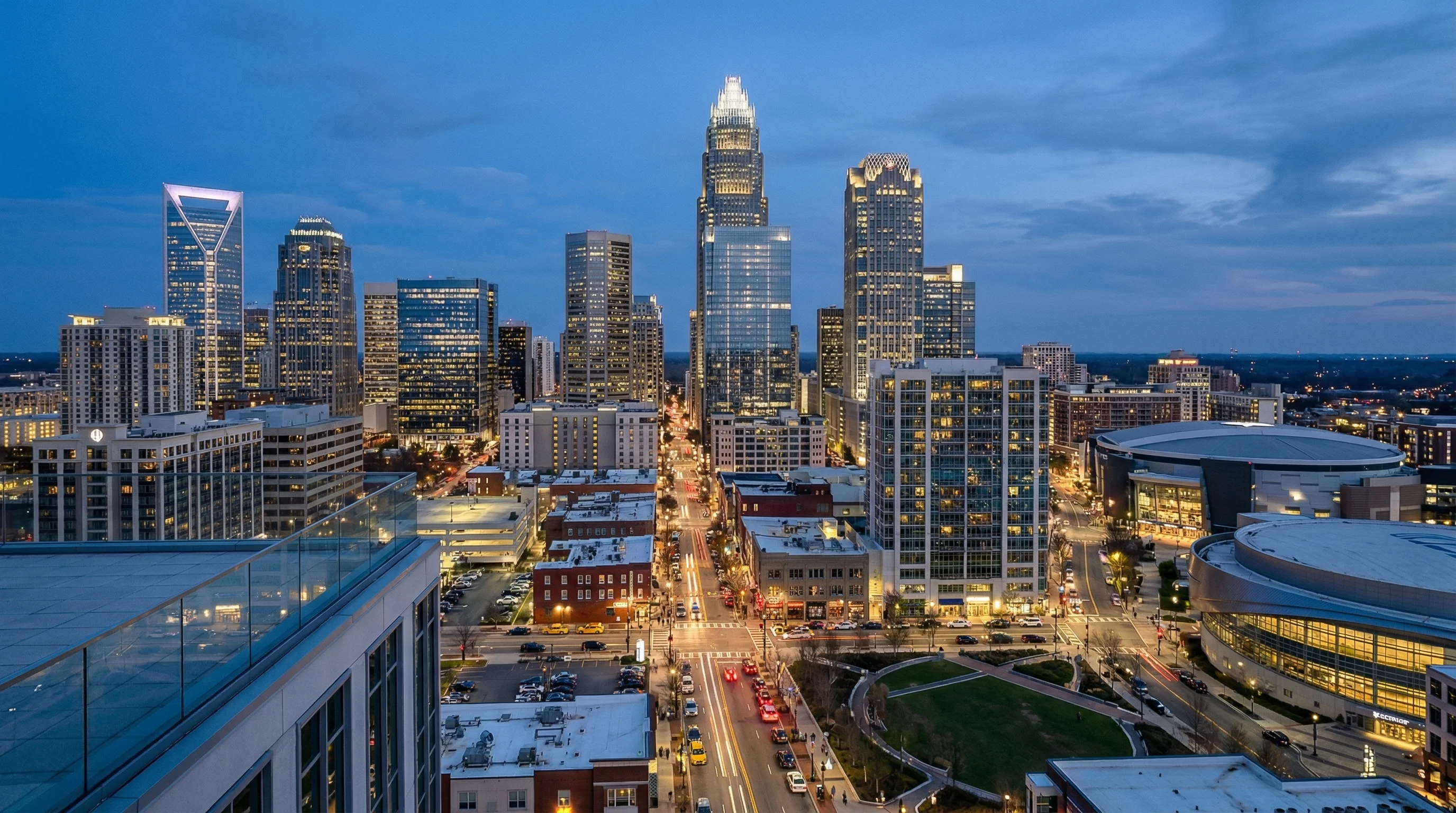 Destination
Charlotte
Charlotte, North Carolina, stands as a major logistics and economic center in the Southeast United States, offering exceptional strategic advantages for freight transportation. The city's location provides access to major East Coast markets and serves as a gateway to both the Southeast and Mid-Atlantic regions. Charlotte's transportation infrastructure includes the Charlotte Douglas International Airport, one of the busiest airports in the world for cargo, extensive highway networks including I-85 and I-77, and rail connections through Norfolk Southern and CSX Transportation.
The Charlotte metropolitan area is a powerhouse of economic activity, particularly strong in banking and finance, with major corporate headquarters and regional offices. The region also boasts significant manufacturing sectors including automotive, energy, and technology industries. Charlotte's proximity to the Port of Charleston and Port of Wilmington provides additional logistics advantages, while the city's growing population and business environment create consistent demand for freight transportation services, especially for full truckload shipments moving between major production and consumption centers.










