Madison to Atlanta
Atlanta → MadisonFTL freight transportation service between Madison and Atlanta. Reliable logistics solutions for your business.
Route Description
Everything you need to know about the corridor Madison - Atlanta
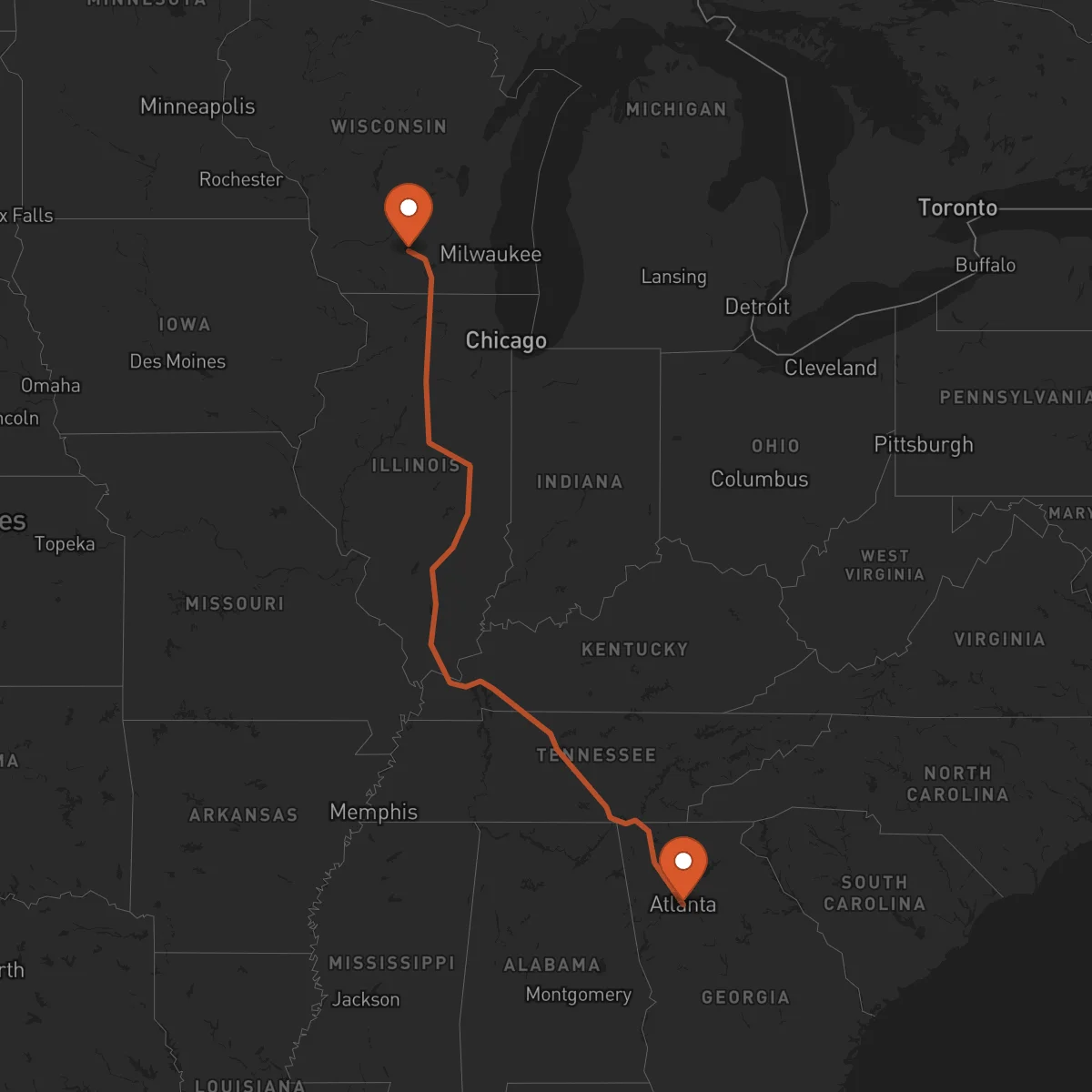
The logistics corridor connecting Madison, Wisconsin, to Atlanta, Georgia, represents a vital domestic freight route spanning approximately 1,124 kilometers across the heart of the United States. This north-to-south corridor traverses multiple states, linking the upper Midwest with the Southeast, and serves as a crucial artery for commerce between these distinct economic regions. The route connects two major metropolitan areas with significant industrial and commercial activity, making it an essential pathway for freight transportation.
The corridor primarily follows major interstate highways, including I-90 and I-65, providing efficient and reliable transportation infrastructure for freight movement. This route passes through key states such as Wisconsin, Illinois, Kentucky, Tennessee, and Georgia, connecting diverse economic zones and industrial clusters. The well-developed highway system ensures consistent transit times and accessibility for various types of freight, from manufacturing components to finished goods.
Control Terrestre specializes in facilitating seamless freight operations along this corridor, offering dedicated full truckload (FTL) services tailored to the specific needs of businesses shipping between Madison and Atlanta. Our extensive network of certified carriers and strategic partnerships ensures reliable capacity, competitive rates, and professional handling of your cargo. Whether you're transporting industrial equipment, consumer goods, or specialized freight, our team coordinates every aspect of the journey to optimize efficiency and maintain the integrity of your supply chain.
Services for this Route
Available services for the corridor Madison - Atlanta
 Origin
Madison
Madison, Wisconsin, serves as a strategic origin point for logistics operations in the upper Midwest. Located in south-central Wisconsin, Madison benefits from its position near major transportation hubs and its proximity to other industrial centers in the region. The city is home to a diverse economic base, including manufacturing, healthcare, education, and technology sectors, with the University of Wisconsin-Madison serving as a major research and innovation center. The surrounding area features numerous industrial parks and distribution centers that support regional and national supply chains.
The transportation infrastructure in Madison includes access to major highways such as I-90 and I-94, providing direct connections to other key markets across the Midwest and beyond. The city is also served by the Dane County Regional Airport for air freight options, and the nearby Port of Milwaukee offers additional multimodal capabilities. This comprehensive infrastructure network makes Madison an ideal origin point for freight shipments requiring efficient access to both northern and southern destinations, including the vital Atlanta market.
 Destination
Atlanta
Atlanta, Georgia, stands as a premier logistics and distribution hub in the southeastern United States, making it a strategic destination for freight transportation. The city's location at the intersection of major interstate highways, including I-20, I-75, and I-85, provides unparalleled access to regional and national markets. Atlanta's Hartsfield-Jackson International Airport, one of the busiest in the world, complements the ground transportation network with extensive air cargo capabilities. The city's robust infrastructure supports its role as a major center for commerce, finance, and industry in the Southeast.
The Atlanta metropolitan area hosts a diverse range of industries, including automotive manufacturing, aerospace, healthcare, technology, and consumer goods production. The region's concentration of Fortune 500 companies and its status as a distribution center for major retailers create substantial freight movement in and out of the area. Atlanta's extensive warehousing and distribution facilities, combined with its strategic position as a gateway to both coastal and inland markets, make it an ideal destination for freight shipments from across the country, including the northern industrial centers connected by the Madison corridor.










