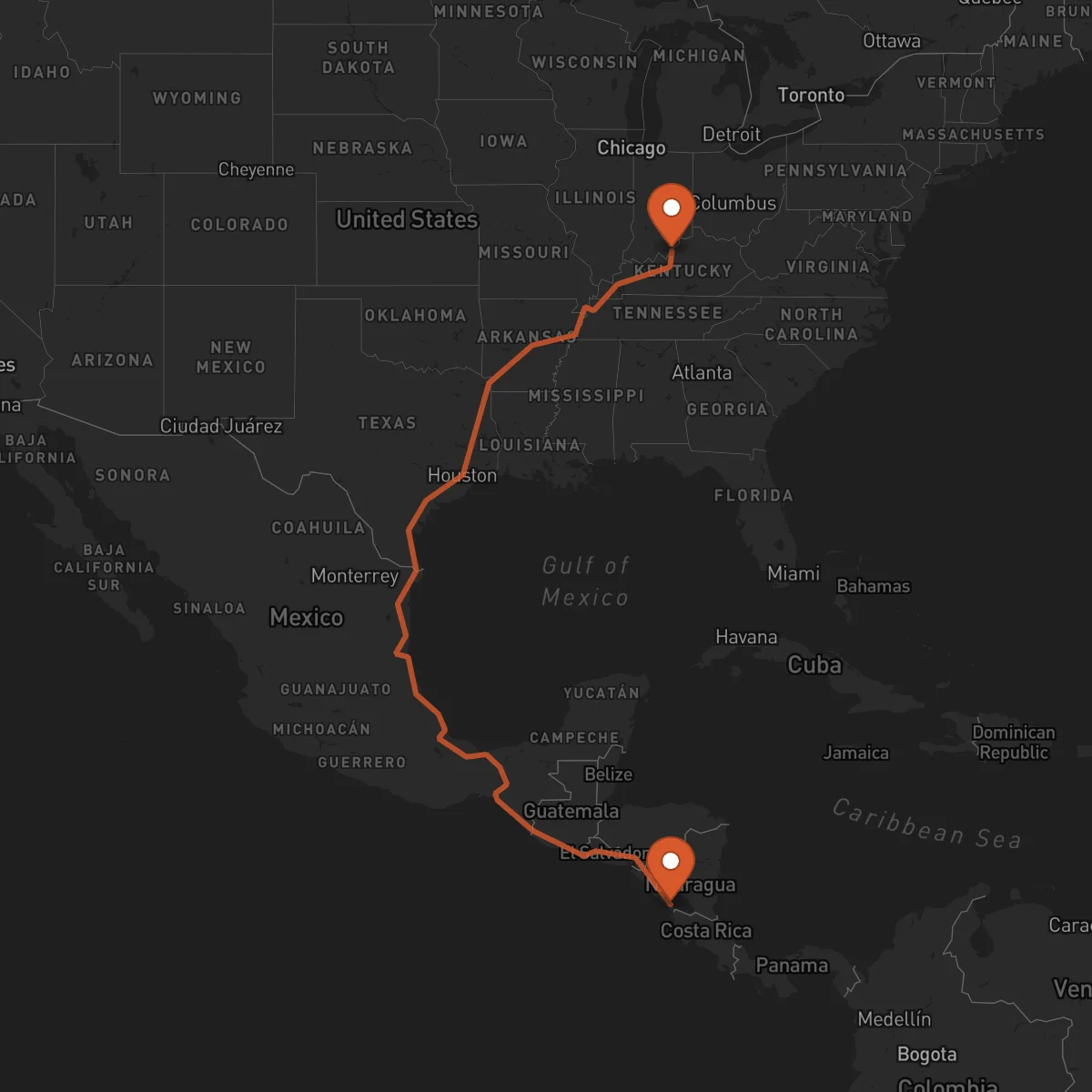
Louisville to Rivas
Rivas → LouisvilleFTL freight transportation service between Louisville and Rivas. Reliable logistics solutions for your business.
Route Description
Everything you need to know about the corridor Louisville - Rivas
The Louisville to Rivas corridor represents a vital cross-border logistics connection spanning approximately 2,982 kilometers from Kentucky, USA to Nicaragua. This strategic route links the industrial heartland of the American Midwest with Central America's emerging markets, facilitating essential trade flows between North and Central America. The corridor traverses diverse terrain and crosses multiple international borders, requiring specialized expertise in cross-border operations and customs compliance.
The economic significance of this corridor is substantial, connecting Louisville's robust manufacturing and distribution ecosystem with Rivas' growing commercial activities. Louisville serves as a major logistics hub with its strategic location at the crossroads of interstate highways, while Rivas functions as an important gateway to Nicaragua's Pacific coast and inland markets. This route supports industries ranging from automotive and manufacturing to consumer goods and agricultural products.
Key transportation infrastructure along this corridor includes major interstate highways in the United States, connecting to Mexico's comprehensive highway network, before continuing through Central America's road systems. The route requires careful coordination at border crossings, particularly at the US-Mexico border and subsequent Central American border points. Control Terrestre facilitates seamless operations on this corridor through our extensive network of certified transportation providers, expertise in cross-border documentation, and commitment to reliable, full truckload service that ensures your cargo moves efficiently from origin to destination.
Services for this Route
Available services for the corridor Louisville - Rivas
 Origin
Louisville
Louisville, Kentucky stands as a premier logistics hub in the eastern United States, strategically positioned at the intersection of major transportation corridors. The city's location along the Ohio River and at the convergence of I-64, I-65, and I-71 makes it an ideal distribution center for companies serving both national and international markets. Louisville's world-class infrastructure includes the UPS Worldport air hub, extensive rail connections, and a deep-water port, creating a multimodal transportation ecosystem that supports efficient freight movement.
The Louisville metropolitan area hosts diverse economic sectors, with particular strengths in advanced manufacturing, healthcare, logistics, and bourbon production. Major employers include Ford Motor Company, GE Appliances, and numerous logistics providers who have established major distribution centers in the region. The city's central location within a day's drive of two-thirds of the US population makes it an optimal point for companies looking to minimize transportation costs while maximizing market reach.
 Destination
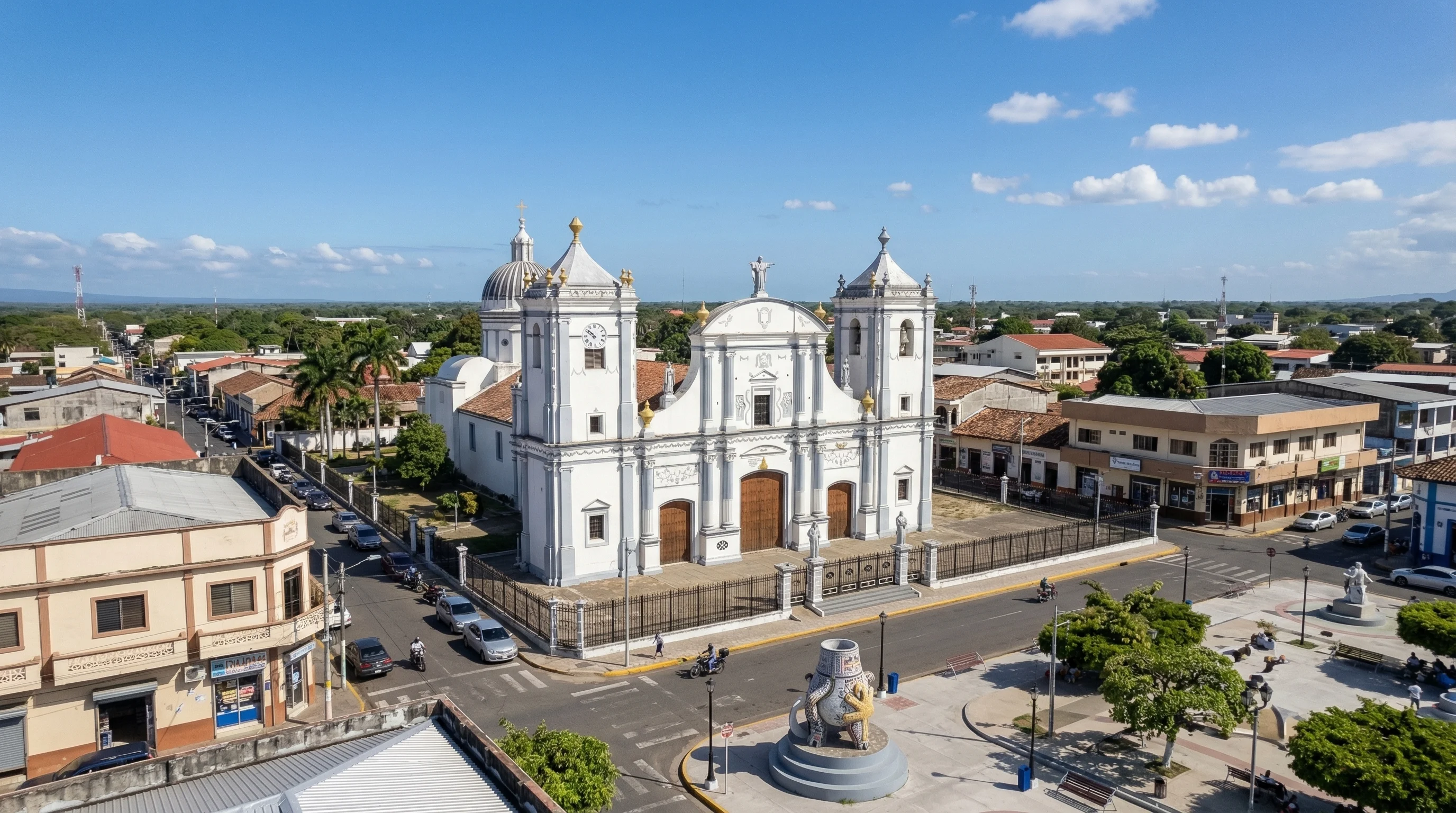
Rivas, located in southwestern Nicaragua, serves as a strategic gateway to Central America's Pacific coast and inland regions. The city's proximity to the Costa Rican border and its position along the Pan-American Highway make it an important logistics node for companies operating throughout the region. Rivas benefits from its connection to Nicaragua's growing port facilities and its role as a commercial center for the surrounding agricultural and tourism sectors.
The economic landscape of Rivas and the surrounding region includes agriculture, fishing, and tourism, with increasing investment in manufacturing and distribution. The area's infrastructure continues to develop, with improvements to road networks and port facilities enhancing its connectivity to regional markets. Rivas' strategic location makes it an ideal entry point for companies looking to establish distribution networks throughout Nicaragua and neighboring Central American countries, supported by the region's improving transportation infrastructure and growing trade relationships.










