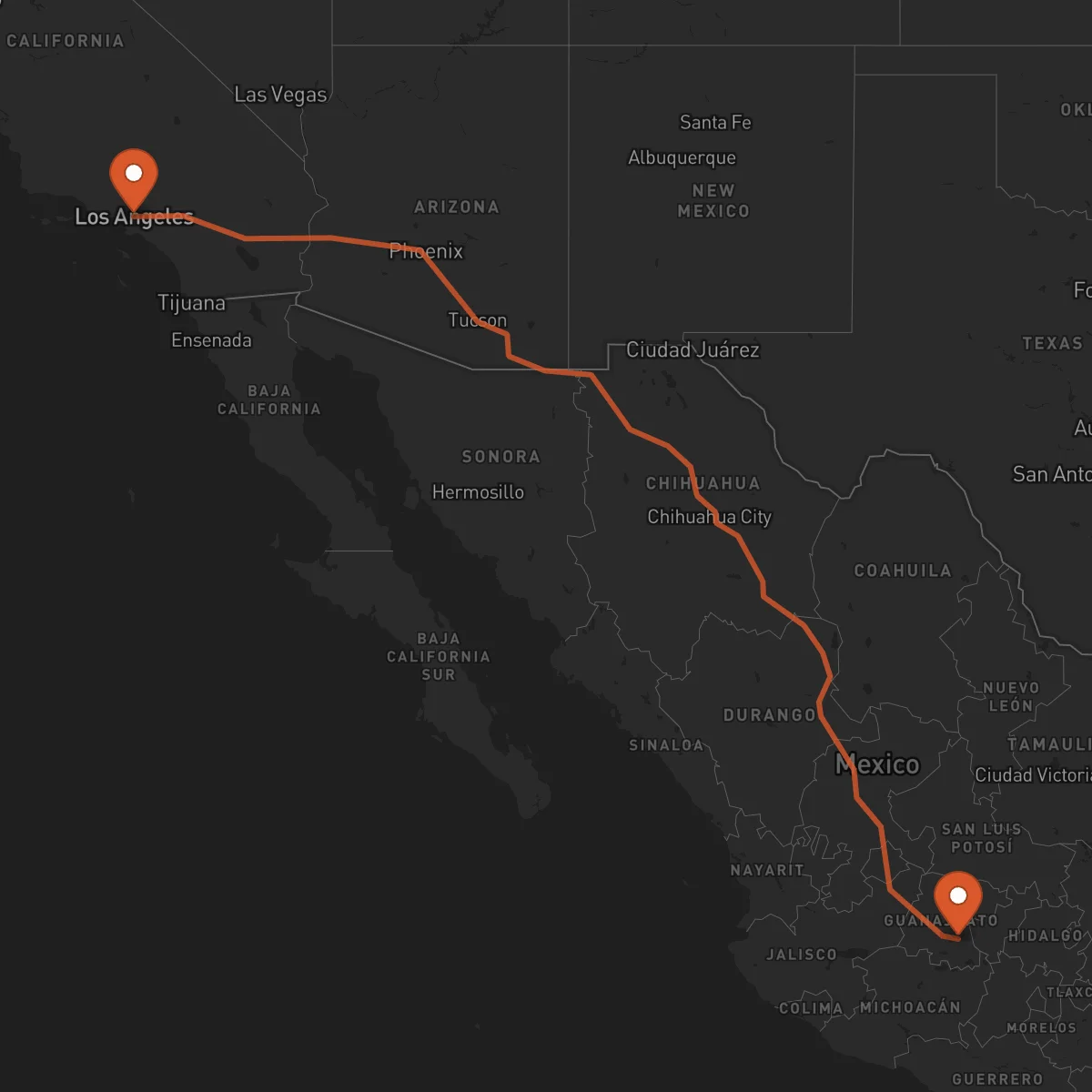
Los Angeles to Celaya
Celaya → Los AngelesFTL freight transportation service between Los Angeles and Celaya. Reliable logistics solutions for your business.
Route Description
Everything you need to know about the corridor Los Angeles - Celaya
The Los Angeles to Celaya corridor represents one of the most important cross-border freight transportation routes between the United States and Mexico. This strategic connection links the West Coast of the United States with the industrial heartland of Mexico, facilitating the movement of goods between two major economic regions. The corridor spans approximately 2,280 kilometers and crosses diverse terrain, connecting the Pacific port and logistics hub of Los Angeles with the automotive and manufacturing center of Celaya in Guanajuato.
The economic significance of this route is substantial, supporting trade between two of North America's most dynamic economies. Los Angeles serves as a gateway for international trade, with its ports handling millions of containers annually, while Celaya has established itself as a key industrial city in Mexico's Bajío region, particularly in automotive manufacturing and related industries. This corridor enables the efficient flow of raw materials, components, and finished products between these economic centers.
Key industries utilizing this transportation corridor include automotive manufacturing, electronics, aerospace, consumer goods, and agricultural products. The automotive sector is particularly prominent, with Celaya hosting major manufacturing facilities that require just-in-time delivery of components from suppliers in the United States. Other industries such as medical devices, machinery, and industrial equipment also rely on this critical supply chain link.
The primary transportation infrastructure along this corridor includes major highways such as I-5, I-15, and I-40 through the United States, connecting to Mexican Federal Highways 45 and 45D. The route typically crosses at major border points like Tijuana or Nogales, depending on the specific logistics strategy. Control Terrestre facilitates seamless operations on this corridor through our experienced team, C-TPAT certified carriers, and comprehensive understanding of cross-border documentation and customs requirements, ensuring efficient and reliable freight movement.
Services for this Route
Available services for the corridor Los Angeles - Celaya
 Origin
Los Angeles
Los Angeles serves as a strategic logistics hub on the West Coast of the United States, offering unparalleled access to Pacific trade routes and extensive transportation infrastructure. The city's port complex, including the Port of Los Angeles and Port of Long Beach, ranks among the busiest in the world, handling millions of containers annually and providing direct ocean freight connections to Asia and beyond. The region's extensive network of highways, including I-5, I-10, and I-15, connects Los Angeles to major inland markets and border crossings, while multiple international airports support air freight operations.
The Los Angeles metropolitan area is home to diverse industries including entertainment, technology, aerospace, and advanced manufacturing. The region hosts numerous distribution centers and warehouses that serve as consolidation points for goods destined throughout North America. The combination of port facilities, rail connections, and trucking infrastructure makes Los Angeles an ideal origin point for cross-border freight movements, with the ability to handle various cargo types from containerized goods to oversized equipment.
 Destination
Celaya
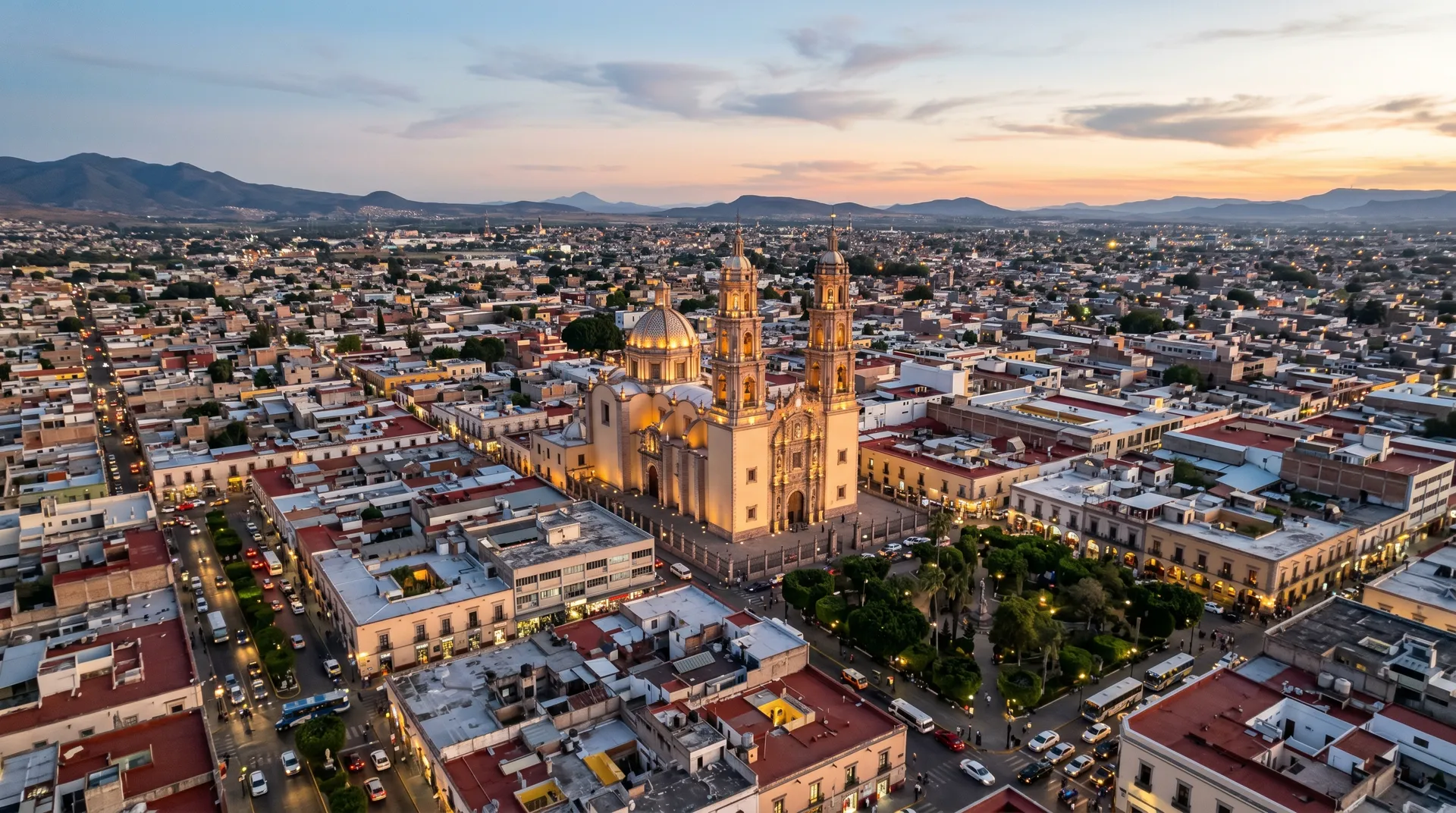
Celaya, located in the heart of Mexico's Guanajuato state, has emerged as a strategic logistics and industrial center within the country's Bajío region. The city benefits from its central location in Mexico, providing relatively quick access to major markets across the country including Mexico City, Guadalajara, and Monterrey. The region's industrial parks and manufacturing facilities are well-connected through Mexico's Federal Highway 45, which links the Bajío region to both the northern border and southern industrial centers.
The industrial base of Celaya and surrounding areas is dominated by automotive manufacturing, with major facilities producing vehicles and components for both domestic and export markets. The city has also developed capabilities in metalworking, machinery manufacturing, and food processing. Celaya's strategic location within Mexico's industrial corridor, combined with its skilled workforce and established supply chain networks, makes it an attractive destination for manufacturing operations and a key node in North American supply chains.










