Long Beach to Miami
Miami → Long BeachFTL freight transportation service between Long Beach and Miami. Reliable logistics solutions for your business.
Route Description
Everything you need to know about the corridor Long Beach - Miami
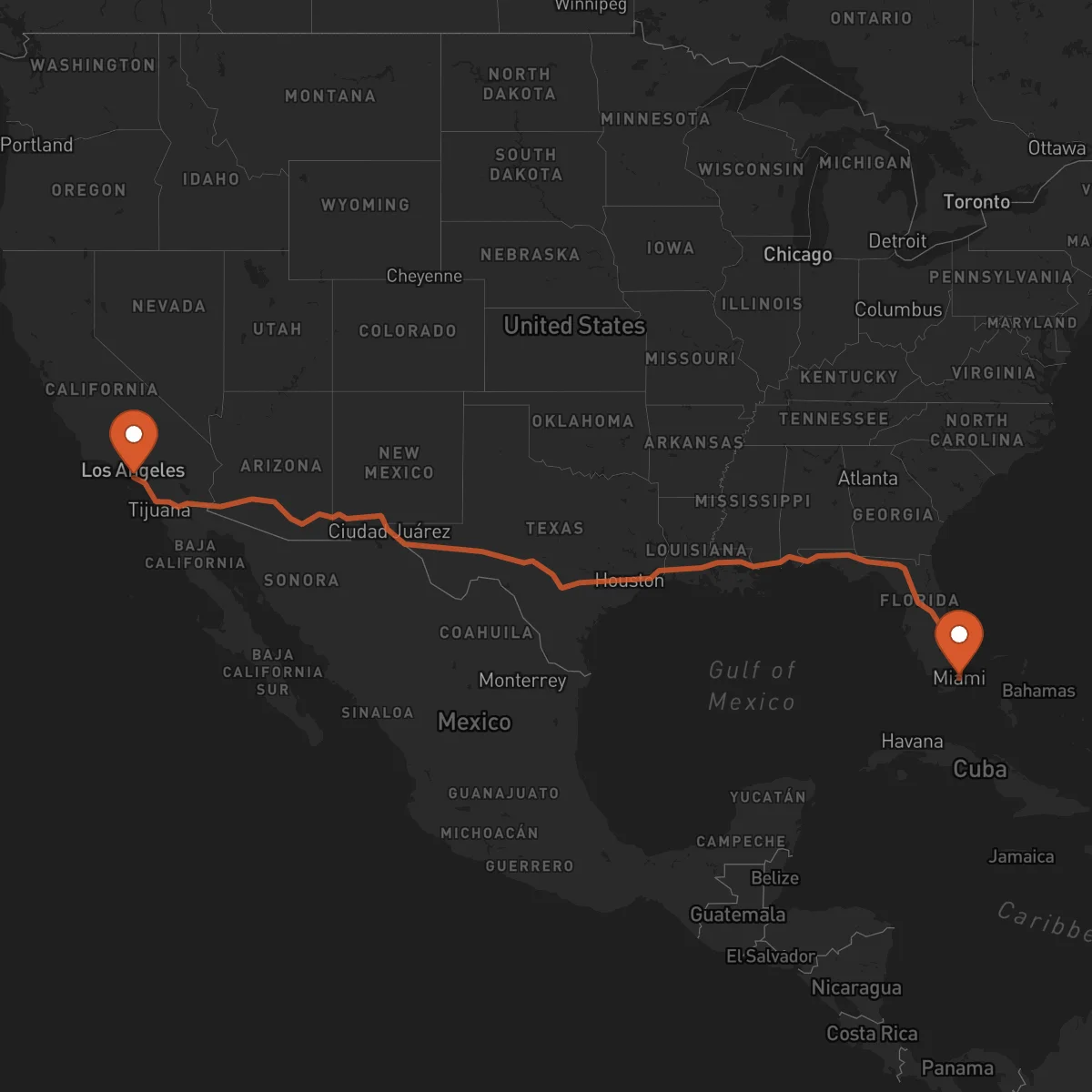
The logistics corridor between Long Beach and Miami represents one of the most important freight transportation routes in the United States, connecting the West Coast with the Southeast. This 3,752 km route traverses the entire country, linking two major economic hubs and facilitating the flow of goods between the Pacific and Atlantic markets. The corridor is vital for maintaining the supply chain efficiency of companies operating across multiple regions of the country.
The economic significance of this corridor is immense, as it connects two of the most dynamic ports and industrial regions in the United States. Long Beach serves as a gateway for international trade, particularly from Asia, while Miami is a crucial entry point for Latin American commerce. The route passes through key industrial states such as Texas, Louisiana, and Georgia, where manufacturing, technology, and agricultural sectors generate substantial freight volume. This corridor is essential for industries including automotive, electronics, retail, and perishable goods.
The main transportation infrastructure along this corridor includes Interstate 10 (I-10), which runs from Long Beach through the southern United States to Jacksonville, Florida, and then connects to I-95 South toward Miami. This highway network provides reliable and efficient transportation for full truckload (FTL) freight. Additionally, the route benefits from the extensive rail network that runs parallel to the highway, offering intermodal transportation options for companies seeking alternative logistics solutions.
At Control Terrestre, we understand the critical importance of this corridor for our clients' supply chains. Our strategic alliance with certified transportation providers ensures reliable and efficient service along the entire route. We offer specialized FTL services with equipment options including dry vans, refrigerated units, and flatbed trailers to accommodate diverse cargo needs. Our providers' certifications (C-TPAT, FAST, BASC) guarantee secure and expedited cross-border operations where applicable. We provide door-to-door service with real-time tracking capabilities, ensuring your cargo moves safely and efficiently from origin to destination, regardless of the challenges this extensive route may present.
Services for this Route
Available services for the corridor Long Beach - Miami
 Origin
Long Beach
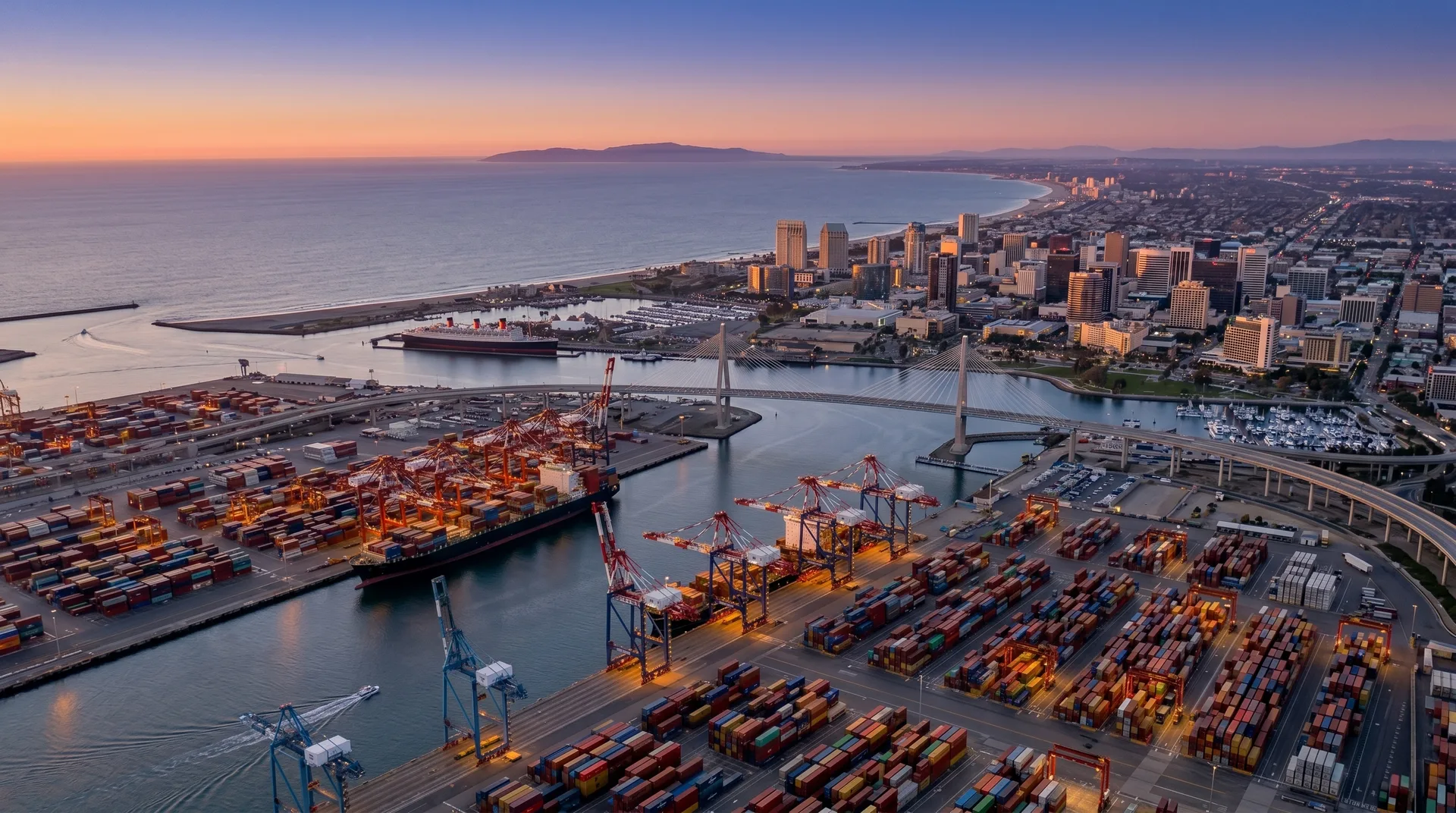
Long Beach, California, is strategically positioned as one of the most important logistics hubs on the West Coast of the United States. Home to the Port of Long Beach, which ranks among the busiest container ports in the country, the city serves as a critical gateway for international trade, particularly with Asia. The port's advanced infrastructure includes extensive container terminals, rail connections, and highway access, making it ideal for handling large volumes of freight. Long Beach's proximity to major distribution centers and its integration with the Los Angeles metropolitan area further enhance its logistical capabilities.
The city's economy is diverse, with key industries including international trade, aerospace, technology, and manufacturing. The presence of major corporations and logistics companies has created a robust industrial ecosystem that supports efficient freight movement. Long Beach also benefits from its location near major transportation hubs, including the Long Beach Airport and extensive highway networks such as I-405 and I-710, which connect to the broader California and national transportation systems.
 Destination
Miami
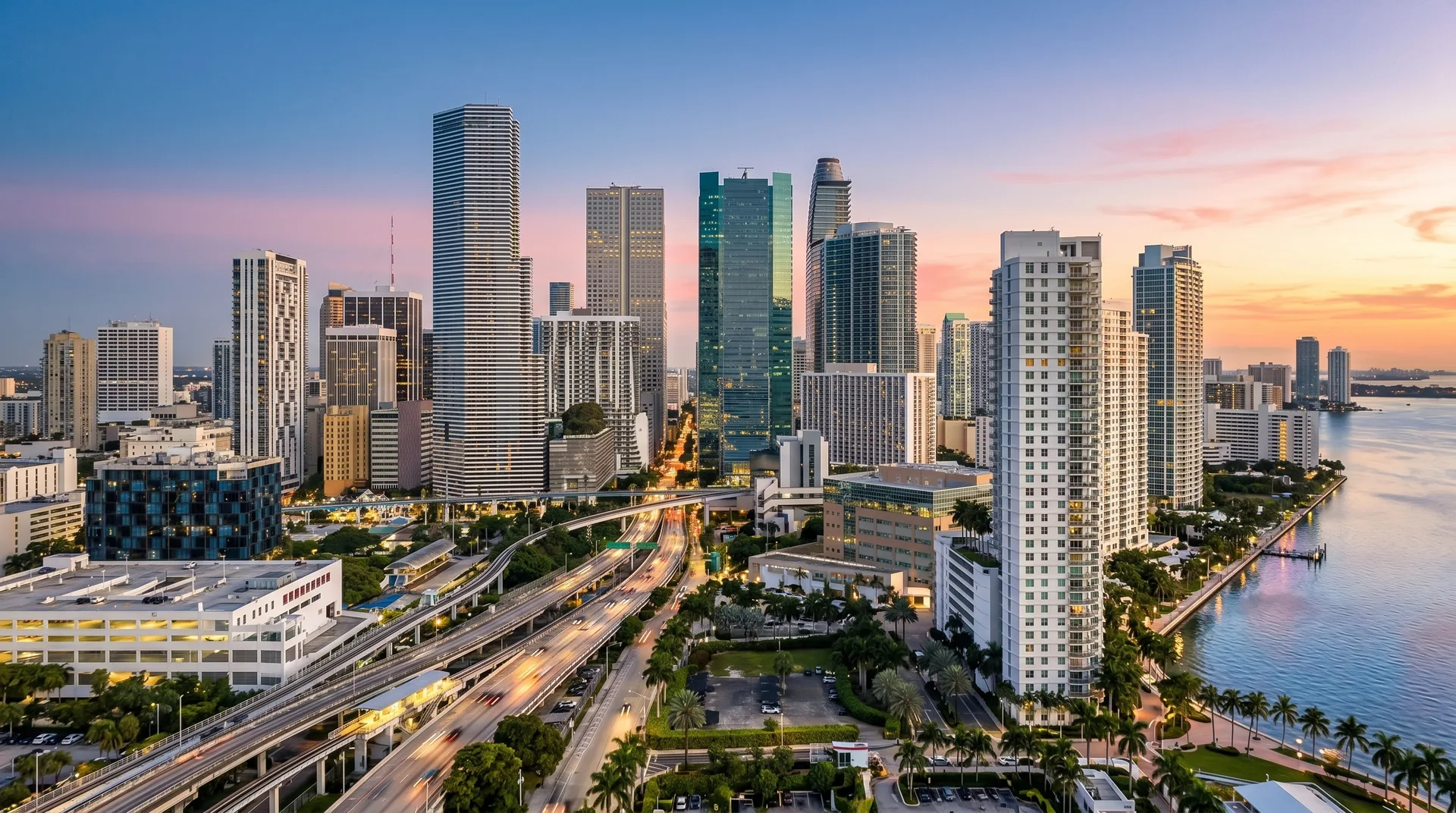
Miami, Florida, is a strategic logistics hub for the southeastern United States and the Caribbean region. The city's PortMiami is one of the busiest cruise and cargo ports in the world, serving as a vital gateway for trade with Latin America and the Caribbean. The port's deep-water facilities and advanced cargo handling capabilities make it an ideal location for managing diverse freight types, including containerized goods, vehicles, and perishable items. Miami's extensive transportation infrastructure includes major highways such as I-95 and the Florida Turnpike, as well as Miami International Airport, which is a key hub for air cargo.
The city's economy is driven by international trade, tourism, finance, and logistics. Miami's proximity to Latin America has established it as a critical center for import and export activities, particularly for industries such as retail, electronics, and perishable goods. The region's growing population and economic development have further increased the demand for efficient freight transportation, making Miami a key destination for logistics operations across the United States.










