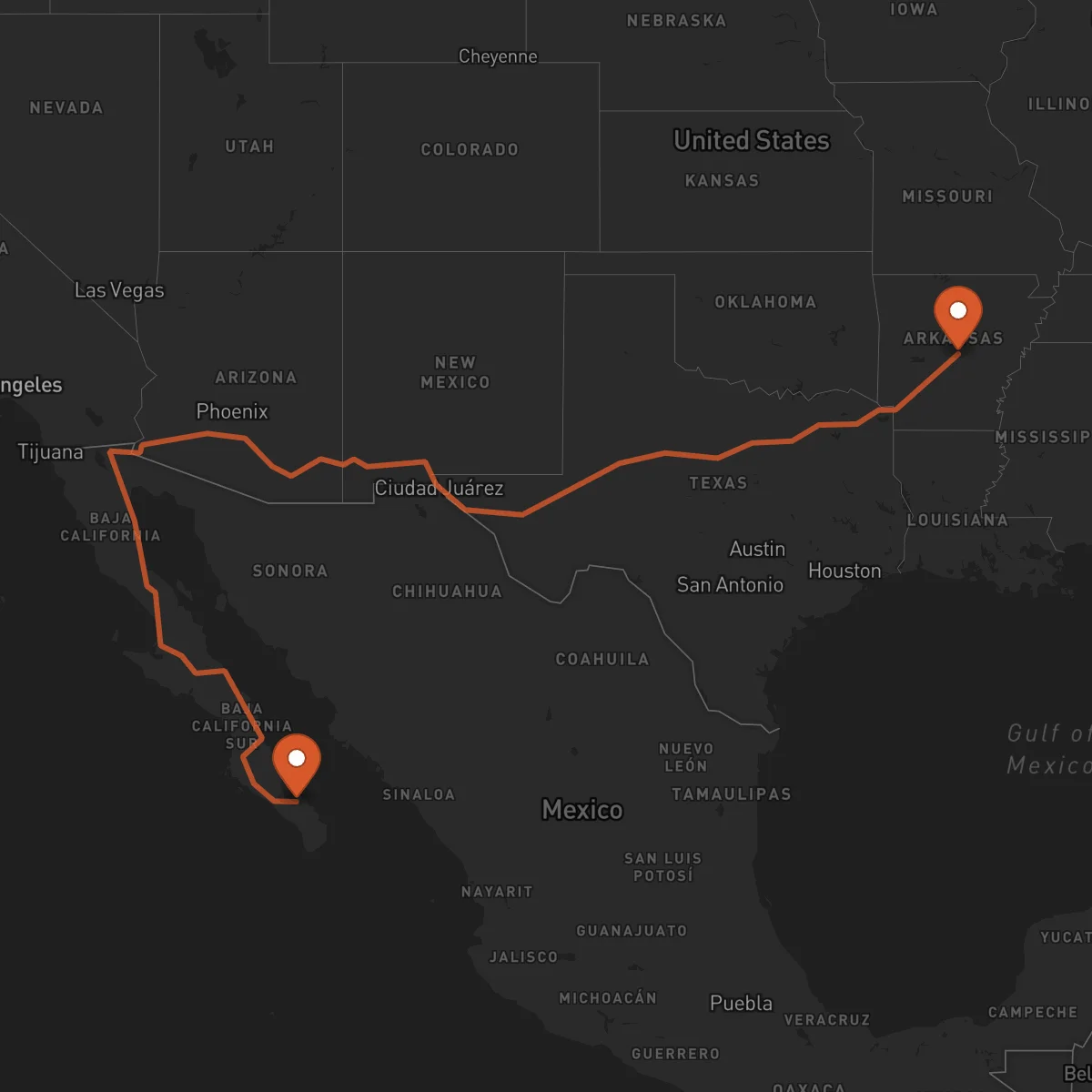
Little Rock to La Paz
La Paz → Little RockFTL freight transportation service between Little Rock and La Paz. Reliable logistics solutions for your business.
Route Description
Everything you need to know about the corridor Little Rock - La Paz
The logistics corridor between Little Rock, Arkansas, and La Paz, Baja California Sur, represents a vital cross-border connection spanning approximately 2,102 kilometers. This route links the industrial heartland of the American Midwest with the growing economic center of Baja California Sur, facilitating trade and commerce between the United States and Mexico. The corridor traverses diverse terrain and crosses multiple state lines, requiring expert navigation of both regulatory requirements and logistical challenges.
Little Rock serves as a strategic logistics hub in the southeastern United States, with strong manufacturing, distribution, and agricultural sectors. The region's robust transportation infrastructure includes major interstate highways and rail connections, making it an ideal origin point for cross-border freight. La Paz, as the capital of Baja California Sur, has emerged as a key destination for various industries, particularly in technology, tourism, and specialized manufacturing, creating consistent demand for reliable transportation services.
The primary transportation infrastructure along this corridor includes major highways such as I-30, I-20, and Mexican Federal Highways 45 and 1. Key border crossings, particularly at major points like Laredo or Nogales, require careful coordination to ensure smooth customs clearance and minimal delays. Control Terrestre's expertise in cross-border operations ensures seamless transitions through these critical points, with our certified carriers maintaining all necessary permits and documentation.
Our specialized full truckload (FTL) services along this corridor are designed to meet the specific needs of industries requiring dedicated transportation solutions. Whether shipping industrial equipment, consumer goods, or specialized cargo, Control Terrestre provides end-to-end logistics support, ensuring your freight moves efficiently from origin to destination while maintaining the highest standards of safety and compliance throughout the journey.
Services for this Route
Available services for the corridor Little Rock - La Paz
 Origin
Little Rock
Little Rock, Arkansas, serves as a strategic logistics hub in the southeastern United States, offering excellent connectivity to major markets across the country. The city's central location provides efficient access to both coastal regions and inland destinations, making it an ideal origin point for cross-border freight operations. Little Rock's robust transportation infrastructure includes multiple interstate highways, rail connections, and the Bill and Hillary Clinton National Airport, supporting diverse logistics needs.
The region's economy is anchored by strong manufacturing, distribution, and agricultural sectors, with numerous warehouses and distribution centers located throughout the metropolitan area. Major industries include aerospace, automotive parts, food processing, and retail distribution, creating consistent demand for reliable freight transportation services. The city's pro-business environment and strategic location make it an attractive choice for companies seeking efficient logistics solutions.
 Destination
La Paz
La Paz, Baja California Sur, represents a growing economic center in northwestern Mexico, strategically positioned along the Pacific coast. The city's location provides access to both domestic Mexican markets and international trade routes, making it an increasingly important destination for cross-border freight. La Paz benefits from its proximity to major port facilities and developing industrial parks, supporting the region's expanding economic activities.
The local economy is diversifying beyond traditional tourism to include technology, specialized manufacturing, and renewable energy sectors. The region's focus on sustainable development and innovation has attracted investment in various industries, creating demand for specialized logistics services. La Paz's transportation infrastructure includes highway connections to major Mexican cities and developing port facilities, though cross-border freight operations require expert coordination to navigate the unique challenges of this region.










