Lincoln to Ocotal
Ocotal → LincolnFTL freight transportation service between Lincoln and Ocotal. Reliable logistics solutions for your business.
Route Description
Everything you need to know about the corridor Lincoln - Ocotal
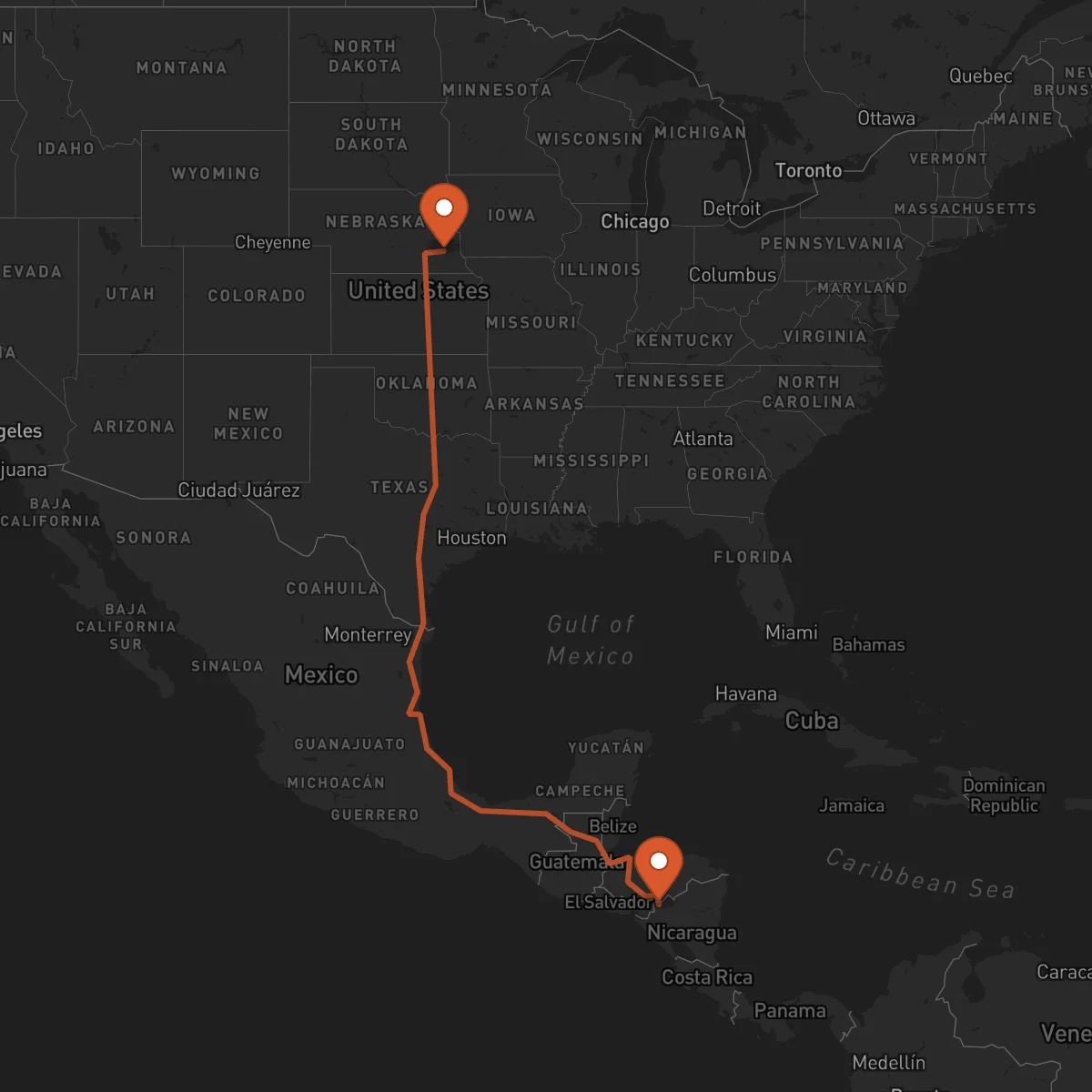
The logistics corridor connecting Lincoln, Nebraska, to Ocotal, Nicaragua, represents a vital cross-border transportation route spanning approximately 3,181 kilometers. This corridor serves as a crucial link between the central United States and northern Nicaragua, facilitating trade and economic integration across North and Central America. The route traverses multiple countries and diverse geographic regions, requiring expert coordination and comprehensive logistics management to ensure efficient cargo movement.
This corridor connects major industrial and agricultural centers in the American Midwest with growing commercial hubs in Central America. Lincoln's strategic position in the Great Plains region, combined with Ocotal's location in Nicaragua's northern highlands, creates a supply chain pathway that supports various industries including agricultural products, manufacturing components, and consumer goods. The transportation infrastructure along this route includes major interstate highways in the United States, connecting roads through Mexico, and established freight corridors through Guatemala and Honduras before reaching Nicaragua.
Control Terrestre specializes in managing the complexities of this extensive cross-border corridor. Our expertise encompasses navigating multiple customs jurisdictions, coordinating multi-modal transportation segments, and ensuring compliance with varying regulatory requirements across different countries. We facilitate seamless operations through our network of certified carriers and strategic partnerships, providing door-to-door FTL services that maintain cargo integrity and optimize transit efficiency throughout the entire journey from Lincoln to Ocotal.
Services for this Route
Available services for the corridor Lincoln - Ocotal
 Origin
Lincoln
Lincoln, Nebraska serves as a strategic logistics hub in the American Midwest, positioned advantageously for freight distribution across the central United States. The city's location provides excellent connectivity to major transportation networks, including Interstate 80, which facilitates east-west cargo movement across the country. Lincoln's infrastructure includes a well-developed road network, rail connections, and proximity to major air cargo facilities, making it an ideal origin point for cross-border freight operations.
The economic landscape of Lincoln is characterized by diverse industries including agriculture, manufacturing, and technology sectors. The region is a significant producer of agricultural commodities, which constitute a substantial portion of cross-border freight volumes. Manufacturing facilities in and around Lincoln produce machinery, electronic components, and industrial equipment that frequently require international shipping. The city's growing tech sector also contributes to the demand for reliable logistics services, particularly for time-sensitive shipments of specialized equipment and components.
 Destination
Ocotal
Ocotal, located in Nicaragua's Nueva Segovia department, represents a strategic gateway to Central American markets and serves as an important commercial center in northern Nicaragua. The city's position near the Honduran border facilitates regional trade and provides access to both domestic and international markets. Ocotal's transportation infrastructure includes road connections to major Nicaraguan cities and neighboring countries, supporting the movement of goods throughout the region.
The local economy of Ocotal is primarily based on agriculture, commerce, and light manufacturing. The region is known for coffee production and other agricultural products that often require transportation to and from international markets. Small and medium-sized enterprises in Ocotal rely on efficient logistics services to import raw materials and export finished products. The city's commercial activity creates consistent demand for freight transportation services, particularly for businesses engaged in cross-border trade with the United States and other Central American nations.










