Lincoln to Cancún
Cancún → LincolnFTL freight transportation service between Lincoln and Cancún. Reliable logistics solutions for your business.
Route Description
Everything you need to know about the corridor Lincoln - Cancún
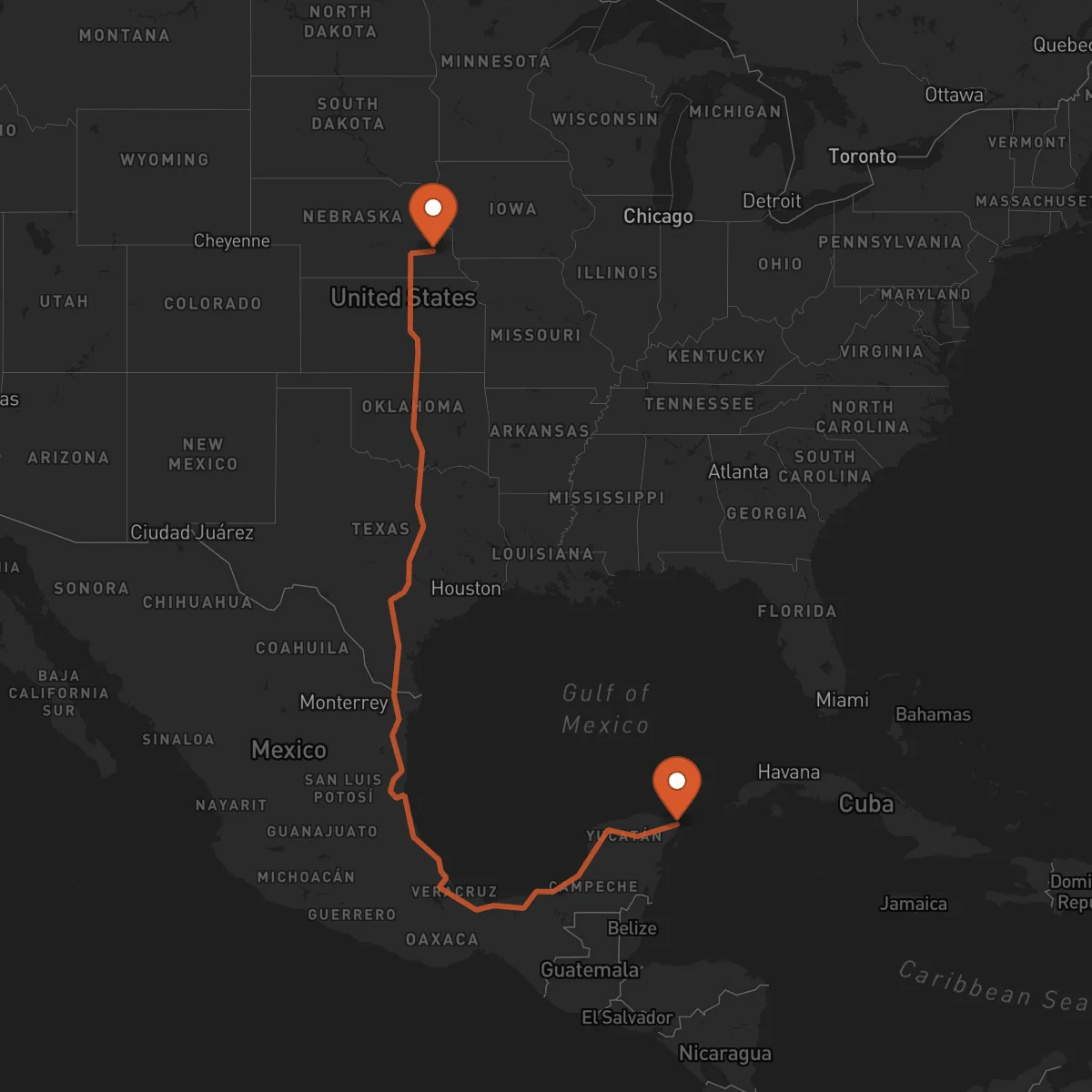
The logistics corridor connecting Lincoln, Nebraska, to Cancún, Quintana Roo, represents a vital cross-border transportation route spanning approximately 2,374 kilometers. This corridor links the industrial heartland of the American Midwest with one of Mexico's premier tourist destinations and emerging industrial hubs. The route traverses diverse terrain and crosses multiple states and regions, making it a complex but essential link for freight transportation between the United States and Mexico.
The economic significance of this corridor extends beyond simple point-to-point transportation. Lincoln serves as a strategic distribution center for agricultural products, manufacturing components, and industrial goods, while Cancún represents a growing market for both tourism-related supplies and expanding industrial activities in the Yucatán Peninsula. The corridor facilitates the movement of diverse cargo types, from agricultural machinery and food products to construction materials and consumer goods.
Key transportation infrastructure along this route includes major highways such as I-80 connecting Lincoln to points south, with connections to Mexican Federal Highway 180 and Highway 307 leading to Cancún. The primary border crossing at Laredo/Nuevo Laredo serves as the main gateway for freight moving between the two countries. Control Terrestre's expertise in cross-border operations ensures seamless customs clearance and compliance with all regulatory requirements, minimizing delays and optimizing transit times for our clients' shipments.
Services for this Route
Available services for the corridor Lincoln - Cancún
 Origin
Lincoln
Lincoln, Nebraska, serves as a strategic logistics hub in the American Midwest, offering excellent connectivity to major transportation networks. The city's location provides direct access to Interstate 80, one of the nation's primary east-west freight corridors, facilitating efficient distribution throughout the central United States. Lincoln's central geographic position makes it an ideal origin point for freight destined for both national and international markets, particularly those requiring access to Mexican and Canadian destinations.
The region's economy is anchored by agriculture, manufacturing, and technology sectors, with numerous distribution centers and warehouses supporting regional logistics operations. Lincoln benefits from multiple transportation options including rail connections via Union Pacific, proximity to major airports, and extensive highway infrastructure. The city's industrial base produces a wide range of goods suitable for cross-border transportation, from agricultural equipment and food products to industrial machinery and consumer goods, making it a vital origin point for freight moving along this corridor.
 Destination
Cancún
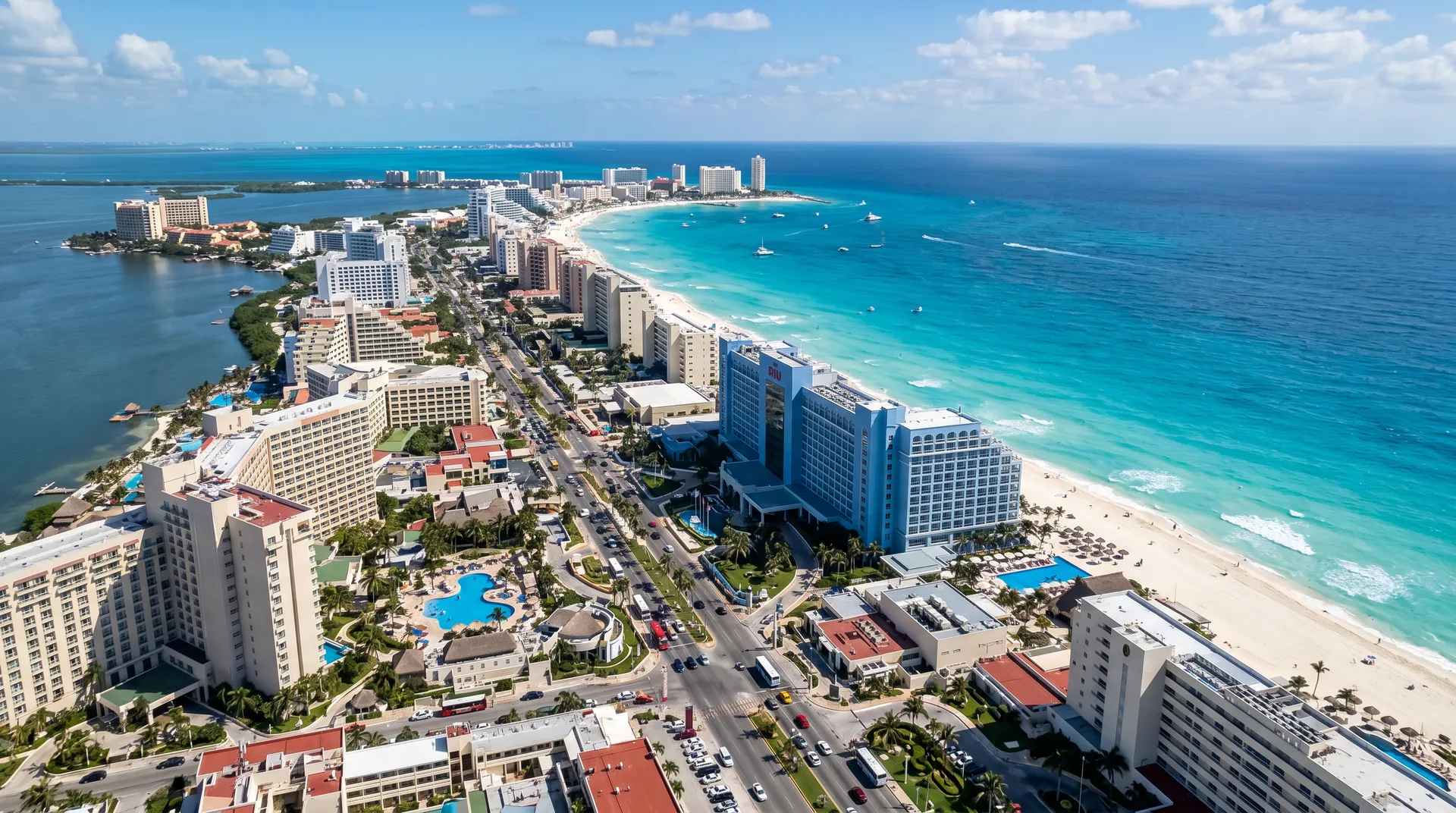
Cancún, Quintana Roo, represents a strategic gateway to Mexico's southeastern region and the Yucatán Peninsula, combining tourism infrastructure with growing industrial capabilities. Located on Mexico's Caribbean coast, Cancún offers excellent maritime connections through its port facilities, complemented by robust road infrastructure linking it to the rest of the country. The city's position makes it an ideal destination for goods destined for both local consumption and distribution throughout the Yucatán Peninsula and beyond.
The local economy, while traditionally tourism-focused, has diversified to include manufacturing, logistics, and construction sectors. Cancún's port facilities handle both commercial cargo and cruise ship operations, while the surrounding region offers expanding industrial parks and free trade zone opportunities. The city's infrastructure includes modern highways connecting to major Mexican cities, as well as proximity to Cancún International Airport, providing multiple options for freight distribution. This combination of tourism and industrial development creates diverse demand for freight transportation services, from consumer goods and construction materials to specialized equipment and supplies.










