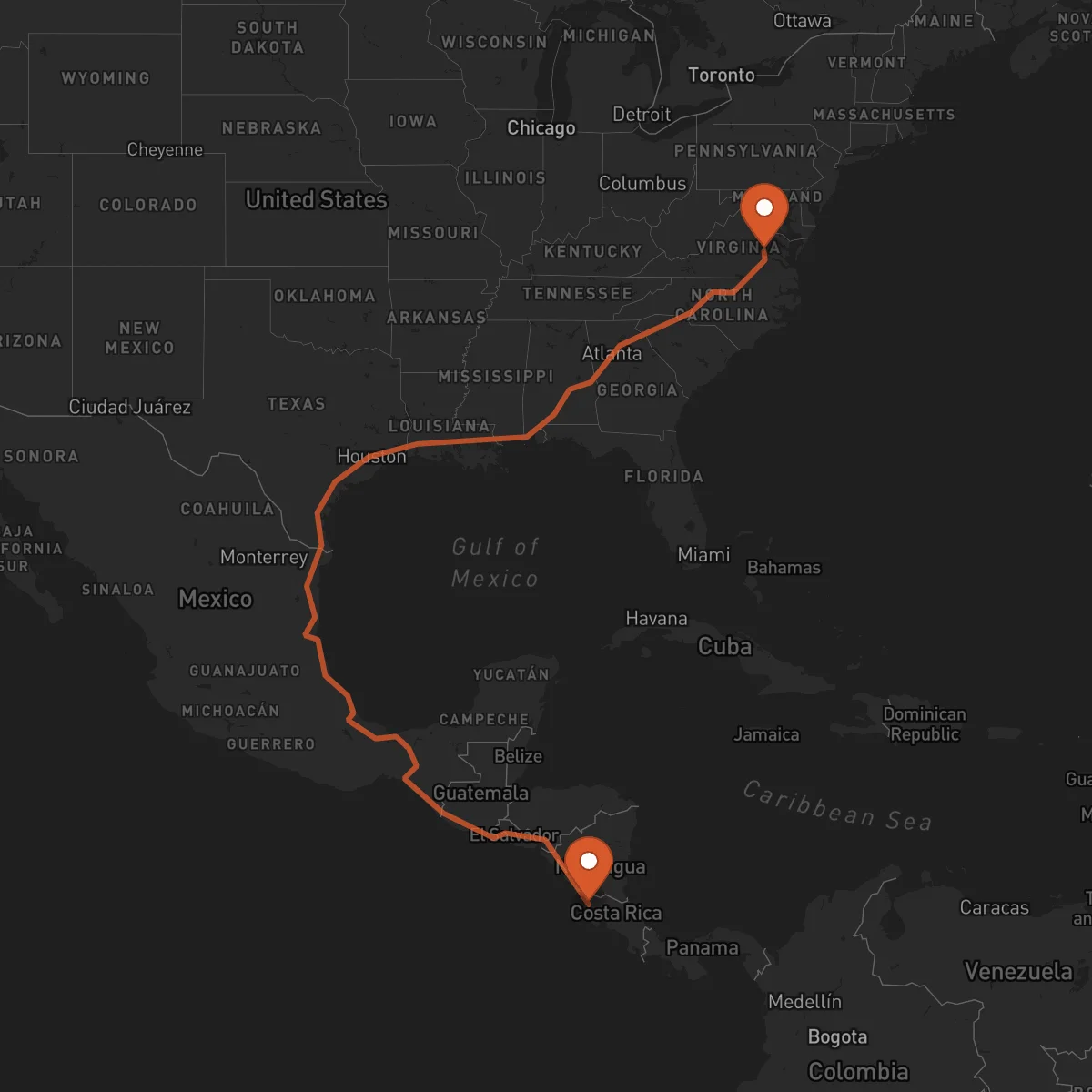
Liberia to Richmond
Richmond → LiberiaFTL freight transportation service between Liberia and Richmond. Reliable logistics solutions for your business.
Route Description
Everything you need to know about the corridor Liberia - Richmond
The logistics corridor connecting Liberia, Guanacaste, Costa Rica, to Richmond, Virginia, represents a critical north-south artery for cross-border trade between Central America and the United States. This route, spanning approximately 3,097 km, is strategically vital for moving time-sensitive and high-value full truckload (FTL) freight, leveraging our robust alliance of certified carriers to ensure seamless transit. Economically, it bridges Costa Rica's dynamic export sectors with the manufacturing and distribution hubs of the Mid-Atlantic US, facilitating the flow of goods that power both regional economies. Key industries utilizing this corridor include agricultural exporters (fresh produce, coffee), manufacturing firms, and companies with specialized cargo needs such as pharmaceuticals or temperature-sensitive goods. The primary transportation infrastructure relies on Central America's Route 1 (Pan-American Highway) through Nicaragua, Honduras, Guatemala, and Mexico, connecting to the US Interstate system—primarily I-10 and I-95—for efficient final-mile delivery to Richmond. Critical border crossings, such as those at Mexico-US points like Laredo or El Paso, are navigated with precision, where customs compliance is paramount. Our providers hold essential certifications including C-TPAT, FAST, and BASC, which streamline clearance and enhance security. At Control Terrestre, we facilitate operations on this corridor by coordinating dedicated and expedited FTL services, managing all cross-border documentation, and leveraging our network's expertise in specialized cargo, including refrigerated and oversized loads, to provide a singular, human point of contact for our clients' supply chain optimization.
Services for this Route
Available services for the corridor Liberia - Richmond
 Origin
Liberia
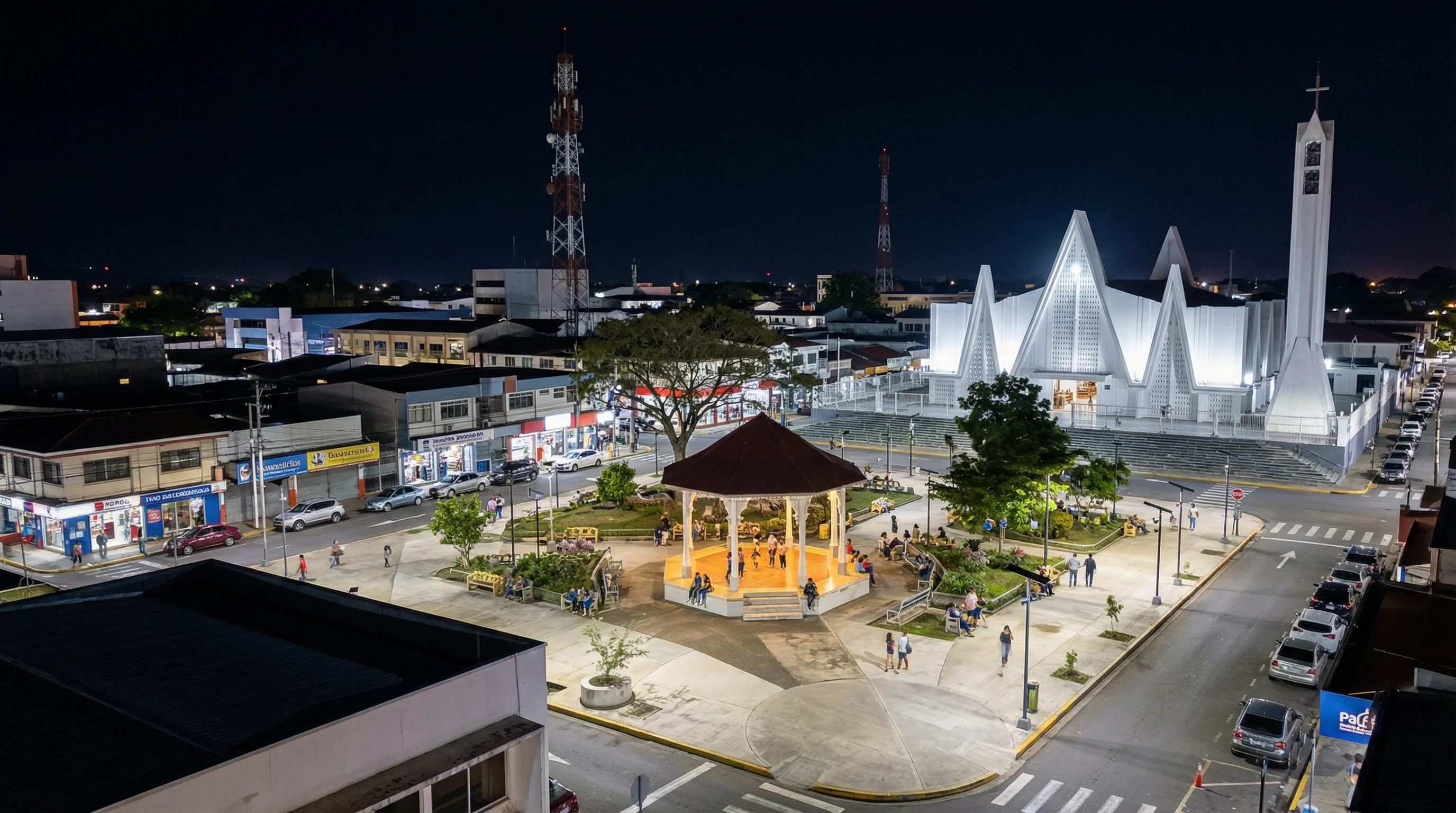
Liberia, located in Costa Rica's Guanacaste province, serves as a pivotal logistics gateway for Central American exports. Its strategic position on the Pacific side provides direct access to the Port of Caldera and the Daniel Oduber Quirós International Airport, creating a multi-modal hub that accelerates cargo movement. The region's economy is driven by robust agricultural sectors, particularly pineapple and banana plantations, alongside a thriving tourism industry that supports hospitality supply chains. Additionally, light manufacturing and export processing zones contribute to freight volume. The transportation infrastructure is anchored by Route 1 (the Pan-American Highway), which offers a direct, paved connection northward through Central America, making Liberia an optimal origin point for long-haul FTL shipments destined for the US. This infrastructure, combined with the region's export-oriented economic activity, establishes Liberia as a consistent and reliable starting point for cross-corridor logistics.
 Destination
Richmond
Richmond, Virginia, is a strategically significant logistics destination on the US East Coast, offering unparalleled connectivity to national and international markets. Its central location within the Mid-Atlantic provides direct access to the dense consumer markets of the Northeast, Southeast, and Midwest via major interstate corridors, primarily I-95 and I-64. The city's economy is diverse, anchored by manufacturing (chemicals, plastics, machinery), agriculture (tobacco, poultry), and a growing professional services sector, generating steady demand for inbound FTL freight. Key infrastructure assets include the Port of Richmond, which supports intermodal container traffic, and an extensive network of rail and highway facilities. The presence of major distribution centers and proximity to Washington D.C. further amplify its role as a consolidation and distribution hub. For Control Terrestre's clients, Richmond represents a high-value endpoint where our cross-border FTL services deliver directly to manufacturing plants, warehouses, or distribution centers, ensuring efficient supply chain integration into this vital economic region.










