Liberia to Durango
Durango → LiberiaFTL freight transportation service between Liberia and Durango. Reliable logistics solutions for your business.
Route Description
Everything you need to know about the corridor Liberia - Durango
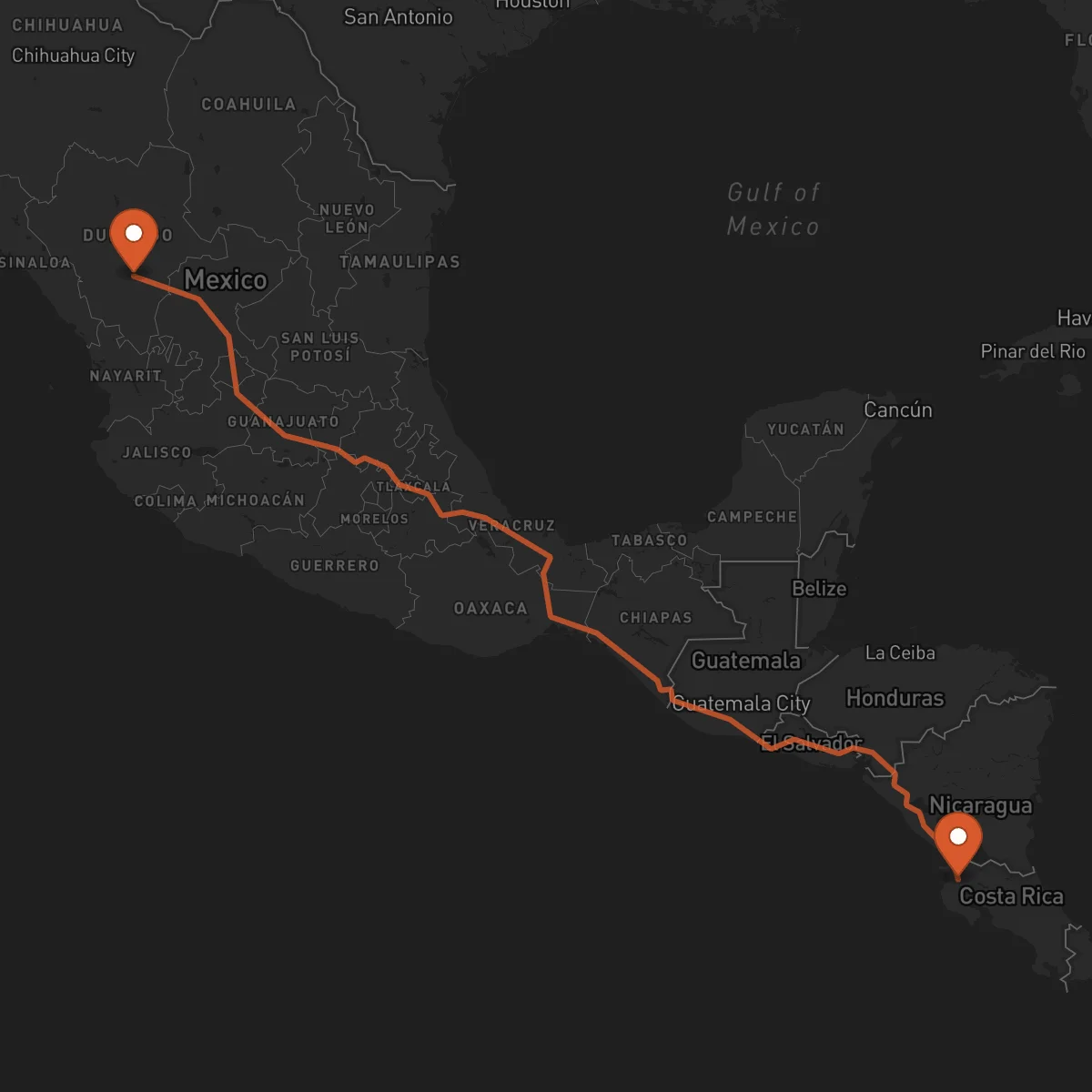
The Liberia-Durango corridor represents a critical overland link connecting the economic heartland of Costa Rica's Guanacaste province with the industrial and mining hub of Durango, Mexico. This approximately 2,520-kilometer route traverses the breadth of Central America and into northern Mexico, serving as a vital conduit for trade between Central America and Mexico's interior. Its strategic importance lies in enabling the efficient movement of goods across multiple national borders, supporting integrated supply chains that span from the Pacific coast of Central America to Mexico's manufacturing and resource extraction zones.
Economically, the corridor bridges regions with complementary industrial profiles. Costa Rica's Guanacaste, anchored by Liberia, is a powerhouse in agriculture, tourism, and light manufacturing, exporting goods like sugarcane, coffee, and processed foods. Durango, conversely, is a cornerstone of Mexico's industrial north, renowned for mining (silver, gold, and other minerals), automotive parts manufacturing, and robust agribusiness. This corridor facilitates the flow of raw materials, intermediate goods, and finished products between these distinct economic zones, underpinning regional commerce.
Key industries leveraging this route include agribusiness for transporting Costa Rican exports northward and Mexican manufactured goods southward, mining equipment and material supply chains, and the specialized movement of oversized or project cargo related to regional development. The primary transportation infrastructure relies on a network of major highways. In Costa Rica, the route begins with Route 1 (CA-1) from Liberia towards the southern border. Through Central America, it integrates the Pan-American Highway network. In Mexico, Federal Highways 40 and 45 form the backbone, providing a direct north-south connection to Durango. The corridor necessitates navigating several border crossings, starting with the Costa Rica-Panama border at Paso Canoas/Peñas Blancas, followed by crossings through Guatemala, El Salvador/Honduras, and finally the Mexico-Guatemala border at Ciudad Hidalgo/Tecún Umán. Each crossing involves specific customs and documentation requirements, including compliance with regional integration agreements and Mexican customs regulations.
Control Terrestre facilitates seamless operations on this complex corridor through our exclusive focus on Full Truckload (FTL) solutions and our robust alliance of experienced, certified transportation providers. Our partners hold key certifications including C-TPAT, FAST, and BASC, which streamline customs procedures and enhance security at border points. We manage the intricate logistics of multi-border transit, coordinating dedicated, expedited, and specialized cargo services—including refrigerated and oversized units—tailored to the corridor's demands. By handling the operational complexity from door-to-door, we provide our clients with a single, reliable point of contact for moving their freight efficiently across this strategic North American-Central American link.
Services for this Route
Available services for the corridor Liberia - Durango
 Origin
Liberia
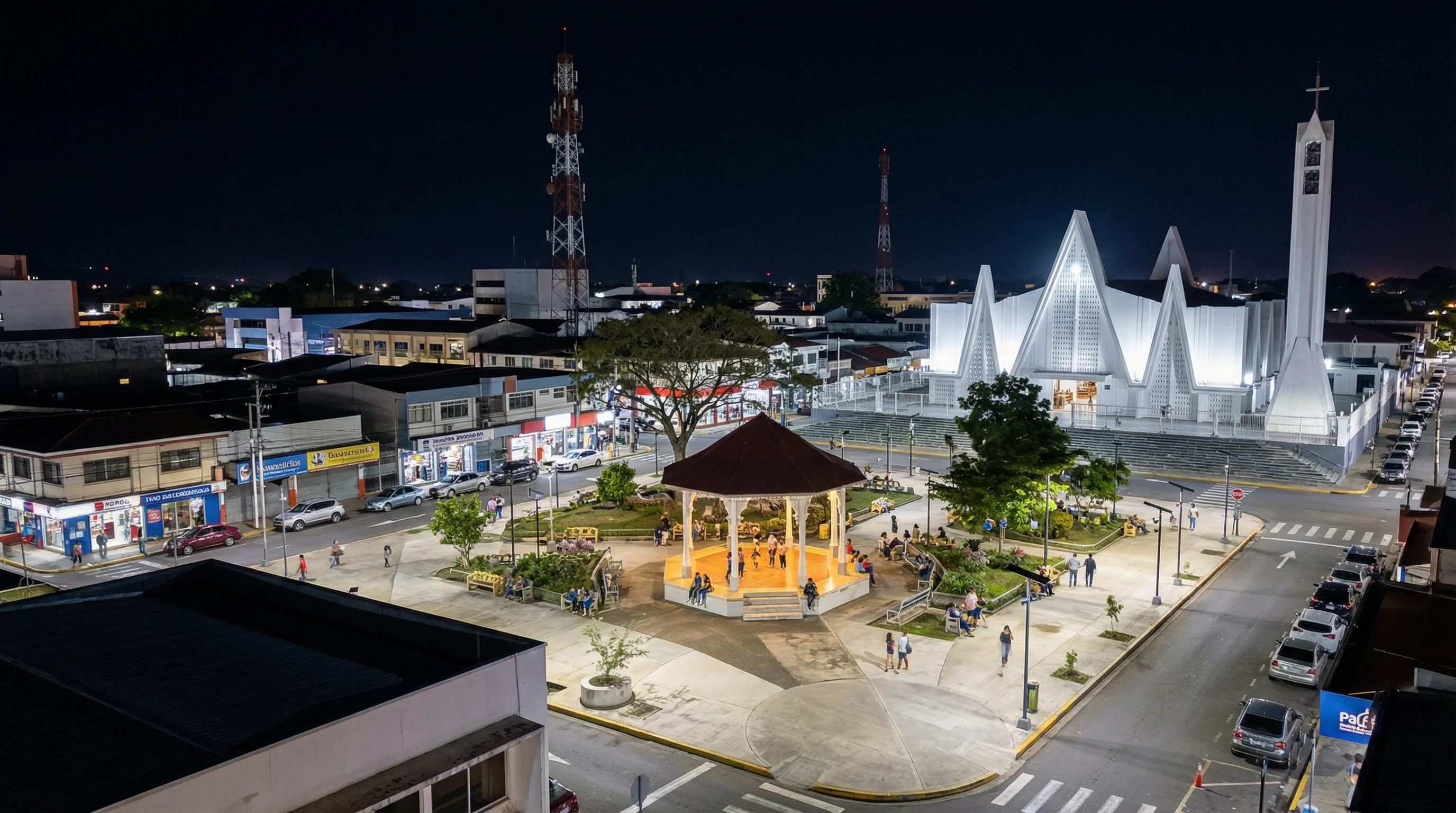
Liberia, the capital of Costa Rica's Guanacaste province, serves as a pivotal logistics gateway on the Pacific coast of Central America. Its strategic location is defined by its proximity to the country's main international airport, Daniel Oduber Quirós International Airport (LIR), and the Port of Caldera, a crucial maritime terminal for container and bulk cargo. This air-sea-land connectivity makes Liberia a natural consolidation and distribution hub for northern Costa Rica and beyond. The region's economy is dominated by world-class tourism, centered on beach destinations and national parks, alongside large-scale agriculture. Key sectors include sugarcane production and processing, coffee, melons, and other tropical fruits, supported by significant agro-industrial facilities. The surrounding infrastructure is robust, featuring well-maintained highways like Route 1 (CA-1) that connect Liberia directly to the capital, San José, and southward towards the Panamanian border. This network efficiently links the province's agricultural plains, tourist zones, and industrial parks to the primary corridor leading north.
 Destination
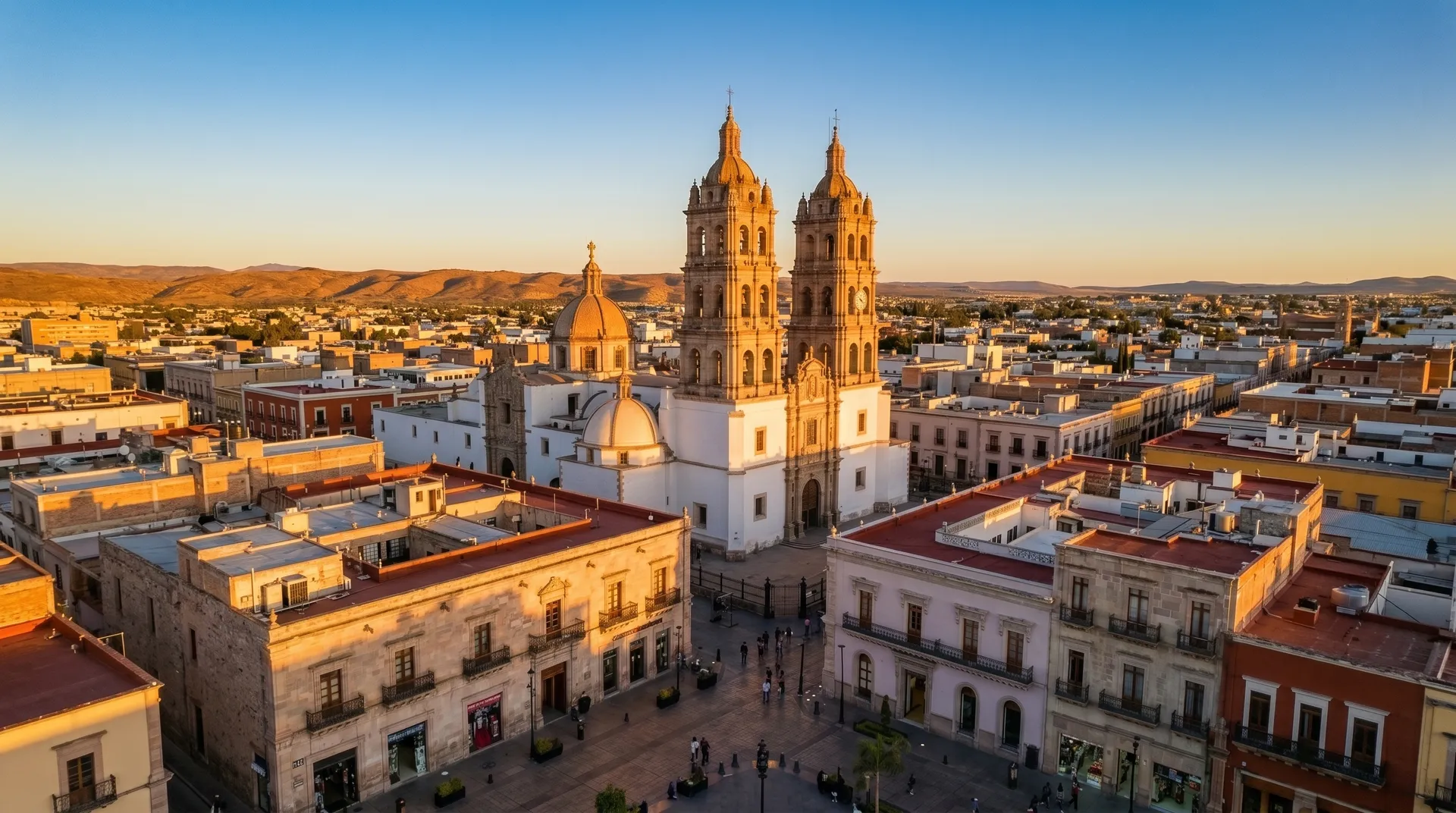
Durango, the capital of the state of Durango, is a major industrial and logistical center in northern Mexico's interior. Its strategic location is anchored in the Sierra Madre Occidental mountain range, providing access to vast mineral wealth and serving as a crossroads between Mexico's manufacturing heartland (the Bajío region) and the U.S. border to the north. Historically founded on silver mining, Durango's modern economy is diversified, encompassing significant mining operations (for silver, gold, and iron ore), a growing automotive and auto parts manufacturing sector, and strong agribusiness focused on corn, wheat, and livestock. The city is a critical freight hub, intersected by major federal highways, most notably Highway 40, which provides a direct, high-capacity route west to Mazatlán on the Pacific coast and east to the U.S. border at Ciudad Juárez/El Paso via Highway 45. This highway network connects Durango to key industrial corridors in Mexico and facilitates efficient cross-border movements. Furthermore, the region benefits from rail connectivity, supporting intermodal logistics for bulk commodities like minerals and agricultural products.










