León to Torreón
Torreón → LeónFTL freight transportation service between León and Torreón. Reliable logistics solutions for your business.
Route Description
Everything you need to know about the corridor León - Torreón
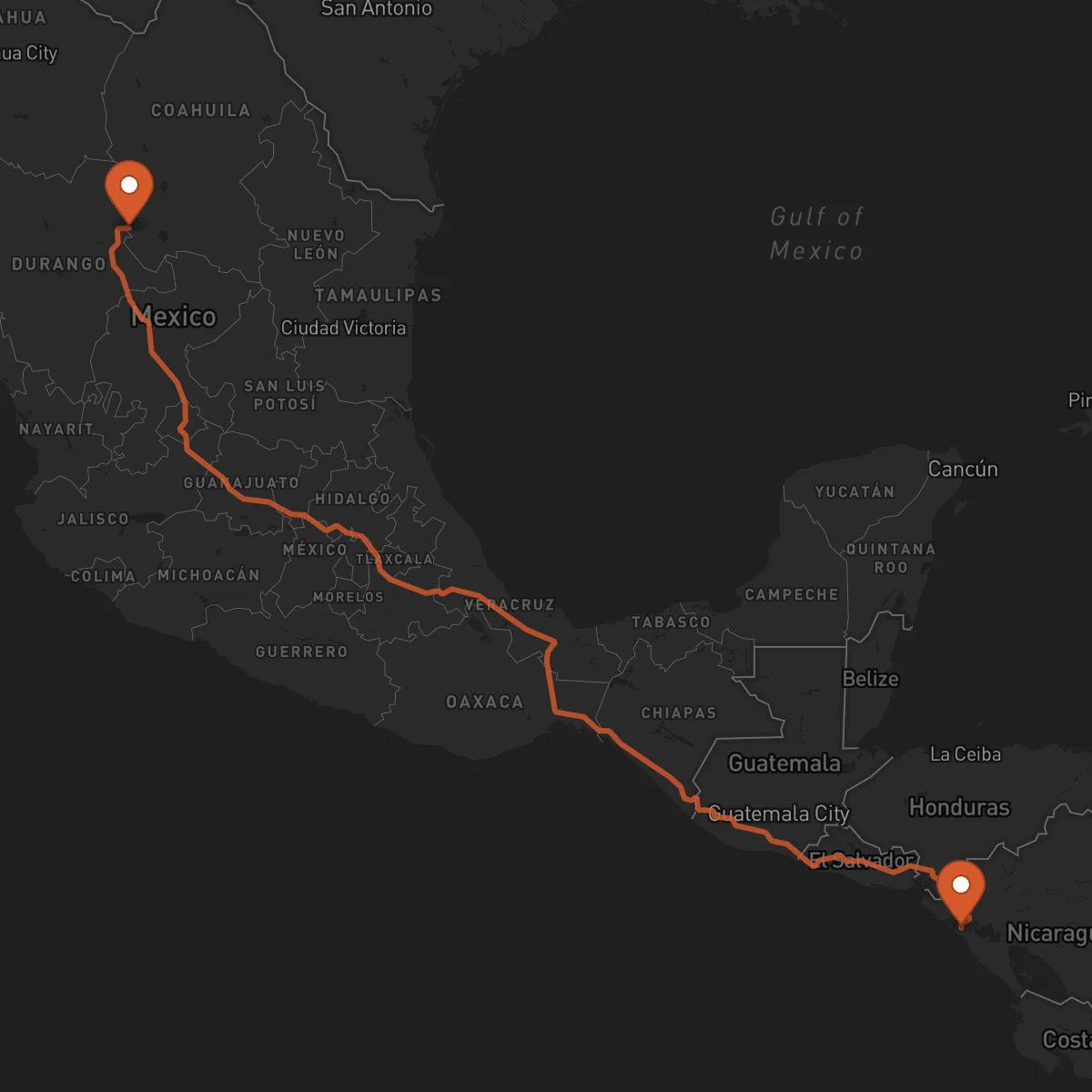
The logistics corridor connecting León, Nicaragua, to Torreón, Coahuila, Mexico, represents a critical north-south artery for cross-border freight in the Americas. Spanning approximately 2,264 kilometers, this route bridges Central America's productive Pacific coast with the industrial heartland of northern Mexico, facilitating the essential flow of goods between these dynamic economic regions. Its strategic importance lies in enabling efficient access from Nicaraguan production centers to major manufacturing, automotive, and agricultural hubs in the Comarca Lagunera and beyond, while also serving as a gateway for exports to the United States and Canada. The economic context is defined by León's robust textile, food processing, and agricultural sectors, which rely on this corridor to reach Mexican markets and assembly plants. Torreón, a key node in Mexico's industrial corridor, demands consistent inbound supply for its diverse manufacturing base, including automotive parts, textiles, and metal mechanics, as well as outbound shipments of finished goods and agricultural products like cotton and dairy. Primary industries utilizing this corridor include textile and apparel manufacturers, agribusiness, food and beverage producers, and general industrial suppliers. The transportation infrastructure primarily follows the CA-1 highway from León through Nicaragua to the Guatemalan border, then traverses Guatemala and Chiapas, Mexico, before connecting to Mexican Federal Highways 190, 150, and ultimately 40 and 30 towards Torreón. Key border crossings, such as the Guatemala-Mexica border at Tecún Umán / Ciudad Hidalgo, require meticulous customs compliance. Control Terrestre facilitates seamless operations on this corridor through our robust alliance of experienced carriers, all holding critical certifications including C-TPAT, FAST, and BASC. This ensures expedited crossings and rigorous security protocols. We coordinate the entire cross-border process, from origin pickup in León to final delivery in Torreón, leveraging our network's expertise in international documentation and regulatory requirements to provide a singular, managed solution for our clients' full truckload (FTL) needs.
Services for this Route
Available services for the corridor León - Torreón
 Origin
León, Nicaragua, is a pivotal economic and logistical hub on the Pacific side of Central America. Its strategic location provides direct access to major production zones and the crucial CA-1 highway corridor, which serves as the primary north-south route through Nicaragua and into Guatemala. The city is a national powerhouse for industry, primarily known for its dominant textile and apparel manufacturing sector, which is a major exporter. Furthermore, León's surrounding regions are agriculturally rich, producing significant quantities of sugar cane, peanuts, and grains, supporting a substantial food processing industry. This industrial and agricultural output creates a consistent demand for outbound freight transportation. The available transportation infrastructure is centered on the well-maintained CA-1 highway, which connects León directly to the border crossing at Guasaule (Nicaragua-Guatemala) and to Managua's international airport and port facilities for multimodal options. This established road network allows for efficient consolidation and dispatch of full truckload shipments destined for Mexico and beyond, making León a key origin point for cross-border logistics.
 Destination
Torreón, Coahuila, is a cornerstone of Mexico's industrial landscape and a strategic logistics destination in the north. Located in the Comarca Lagunera, it sits at the crossroads of major federal highways, notably Federal Highway 40 (linking to Monterrey and the U.S. border) and Federal Highway 30 (connecting to the interior). This superior road infrastructure, complemented by active railway lines, makes it a central distribution node for northern Mexico and a critical link to U.S. markets. Economically, Torreón is a diversified manufacturing center with strong sectors in automotive parts, metal mechanics, textiles, and food processing. The region is also a major agricultural producer, particularly of cotton, alfalfa, and dairy, generating significant inbound and outbound freight volumes. Its status as an industrial and agricultural nexus ensures a constant flow of full truckload cargo, both for local consumption and for transshipment. The comprehensive highway network and proximity to the U.S. border make Torreón an ideal endpoint for cross-border corridors, capable of efficiently receiving and distributing goods to a wide catchment area.










