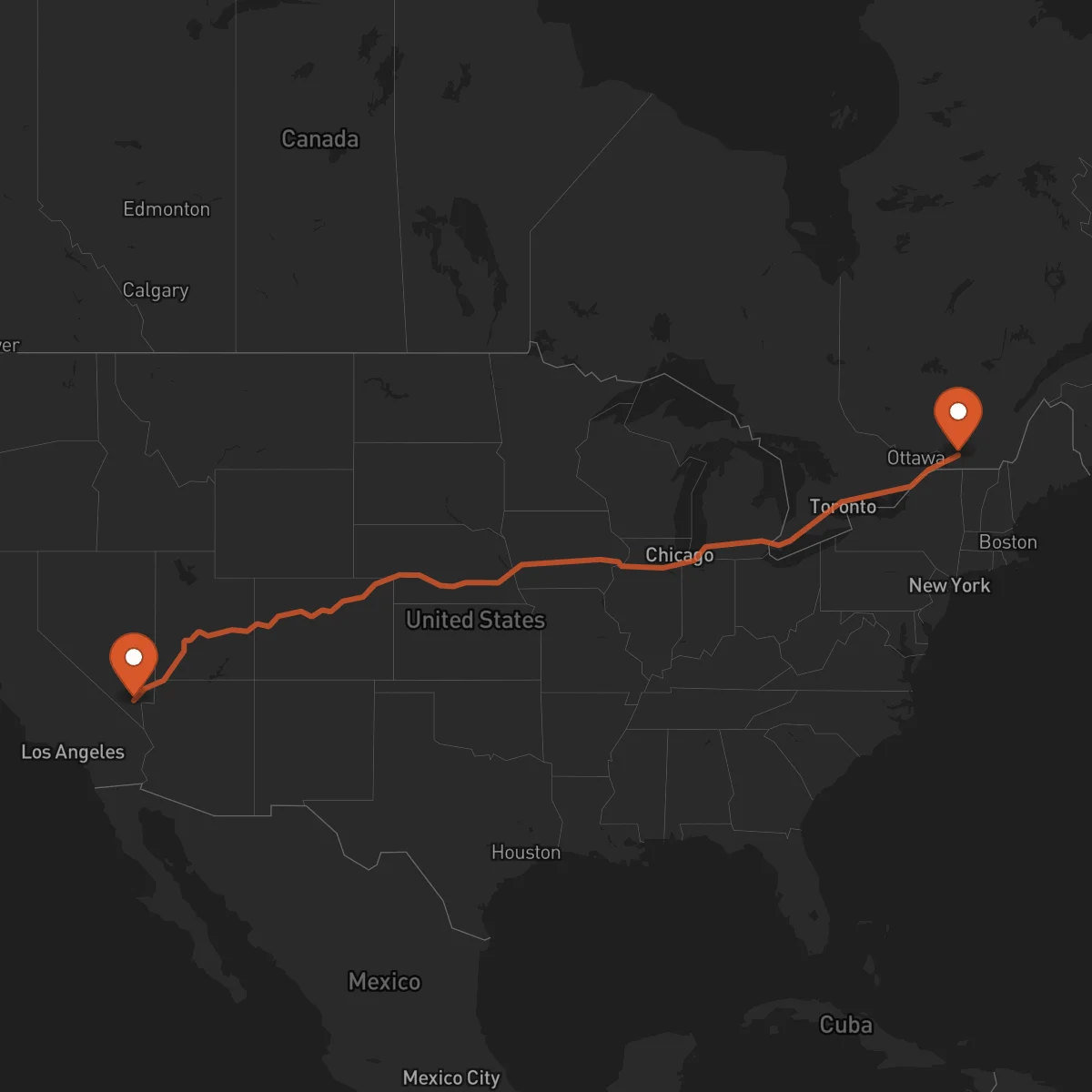
Las Vegas to Montreal
Montreal → Las VegasFTL freight transportation service between Las Vegas and Montreal. Reliable logistics solutions for your business.
Route Description
Everything you need to know about the corridor Las Vegas - Montreal
The logistics corridor connecting Las Vegas, Nevada, to Montreal, Quebec, represents a vital trade route across North America, spanning approximately 3,604 kilometers through diverse terrain and multiple jurisdictions. This cross-border corridor links the southwestern United States with Canada's second-largest metropolitan area, facilitating the movement of goods between two major economic zones. The route traverses through key states including Nevada, Utah, Wyoming, South Dakota, Minnesota, Wisconsin, and New York before entering Canada through Quebec.
The economic significance of this corridor is substantial, connecting Las Vegas's tourism and entertainment-driven economy with Montreal's diverse industrial base. Montreal serves as a major Canadian port and logistics hub, while Las Vegas functions as a critical distribution center for the southwestern United States. The corridor supports industries ranging from manufacturing and automotive to technology and consumer goods, with particular emphasis on time-sensitive freight given the distance involved.
Key transportation infrastructure along this route includes major interstate highways such as I-15, I-80, I-90, and I-94 in the United States, connecting to Canadian highways 20 and 40. The primary border crossing is typically at the Thousand Islands Bridge near Alexandria Bay, New York, though alternative crossings exist depending on specific routing needs. Control Terrestre's expertise in cross-border operations ensures seamless customs clearance and compliance with both US and Canadian regulations, providing reliable full truckload (FTL) services throughout this extensive corridor.
Services for this Route
Available services for the corridor Las Vegas - Montreal
 Origin
Las Vegas
Las Vegas, Nevada, serves as a strategic logistics hub in the southwestern United States, leveraging its position in the Mojave Desert and proximity to major West Coast ports. The city's infrastructure includes extensive highway networks, with I-15 providing direct north-south connectivity and I-215 creating a beltway around the metropolitan area. McCarran International Airport offers significant air cargo capacity, complementing ground transportation options. Las Vegas's economy, while dominated by tourism and entertainment, has developed substantial warehousing and distribution capabilities to support both the local market and regional distribution needs.
 Destination
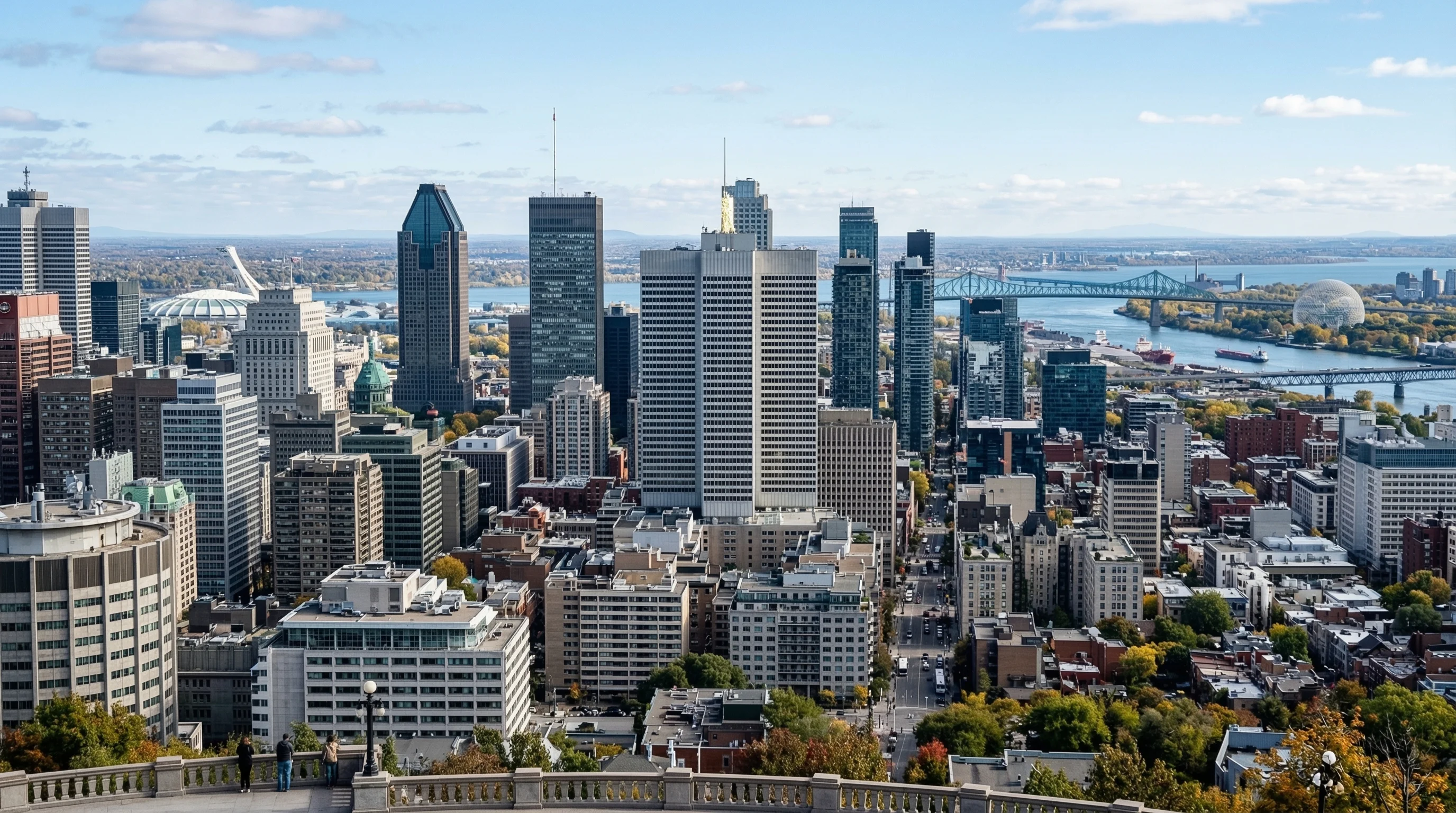
Montreal, Quebec, stands as Canada's premier logistics center, strategically positioned along the St. Lawrence River with access to the Atlantic Ocean. The city boasts Port of Montreal, one of North America's busiest inland ports, alongside extensive rail connections through Canadian National Railway and Canadian Pacific Railway. Montreal-Pierre Elliott Trudeau International Airport provides significant air cargo capabilities, while the city's location makes it a natural gateway to Eastern Canada and the northeastern United States. The metropolitan area's diverse economy spans aerospace, pharmaceuticals, technology, and manufacturing sectors, creating substantial freight transportation demand.










