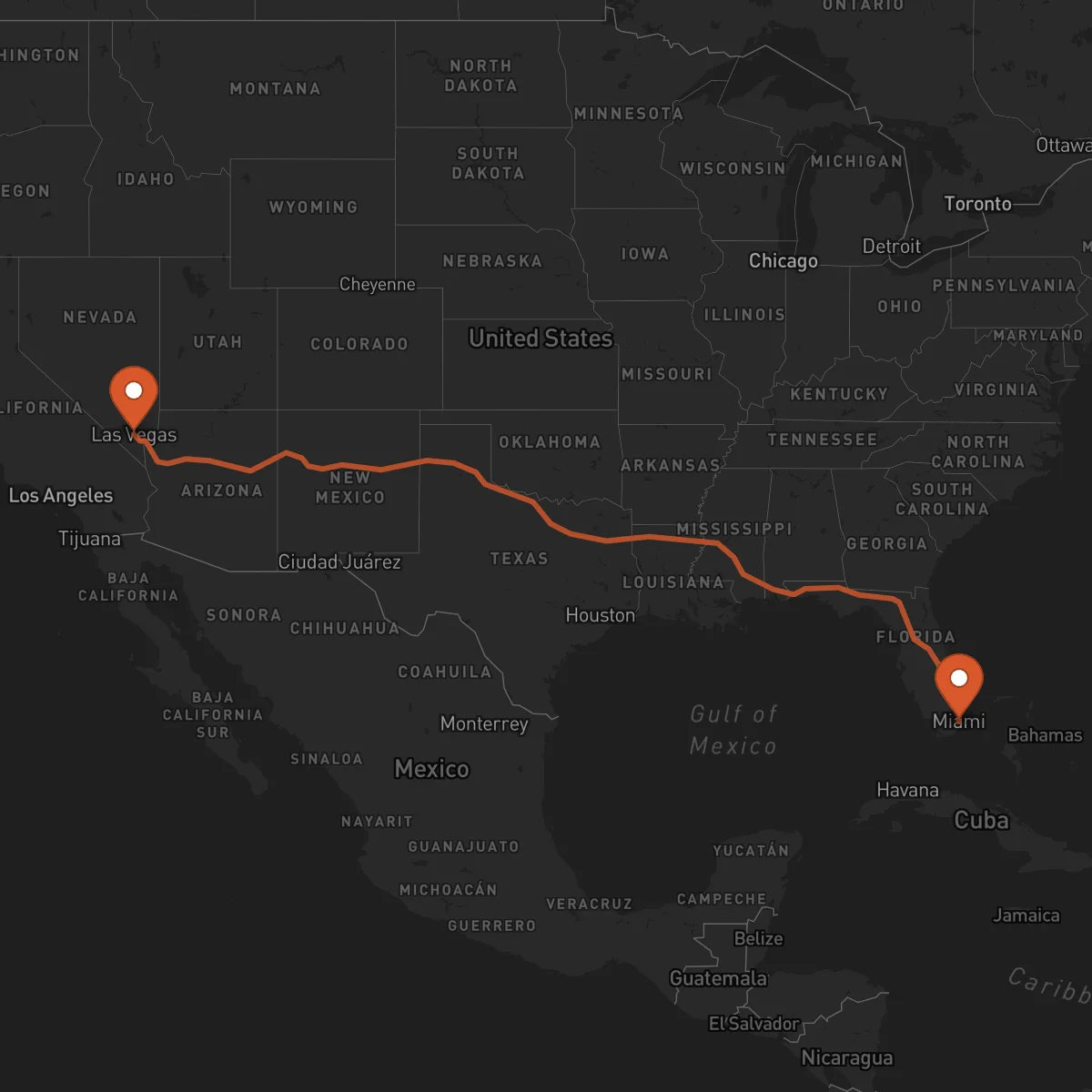
Las Vegas to Miami
Miami → Las VegasFTL freight transportation service between Las Vegas and Miami. Reliable logistics solutions for your business.
Route Description
Everything you need to know about the corridor Las Vegas - Miami
The logistics corridor between Las Vegas, Nevada, and Miami, Florida, represents one of the most strategic freight routes in the United States, connecting the southwestern region with the southeastern Atlantic coast. This 3,505-kilometer route traverses diverse terrains and crosses multiple states, facilitating the movement of goods between two major economic hubs. The corridor serves as a vital link for companies operating in both regions, enabling efficient supply chain management and distribution across the country.
The economic significance of this corridor is substantial, with Las Vegas serving as a major entertainment and tourism center while Miami functions as a crucial gateway to Latin American markets. The route connects major industrial zones, including manufacturing centers, agricultural areas, and technology hubs. Key industries utilizing this corridor include electronics, automotive parts, consumer goods, and agricultural products. The transportation infrastructure along this route includes major highways such as I-15, I-40, and I-95, providing multiple routing options for freight carriers.
Control Terrestre specializes in providing full truckload (FTL) services along this corridor, ensuring reliable and efficient transportation solutions. Our extensive network of certified carriers and strategic partnerships allows us to offer dedicated services, expedited freight options, and specialized transportation for various cargo types. We understand the unique challenges of this long-haul route and provide comprehensive solutions to optimize transit times and ensure cargo safety throughout the journey.
Services for this Route
Available services for the corridor Las Vegas - Miami
 Origin
Las Vegas
Las Vegas, Nevada, serves as a strategic origin point for logistics operations, situated in the southwestern United States with excellent connectivity to major transportation networks. The city's location provides direct access to Interstate 15, which serves as a primary north-south corridor connecting to Southern California and beyond. Las Vegas benefits from McCarran International Airport and the Union Pacific Railroad, offering multimodal transportation options for businesses. The region's logistics infrastructure includes modern warehousing facilities and distribution centers, particularly concentrated in the Las Vegas Valley area.
The economic landscape of Las Vegas extends beyond its famous entertainment industry to include significant manufacturing, technology, and logistics sectors. The city has developed into a major distribution hub for southwestern states, with numerous companies establishing fulfillment centers to serve the western United States. Key industries in the area include hospitality equipment manufacturing, electronics, and consumer goods. The availability of specialized logistics services and the region's business-friendly environment make Las Vegas an ideal starting point for freight transportation to various destinations across the country.
 Destination
Miami
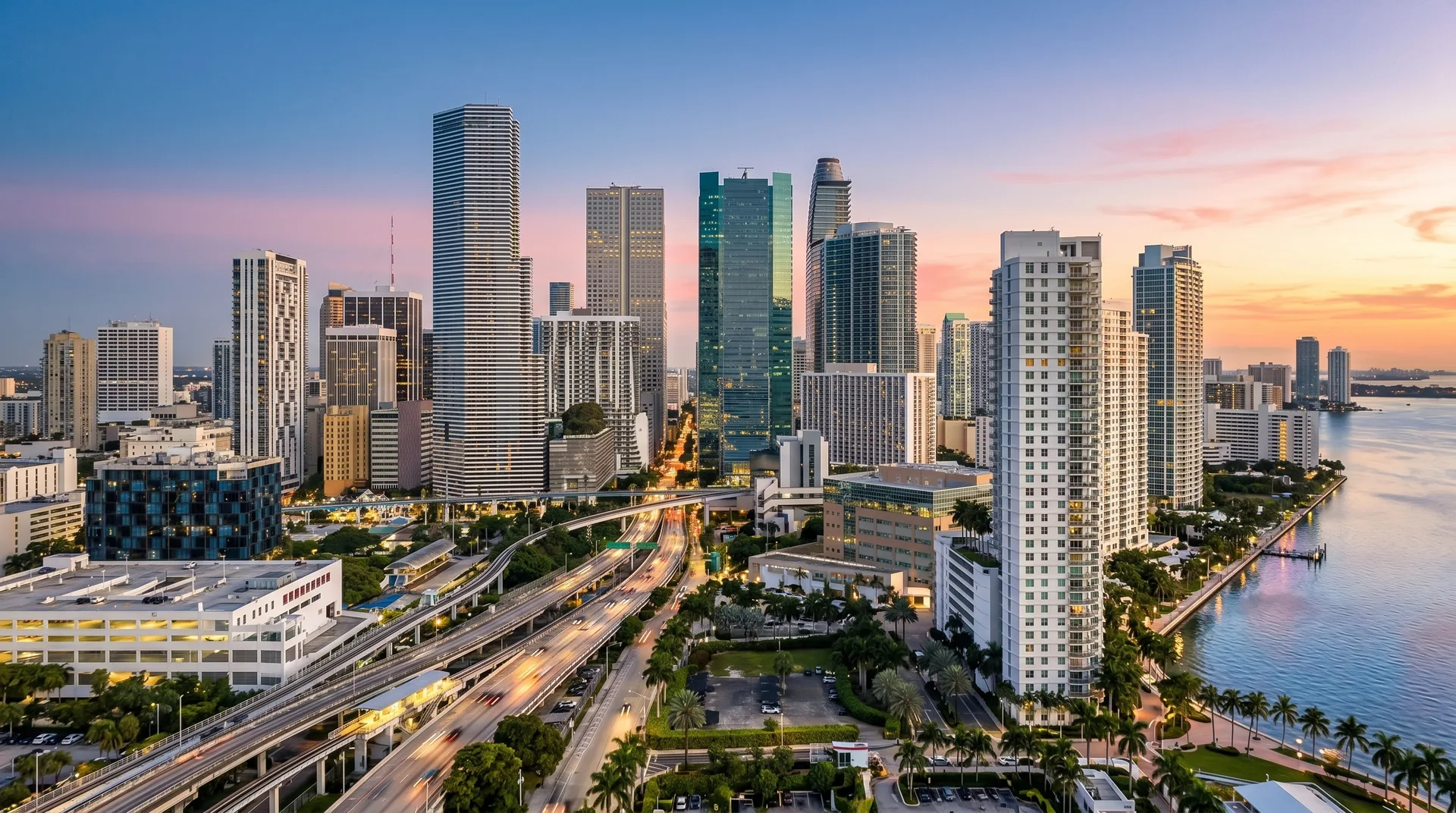
Miami, Florida, stands as a premier logistics destination on the southeastern coast of the United States, offering unparalleled access to international markets and robust domestic distribution capabilities. The city's strategic location provides direct connections to major highways, including Interstate 95, which serves as a primary north-south corridor along the East Coast. Miami International Airport ranks among the busiest cargo airports in the nation, while the Port of Miami serves as a crucial gateway for both imports and exports. The region's logistics infrastructure includes extensive warehousing facilities, cold storage options, and specialized handling capabilities for various cargo types.
The economic profile of Miami encompasses a diverse range of industries, with international trade playing a central role in the region's commerce. The city serves as the primary gateway to Latin American and Caribbean markets, hosting numerous multinational corporations and trade organizations. Key industries utilizing Miami's logistics capabilities include pharmaceuticals, electronics, fashion and apparel, and perishable goods. The presence of Free Trade Zones and specialized logistics services further enhances Miami's position as a critical distribution center for both domestic and international freight movements.










