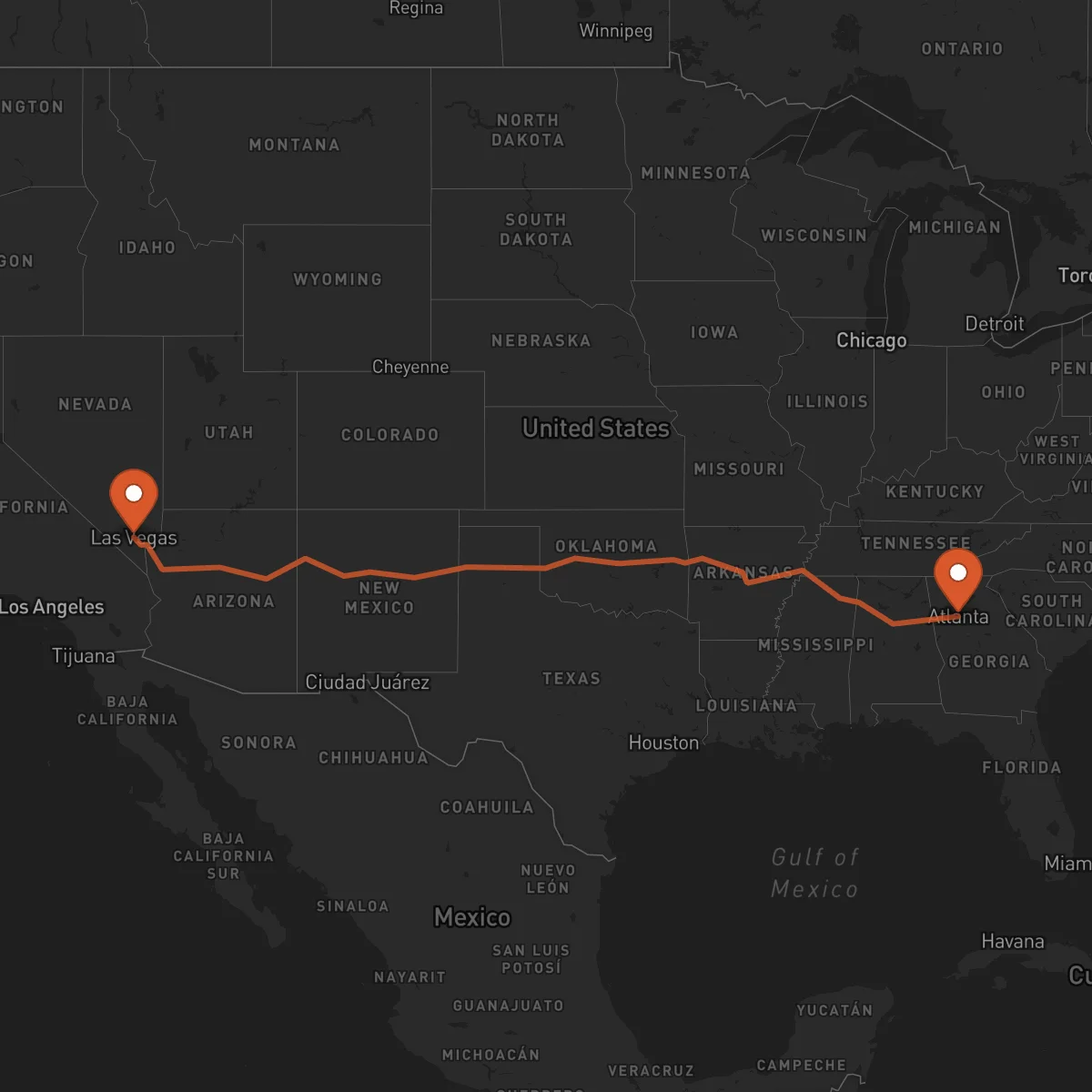
Las Vegas to Atlanta
Atlanta → Las VegasFTL freight transportation service between Las Vegas and Atlanta. Reliable logistics solutions for your business.
Route Description
Everything you need to know about the corridor Las Vegas - Atlanta
The Las Vegas to Atlanta corridor represents a vital connection between the Southwest and Southeast regions of the United States, spanning approximately 2,803 kilometers across diverse terrains and economic zones. This transcontinental route links Nevada's entertainment and tourism capital with Georgia's commercial hub, creating a strategic pathway for freight movement that supports numerous industries across the country.
The corridor traverses multiple states including Arizona, New Mexico, Texas, and Tennessee, utilizing major interstate highways such as I-40 and I-75. These well-maintained transportation arteries provide reliable access for commercial vehicles, while the route passes through key logistics centers and manufacturing regions. The journey connects the arid landscapes of the Southwest with the humid subtropical climate of the Southeast, requiring specialized knowledge of regional regulations and weather conditions.
Control Terrestre specializes in managing full truckload shipments along this critical corridor, offering dedicated transportation solutions that ensure your cargo moves efficiently from origin to destination. Our experienced carriers understand the unique challenges of this transcontinental route, from navigating mountain passes to coordinating cross-state logistics. We provide real-time tracking, professional handling, and reliable delivery schedules that keep your supply chain moving smoothly across the entire journey.
Services for this Route
Available services for the corridor Las Vegas - Atlanta
 Origin
Las Vegas
Las Vegas serves as a strategic logistics hub for the Southwest region, benefiting from its position as a major transportation gateway in Nevada. The city's economy extends beyond tourism to include significant manufacturing, warehousing, and distribution activities. Las Vegas's proximity to major West Coast ports and its extensive network of highways, including I-15 and US-95, make it an ideal origin point for freight moving eastward across the country.
The region offers robust transportation infrastructure with multiple intermodal facilities, warehousing districts, and specialized handling capabilities. Las Vegas International Airport and the nearby McCarran Cargo Airport support air freight operations, while the extensive highway network provides reliable ground transportation options. The area's logistics sector has developed sophisticated systems for managing high-volume freight movements, particularly for industries such as electronics, consumer goods, and specialized equipment.
 Destination
Atlanta
Atlanta stands as one of the most important logistics centers in the Southeastern United States, serving as a major distribution hub for the region. The city's strategic location at the intersection of major interstate highways, including I-75, I-85, and I-20, provides excellent connectivity for freight movement throughout the Southeast and beyond. Atlanta's Hartsfield-Jackson International Airport, one of the busiest cargo airports globally, enhances the region's multimodal transportation capabilities.
The Atlanta metropolitan area hosts a diverse economic landscape with strong presence in automotive manufacturing, aerospace, technology, and consumer goods industries. The region's extensive warehousing and distribution infrastructure, combined with its central location within the Eastern time zone, makes it an ideal destination for freight consolidation and distribution. Atlanta's logistics ecosystem includes numerous third-party logistics providers, advanced supply chain management systems, and specialized handling facilities for various cargo types.










