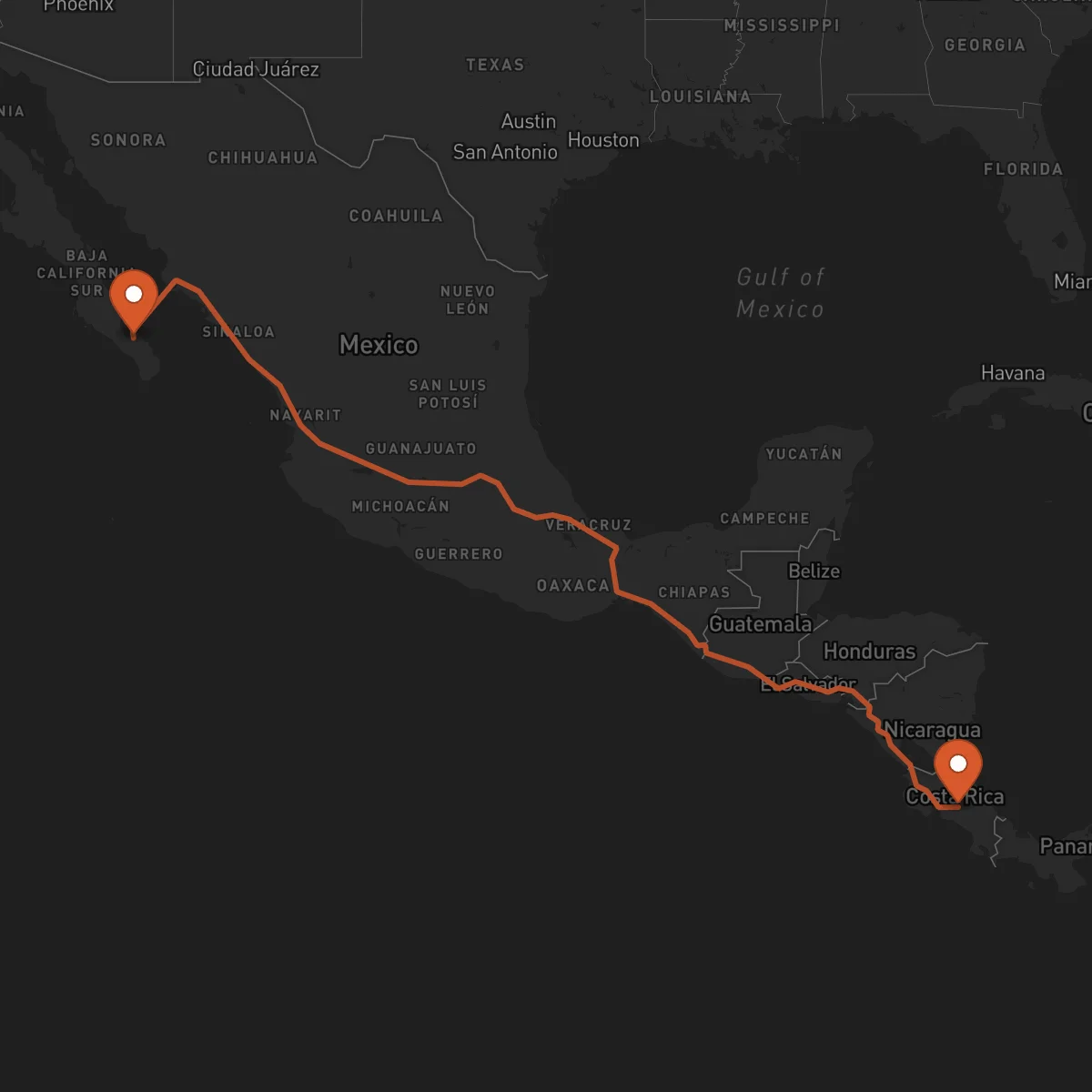
La Paz to San José
San José → La PazFTL freight transportation service between La Paz and San José. Reliable logistics solutions for your business.
Route Description
Everything you need to know about the corridor La Paz - San José
The logistics corridor connecting La Paz, Mexico, to San José, Costa Rica, represents a critical north-south artery for cross-border trade across the Americas. Spanning approximately 3,195 km, this route traverses the entire length of Mexico and Central America, linking the Pacific coast of the Baja California Peninsula with the economic heart of Costa Rica. Its strategic importance lies in facilitating the movement of goods between key manufacturing hubs, agricultural regions, and consumer markets, serving as a vital conduit for supply chains that require reliable, overland connectivity. The corridor supports the flow of diverse commodities, from manufactured parts and consumer goods to specialized agricultural products and industrial materials, underpinning regional economic integration. Control Terrestre leverages its robust alliance network to provide dedicated Full Truckload (FTL) solutions on this complex corridor, ensuring seamless coordination across multiple international borders. Our expertise in navigating the distinct regulatory environments, coupled with certified providers holding credentials like C-TPAT, FAST, and BASC, allows us to streamline customs procedures and mitigate delays. We manage the entire journey with a focus on security and efficiency, offering specialized equipment including dry vans, reefers, and flatbeds to match the specific needs of cargo moving between these two pivotal points.
The economic context of this corridor is defined by the vibrant industrial and agricultural sectors of Mexico and Central America. Northern and central Mexico contribute significantly with manufacturing, particularly in automotive, aerospace, and electronics, while the southern regions and Central American nations are strong in agriculture, textiles, and light manufacturing. This creates a dynamic trade flow where finished goods, raw materials, and intermediate products are constantly in transit. The main industries utilizing this corridor include agro-industry (exporting fruits, vegetables, and coffee), manufacturing (auto parts, electronics, textiles), and pharmaceuticals. Perishable goods, such as seafood from the Gulf of California or produce from Central valleys, rely heavily on refrigerated (reefer) capacity, while industrial shipments often require dry van or flatbed services for machinery and oversized components. Control Terrestre’s portfolio is explicitly tailored for these FTL demands, providing the dedicated capacity and specialized handling (including for hazardous materials) that consolidated (LTL) services cannot accommodate.
Transportation infrastructure along this route is a mix of major highways and challenging segments. The journey begins with the Transpeninsular Highway (Mexico Federal Highway 1) connecting La Paz to the Mexican mainland. From there, the primary artery is the extensive network of Mexican Federal Highways (notably 15, 45, 57, and 90) that run south to the Guatemala-Mexico border. Crossing into Central America, the route continues via the Pan-American Highway (CA-1) through Guatemala, El Salvador, Honduras, Nicaragua, and into Costa Rica. Key border crossings, such as Ciudad Hidalgo/Tecún Umán (Mexico-Guatemala) and Peñas Blancas (Costa Rica-Nicaragua), are critical control points. Each nation has its own customs and immigration protocols, requiring meticulous documentation and compliance. Control Terrestre facilitates operations by acting as a single point of contact. Our strategic providers are pre-vetted for all relevant certifications (FAST for Canada/US, C-TPAT for US, BASC for Latin America), ensuring faster processing at borders. We handle all cross-border documentation coordination, provide real-time visibility, and match cargo with the appropriate certified equipment—from tankers for liquids to curtain-side units for weather-sensitive goods—optimizing the entire door-to-door FTL journey.
Services for this Route
Available services for the corridor La Paz - San José
 Origin
La Paz
La Paz, the capital of Baja California Sur, serves as a strategic Pacific gateway with a unique economic profile. Its location on the Sea of Cortez provides direct access to rich fisheries, making seafood processing and export a cornerstone of the local economy. The city is also a major tourism hub, driving demand for consumer goods, construction materials, and hospitality supplies. Furthermore, a growing manufacturing sector, particularly in aerospace components and medical devices, contributes to outbound freight. The primary transportation infrastructure includes the La Paz International Airport (LAP) for air cargo and, crucially, the Transpeninsular Highway (Mex 1), which is the sole major road connecting the Baja California Peninsula to the Mexican mainland via the port of Topolobampo. This highway is essential for moving FTL shipments from the peninsula to the national network. The Port of La Paz supports maritime activity, but for long-haul terrestrial freight to the mainland and beyond, the Transpeninsular Highway is the indispensable link. Control Terrestre utilizes this corridor to efficiently consolidate and dispatch full truckloads from La Paz, leveraging the highway's direct route to connect with Mexico's broader freight network heading south.
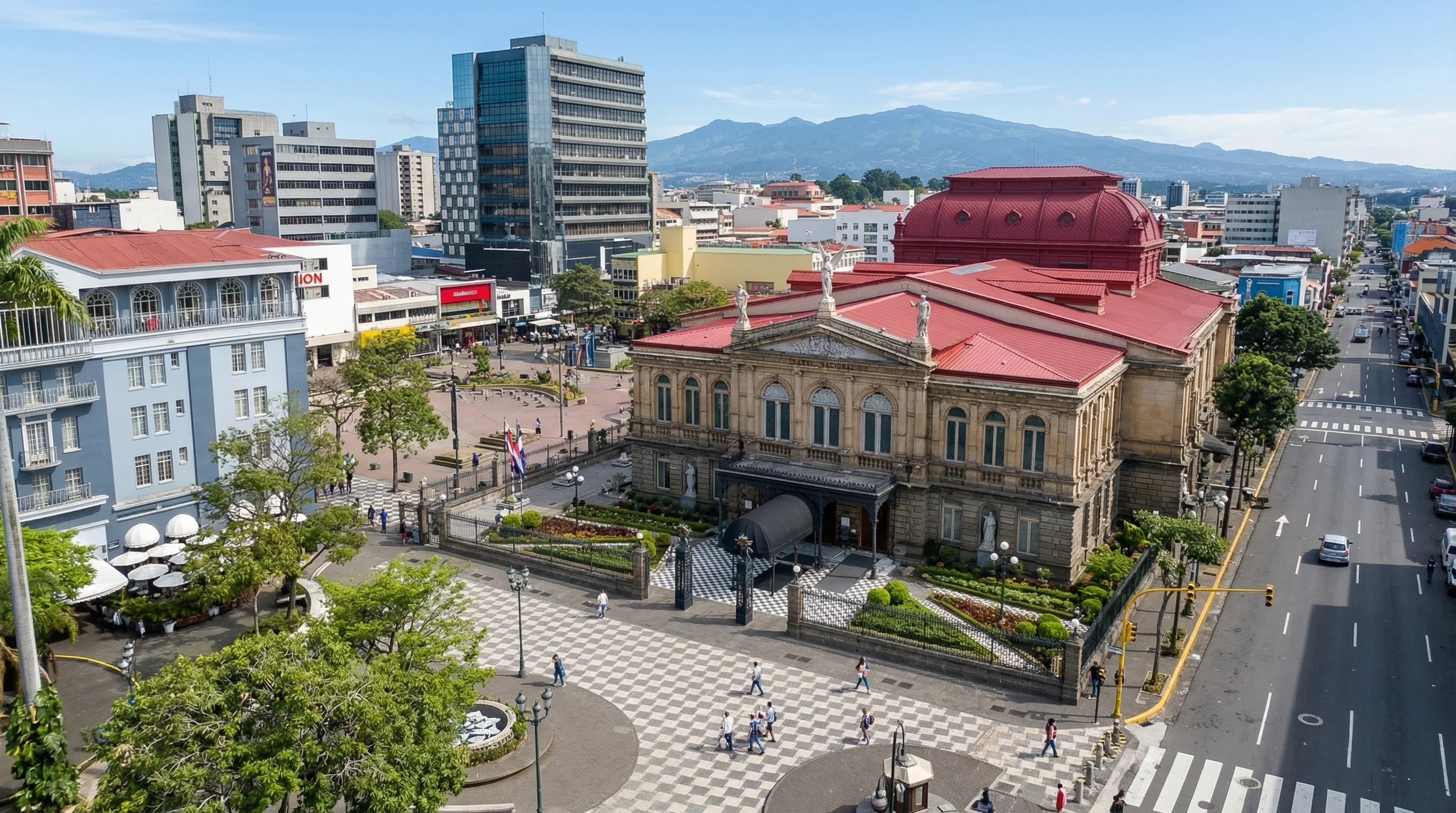 Destination
San José
San José, the capital and largest city of Costa Rica, is the undisputed economic and logistical center of the country. It functions as a primary hub for high-tech manufacturing, pharmaceuticals, finance, and services, with a strong emphasis on export-oriented industries. The surrounding Central Valley is an agricultural powerhouse, producing coffee, bananas, pineapples, and flowers for global markets. This creates consistent demand for inbound raw materials and outbound finished goods. Its strategic location is enhanced by excellent infrastructure: the Juan Santamaría International Airport (SJO) is a major cargo hub, and the city is the nexus of Costa Rica's highway system. Key routes like the General Cañas Highway (Ruta 1) and the Autopista Próspero Fernández (Ruta 27) connect San José to the Caribbean port of Limón (via Ruta 32) and the Pacific ports of Caldera and Puntarenas. This multimodal connectivity allows for seamless door-to-door FTL solutions, whether the final destination is within the metropolitan area or a port for export. Control Terrestre’s operations in San José capitalize on this infrastructure, providing dedicated trucking services that feed into these ports or serve local industry directly, with reefers for perishables and dry vans for manufactured goods.










